Crowned Credit
Credit RepairMay 10, 20268 min read

Can You Sue a Credit Bureau? Your Legal Rights Under the FCRA in 2026

Ashley Rivera

Ashley Rivera

Credit Repair Specialist
Can You Sue a Credit Bureau? Your Legal Rights Under the FCRA in 2026
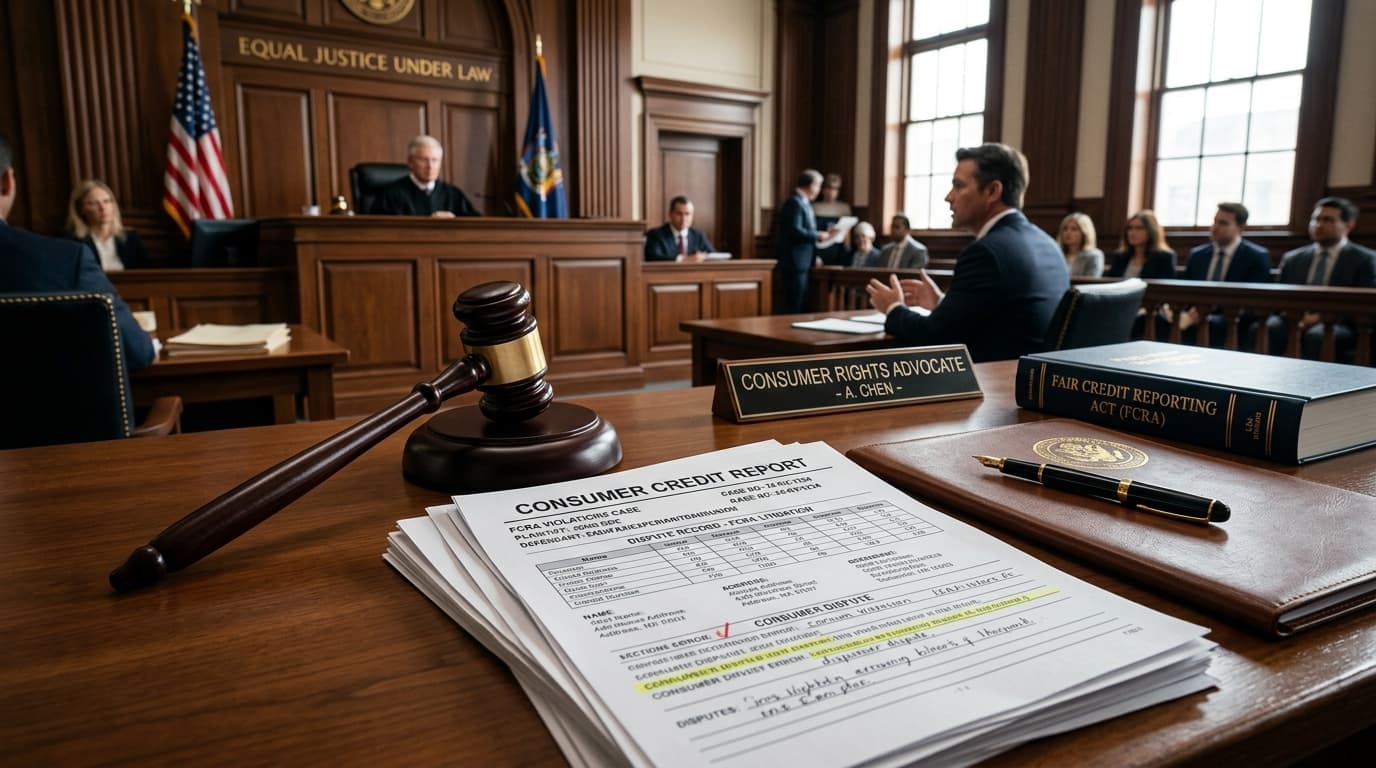
You disputed an error on your credit report. You followed all the steps. You waited the required 30 days. And the credit bureau either ignored you completely or sent back a generic letter claiming they "verified" the inaccurate information. Now what? Here's something most people don't know: **you can sue a credit bureau when they violate your rights under federal law.** And in many cases, they'll have to pay your legal fees if you win. The Fair Credit Reporting Act (FCRA) isn't just a suggestion. It's federal law with real teeth, and credit bureaus who break it face serious consequences. ## Your Rights Under the FCRA The FCRA gives you specific, enforceable rights when dealing with credit reporting agencies like Experian, Equifax, and TransUnion. These aren't suggestions. They're legal requirements. **When you dispute an error, credit bureaus must:**
  • Conduct a reasonable investigation within 30 days
  • Forward all relevant documentation you provide to the data furnisher
  • Review the evidence you submit, not just rubber-stamp the furnisher's response
  • Delete or correct information they cannot verify
  • Notify you of the results in writing
  • Provide you with an updated credit report if changes were made
When they fail to meet these obligations, you may have grounds for a lawsuit. ## Common FCRA Violations That Give You a Case Not every dispute that doesn't go your way means you can sue. But certain patterns of behavior cross the line from poor customer service into illegal conduct. **Reinsertion of deleted information without notice:** The bureau removed an error, then put it back on your report months later without telling you. That's illegal under 15 U.S.C. § 1681i(a)(5)(B). **Failure to conduct a reasonable investigation:** They sent your dispute to the furnisher and accepted whatever response came back without actually reviewing your evidence. Courts have repeatedly ruled this doesn't meet the "reasonable investigation" standard. **Ignoring disputes or documentation:** You sent a detailed dispute letter with supporting documents, and they claimed they never received it or dismissed it as "frivolous" without proper review. **Reporting inaccurate information after being notified:** You showed them clear proof something is wrong, but they keep reporting it anyway. That's negligent or willful noncompliance. **Mixed credit files:** Your credit report contains information from someone else with a similar name, and the bureau won't fix it even after you've proven it's not yours. **Failure to provide proper notice:** They made a change to your report that hurt your credit, but didn't send you the required notice. ## Can You Actually Win? Yes. Consumers win FCRA cases against credit bureaus every year. In 2024, a federal jury awarded a California woman $75,000 in damages after Equifax repeatedly failed to fix errors on her credit report despite multiple disputes. The bureau was also ordered to pay her attorney's fees. In another case, a Texas man received $1.2 million after all three major bureaus ignored his disputes and continued reporting accounts that didn't belong to him, causing him to lose a job opportunity. These aren't lottery-ticket outliers. They're what happens when credit bureaus violate federal law and consumers fight back. ## Small Claims Court vs. Federal Court You have two main options for suing a credit bureau: ### Small Claims Court **Pros:**
  • No lawyer required
  • Lower filing fees (typically $50-$150)
  • Faster resolution (usually 30-90 days)
  • Less formal procedures
**Cons:**
  • Damage caps vary by state (usually $5,000-$10,000)
  • You can only recover actual damages, not statutory damages
  • Credit bureaus may not take it as seriously
### Federal Court **Pros:**
  • No damage caps
  • Can recover statutory damages ($100-$1,000 per violation) even without proving financial harm
  • Can recover punitive damages for willful violations
  • Credit bureau must pay your attorney fees if you win
  • Stronger leverage for settlement
**Cons:**
  • You'll need a lawyer (but many FCRA attorneys work on contingency)
  • More complex procedures
  • Takes longer (6-18 months typically)
Most consumer attorneys recommend federal court for anything beyond minor disputes, especially when the violation caused real damage or appears willful. ## What You Need Before You Sue Don't run to court the day after your dispute comes back unfavorable. Courts expect you to give the credit bureau a chance to fix the problem first. **Build your paper trail:**
  1. Document the error clearly. Pull your credit reports from all three bureaus. Screenshot or print the inaccurate information.
  2. Submit a proper written dispute. Use certified mail with return receipt. Include copies (never originals) of supporting documents.
  3. Keep everything. Save copies of your dispute letter, the evidence you sent, the return receipt, and the bureau's response.
  4. Document the damage. If the error caused you to be denied credit, lose a job opportunity, pay higher interest, or suffer other financial harm, document it. Save denial letters, loan documents showing higher rates, email correspondence about the job, etc.
  5. Give them time. Wait the full 30-45 days for their investigation. Don't file suit on day 31 unless they completely ignored you.
  6. Follow up if necessary. If their response doesn't fix the problem, send a second dispute pointing out why their investigation was inadequate.
The stronger your paper trail, the stronger your case. ## How Much Can You Recover? FCRA damages break down into several categories: **Actual damages:** Any financial harm you can prove. Lost wages from a denied job. Higher interest rates you paid because of the error. Time and money spent fixing the problem. **Statutory damages:** $100 to $1,000 per violation, even if you can't prove actual financial harm. You don't need receipts. The violation itself is enough. **Punitive damages:** If the violation was willful (they knew they were breaking the law and did it anyway), courts can award punitive damages to punish the behavior. These can be substantial. **Attorney's fees and costs:** If you win, the credit bureau pays your lawyer's fees and court costs. This is huge because it means you can get representation even if you can't afford thousands in upfront legal fees. In practice, many cases settle before trial. Credit bureaus know FCRA cases are expensive to defend and they're on the hook for your legal fees if they lose. Settlement amounts vary widely based on the severity of the violation and the strength of your documentation. ## Finding a Lawyer Many consumer attorneys specialize in FCRA cases and work on contingency, meaning you pay nothing upfront and they only get paid if you win. **Where to find FCRA attorneys:**
  • National Association of Consumer Advocates (NACA): Searchable directory of consumer law specialists
  • Your state bar association: Most have referral services that can connect you with FCRA lawyers
  • Legal aid organizations: May offer free help if you meet income requirements
  • Online reviews and consultations: Many FCRA lawyers offer free case evaluations
During your consultation, ask:
  • How many FCRA cases have you handled?
  • What percentage of your practice is consumer credit law?
  • Do you work on contingency?
  • What do you think my case is worth?
  • How long will it take?
A good FCRA lawyer will be upfront about your chances and realistic about potential recovery. ## What Happens After You File Once you file a lawsuit, several things typically happen: **The credit bureau will take you seriously.** Suddenly, that error they couldn't fix for six months gets corrected. This happens in many cases because bureaus want to avoid the cost and risk of litigation. **They'll probably try to settle.** Before discovery, before depositions, they'll make an offer. Sometimes it's lowball. Sometimes it's reasonable. Your lawyer will advise whether to accept or push forward. **Discovery can be revealing.** If the case proceeds, you get to request internal documents showing how the bureau handled your dispute. This often uncovers additional violations and strengthens your position. **Most cases don't go to trial.** The vast majority settle. But having a lawyer willing to go to trial gives you leverage. ## When Professional Help Makes Sense Look, you can dispute credit report errors yourself. We've written detailed guides on how to dispute errors and what to do when a dispute comes back "verified." But if you're dealing with:
  • Repeated violations after multiple disputes
  • Clear evidence the bureau ignored your documentation
  • Significant financial harm from the errors
  • A bureau that re-inserted deleted items without notice
  • Mixed credit files they refuse to separate

...it might be time to explore legal action or professional credit repair assistance. At Crowned Credit, we've helped thousands of clients navigate complex credit reporting violations. Our team knows how to document errors properly, escalate disputes when necessary, and refer clients to consumer attorneys when legal action is warranted. We don't practice law, but we know how to build the paper trail that makes legal cases strong. **Our pricing is straightforward:** Essential plan at $150 setup + $99/month, or Accelerated plan at $249 setup + $199/month for faster results. See all our plans here. You can schedule a free consultation or call us at 336-310-0090 to discuss your specific situation. ## The Bottom Line Yes, you can sue a credit bureau. No, you don't need to accept inaccurate information on your credit report just because a bureau claims they "verified" it. The FCRA exists to protect you, and it includes real penalties when credit bureaus violate your rights. If you've done everything right—submitted proper disputes, provided evidence, given them time to investigate—and they still won't fix clear errors, you have options. Document everything. Know your rights. And don't be afraid to enforce them. **Disclaimer:** This article provides general information about FCRA rights and is not legal advice. For specific legal guidance about your situation, consult with a qualified attorney who specializes in consumer credit law. Under the Credit Repair Organizations Act (CROA), credit repair companies cannot guarantee specific results or timeframes.

Share this article:

Related Articles

Continue your reading with these related articles on credit repair and financial health.

What Is a Credit-Based Insurance Score? (And How It's Costing You Money)
Credit Repair

What Is a Credit-Based Insurance Score? (And How It's Costing You Money)

Ever wonder why your insurance premiums are so high despite a perfect driving record? The answer might be your credit-based insurance score, a hidden number that costs drivers hundreds.

May 7, 2026
9 min read
What Is a Frivolous Dispute on a Credit Report in 2026?
Credit Repair

What Is a Frivolous Dispute on a Credit Report in 2026?

If a credit bureau labels your dispute frivolous, it can refuse to investigate. Here is what that actually means, why it happens, and how to respond the right way.

April 22, 2026
11 min read
What Is a Credit Sweep, and Is It Legal in 2026? What Borrowers Need to Know Before They Pay Anyone
Credit Repair

What Is a Credit Sweep, and Is It Legal in 2026? What Borrowers Need to Know Before They Pay Anyone

A credit sweep usually means disputing negative accounts in bulk with claims that push past the legal line. Here’s what’s real, what’s risky, and what to do instead in 2026.

April 18, 2026
12 min read
What Credit Score Do You Need for a HELOC in 2026?
Credit Repair

What Credit Score Do You Need for a HELOC in 2026?

Most HELOC borrowers in 2026 should think in ranges, not one perfect number. Here is what credit score usually gets you in the door, what lenders look at beyond your score, and how to improve your odds before you apply.

April 30, 2026
13 min read
Do Judgments Show Up on Your Credit Report in 2026? What Changed, What Still Hurts, and What to Do Next
Credit Repair

Do Judgments Show Up on Your Credit Report in 2026? What Changed, What Still Hurts, and What to Do Next

Civil judgments usually do not appear on consumer credit reports in 2026, but they can still create serious problems. Here is what changed, what lenders still see, and how to respond smartly.

April 20, 2026
13 min read
Adverse Action Notice After a Credit Denial: What to Do Next in 2026
Credit Repair

Adverse Action Notice After a Credit Denial: What to Do Next in 2026

Got denied for credit and received an adverse action notice? Here’s what that letter really means, what lenders must tell you, and how to respond the smart way in 2026.

April 15, 2026
13 min read

Ready to Improve Your Credit Score?

Take the first step towards financial freedom today. Schedule your free consultation with our credit repair experts.