What Credit Score Do You Need for a Personal Loan? (2026 Guide)

Ashley Rivera
Credit Repair Specialist

You need $8,000 for a car repair bill. Or maybe you're consolidating three credit cards into one payment. Whatever the reason, you're thinking about a personal loan — and the first question Google sends you to is: what credit score do you actually need?
The short answer is 580. That's the floor for most online lenders. But here's what nobody tells you upfront: getting approved and getting a good loan are two completely different things. A 580 might get you in the door, but it could also mean a 36% APR that turns a $10,000 loan into a $14,000 payback nightmare.
This guide breaks down exactly what lenders look at, what the score ranges actually mean for your rate, and what you can do right now to put yourself in a better position — whether you're applying next week or next quarter.
The Credit Score Ranges for Personal Loans (What Lenders Actually Use)
Lenders don't all use the same cutoff. Banks tend to be stricter. Online lenders and credit unions are often more flexible. Here's a realistic breakdown of where you'll land with different scores:
- 750+: Best rates available. You'll qualify with virtually any lender, likely 7–12% APR on a standard personal loan. Multiple offers to choose from.
- 700–749: Strong position. Most banks and online lenders will approve you. Rates typically range from 12–18% APR. You have real negotiating power.
- 650–699: Fair credit zone. Many online lenders will work with you here. APRs start climbing — expect 18–24% APR from major lenders. Credit unions often beat these rates.
- 580–649: The "bad credit" loan territory. You can still get approved, but your options narrow significantly and rates can hit 28–36% APR. Some lenders cap loan amounts at $2,000–$5,000 in this range.
- Below 580: Conventional personal loans are largely off the table. Secured loans (backed by collateral), credit-builder loans, or co-signer arrangements become your main paths forward.
One thing worth knowing: most lenders pull your FICO Score 8 for personal loan decisions — that's the most widely used version. Your VantageScore (what most free credit monitoring apps show) might be slightly different, sometimes by 20–30 points. Don't assume what you see on Credit Karma is exactly what the lender sees.
It's Not Just Your Credit Score
Your score gets you through the door, but lenders are underwriting the full picture. Here's what else they're pulling:
Debt-to-Income Ratio (DTI)
This is probably the second most important factor after credit score. DTI is your total monthly debt payments divided by your gross monthly income. Most lenders want to see a DTI below 40%. Above 43% and many lenders will decline you even with a decent credit score.
Example: If you earn $5,000/month gross and your current debt payments total $1,800/month — that's a 36% DTI. Adding a $200/month personal loan payment pushes you to 40%. That's borderline, and lenders will notice.
Employment and Income Stability
Lenders want to see at least 12 months at your current job, or 2+ years of self-employment income verified through tax returns. If you recently switched jobs — even for a higher salary — some lenders will treat that as a risk flag during underwriting.
Credit History Length
A 650 score built over 8 years looks very different to a lender than a 650 score built over 18 months. The older your accounts, generally the better.
Recent Inquiries and New Accounts
Applied for a new credit card two months ago? That hard inquiry and new account both signal to lenders that you may be cash-strapped or taking on more debt. Ideally, hold off on new credit applications for at least 6 months before applying for a personal loan you actually want approved.
What the Interest Rate Difference Actually Costs You
Let's get specific about why your credit score matters beyond just getting approved. Take a $10,000 personal loan over 36 months:
- At 10% APR (750+ score): Monthly payment of ~$323. Total interest paid: ~$1,616.
- At 20% APR (650–699 score): Monthly payment of ~$372. Total interest paid: ~$3,384.
- At 30% APR (580–629 score): Monthly payment of ~$424. Total interest paid: ~$5,256.
- At 36% APR (deep subprime): Monthly payment of ~$453. Total interest paid: ~$6,308.
The difference between a 750+ score and a 580 score on that one loan is over $4,600 in extra interest. That's not theoretical — that's real money out of your pocket. And if you're consolidating debt to save money, borrowing at 30%+ APR often just trades one problem for another.
How to Get Approved With Bad Credit — And What to Watch Out For
If your score is under 650 and you need a loan now, here are your realistic options:
1. Credit Unions
Credit unions are member-owned and typically more flexible than banks. Many have programs specifically for members with lower credit scores, and their APRs are capped by law at 18% for most standard loans. If you're not already a member of a credit union, look into community-based ones — some allow anyone in a certain geographic area or profession to join.
2. Online Lenders Who Specialize in Bad Credit
Lenders like Avant, Upgrade, and OneMain Financial specifically work with borrowers in the 580–650 range. Rates are higher than what you'd get with good credit, but they're transparent and regulated. Always check the full APR (not just the monthly payment) and verify there's no prepayment penalty.
3. Secured Personal Loans
Backing your loan with collateral — a savings account, vehicle, or other asset — reduces the lender's risk significantly. Some lenders will approve secured loans with scores as low as 500. The downside: if you default, you lose the collateral.
4. Co-signer Loans
Adding a co-signer with strong credit can unlock dramatically better rates and approval odds. Just know that your co-signer is equally responsible for the debt if you miss payments — it can strain relationships fast if things go sideways.
5. Credit-Builder Loans
These aren't really for getting cash — they're for building credit. The lender holds your loan funds in a savings account while you make payments, then releases the money at the end. Great for building credit history if you're starting from scratch or recovering from damage.
Watch Out For These Red Flags
- Payday loans and cash advance apps — effective APRs can hit 300%+. Never use these for anything except a genuine emergency with a clear, immediate payoff plan.
- Lenders who don't check your credit at all — if they're not checking, they're pricing the risk into an astronomical rate instead. These "no credit check" loans are almost always predatory.
- Upfront fees before funding — legitimate lenders don't charge you money to receive a loan. Any "processing fee" or "insurance fee" required before you get funded is a scam.
The Smarter Play: Fix the Score First, Then Borrow
If your loan isn't urgent — if you can wait 3 to 6 months — that window of time is worth using. The difference between a 610 score and a 690 score can mean cutting your interest rate nearly in half on a personal loan. Here are the fastest legitimate moves:
Pay Down Revolving Balances
Credit utilization — how much of your available credit card limit you're using — is the fastest-moving factor in your credit score. If you're carrying $4,000 across credit cards with a combined $10,000 limit, that's 40% utilization. Getting it below 30% can add 20–40 points in a single billing cycle. Getting below 10% often pushes that even higher.
Dispute Inaccurate Items
Errors on credit reports are more common than most people realize. A 2021 FTC study found that roughly 1 in 5 consumers had an error on at least one of their three credit reports. Incorrect late payments, accounts that aren't yours, balances reported higher than actual — any of these can be disputed under the Fair Credit Reporting Act (FCRA). When errors are removed, the score improvement can be significant and fast.
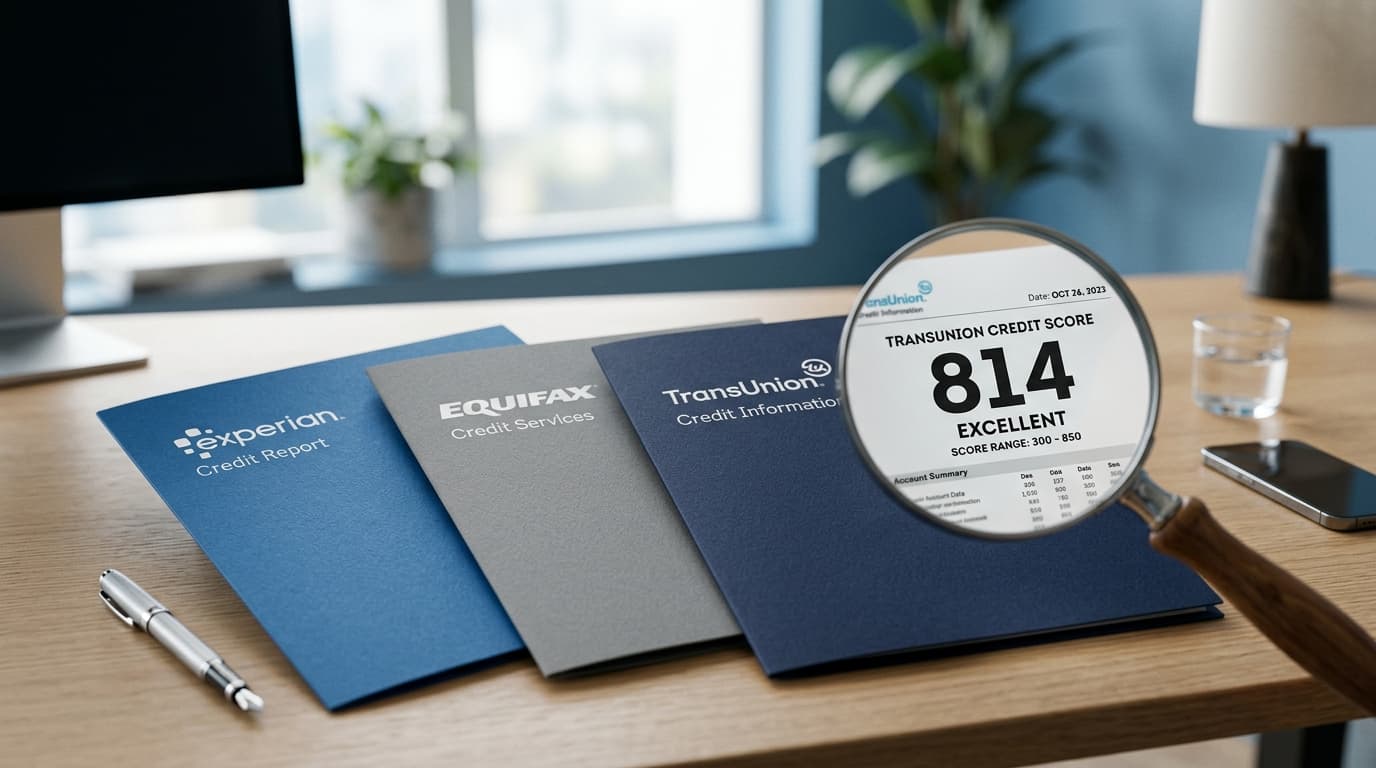
This is one of the main areas where professional credit repair actually delivers real value — knowing exactly which items are legally disputable, how to structure those disputes, and following through across all three bureaus (Equifax, Experian, and TransUnion) simultaneously.
Don't Close Old Accounts
Closing a credit card — even one you never use — reduces your available credit limit and can shorten your average account age. Both hurt your score. Keep old accounts open, even if the card sits in a drawer.
Ask for a Credit Limit Increase on Existing Cards
If you've been paying on time for 6+ months, call your card issuer and ask for a credit limit increase without a hard inquiry (some will do this via a soft pull). A higher limit with the same balance = lower utilization = better score.
When Professional Credit Repair Makes Sense
DIY credit repair works — if you have the time, attention to detail, and patience to track disputes across three bureaus, follow up on every response within FCRA-required timelines, and stay organized through the whole process. For a lot of people, that's not realistic alongside a full-time job and everything else life throws at you.
Professional credit repair makes the most sense when:
- You have multiple negative items across several accounts
- You're dealing with collections, charge-offs, or items from identity theft
- You have a specific financial goal on a timeline — a loan, a mortgage, a lease — and can't afford to get the process wrong
- You've already tried disputing on your own and the bureaus keep "verifying" items you know are inaccurate
At Crowned Credit, we work through your full credit picture using FCRA and FDCPA rights to challenge negative items strategically — not just blasting generic dispute letters at bureaus. Our team reviews what's actually disputable, builds the case file, and works through all three bureaus on your behalf.
Plans start at $150 enrollment + $99/month for the Essential plan, or the Accelerated plan at $249 + $199/month for more aggressive dispute management. If you'd rather do a one-time engagement, the Momentum plan is a one-time, prepaid program priced by custom quote.
You can book a free consultation here to find out what's actually dragging your score down and what the realistic path forward looks like for your situation. No pressure, no scripts — just an honest conversation about your credit.
Call us directly at 336-310-0090 if you'd rather talk it through first. See our full pricing and plan details here.
How Long Does It Take to Improve Your Score Enough for a Better Loan?
Depends on what's on your report. Here's a rough timeline for realistic scenarios:
- Only issue is high utilization: Pay balances down below 10% and you may see results within 30–45 days (next billing cycle reporting).
- Inaccurate negative items: Disputes must be investigated within 30–45 days under the FCRA. If items are removed, the score change shows up quickly.
- Accurate late payments or collections: These are harder. On-time payment history going forward helps, but accurate negative items stay on your report for 7 years. Goodwill adjustment letters and pay-for-delete negotiations are sometimes effective — but not guaranteed.
- Bankruptcies or serious derogatory items: Recovery takes 2–4 years of consistent positive behavior, though scores can start meaningfully recovering well before the item drops off entirely.
Bottom Line
You can get a personal loan with a 580 credit score. That part's true. But at the rates that come with a 580, you might be doing more financial damage than the loan is worth. The smarter play — whenever you have even a few months — is to move that score before you borrow.
Check your credit reports for errors first (free at AnnualCreditReport.com). Pay down utilization. Don't open new accounts before applying. And if the repair work is more complex than you want to tackle solo, get professional help before you lock yourself into a high-rate loan you'll be paying on for three years.
Want to know where you actually stand? Start with a free consultation — we'll pull your credit profile and tell you exactly what's possible and how quickly.
📋 CROA Disclaimer: Crowned Credit is a credit repair organization as defined by federal law, including the Credit Repair Organizations Act (CROA). Results vary based on individual credit profiles. We cannot guarantee specific score increases or the removal of any particular item. Any credit score improvements mentioned in this article are examples for educational purposes only — your results will depend on the specific items on your credit report and lender decisions outside our control. You have the right to dispute inaccurate information on your credit report directly with the credit bureaus at no cost. You may cancel your Crowned Credit agreement within three business days of signing without penalty.