How to Dispute Your LexisNexis Report in 2026 (Step‑by‑Step, With Scripts)

Ashley Rivera
Credit Repair Specialist
Quick take: If you keep getting denied for credit, insurance, apartments, or even utilities despite cleaning up your credit reports, check your LexisNexis file. It aggregates public records (bankruptcies, liens, judgments, prior addresses, claims history) and private data many lenders and insurers quietly use. In 2026, the fastest path is to request your consumer disclosure, identify errors, then dispute anything that’s inaccurate, incomplete, outdated, or unverifiable under your FCRA rights.
What is LexisNexis and why does it matter?
LexisNexis Risk Solutions compiles data about you from courts, government sources, and private databases. Banks, insurers, employers, and landlords use this data to assess risk. If there’s a mismatch (wrong DOB), duplicate entry, or an old public record that should no longer report, it can quietly tank approvals—even if your Experian, Equifax, and TransUnion files look clean.
- Common problem areas: bankruptcy entries that don’t belong to you or are still showing after discharge/aging, judgments tied to a different person with a similar name, duplicate addresses, or records with missing docket numbers.
- Where it shows up: credit denials with vague reasons, insurance premium spikes, background check hiccups, or bank account refusals after ChexSystems/ ChexSystems looks okay.
Step 1 — Request your LexisNexis consumer disclosure (free)
You have the right to see your file. Request it once per year at no cost. Expect it to arrive by mail or secure portal within ~10 business days.
- Online: LexisNexis consumer portal (search: “LexisNexis Risk consumer disclosure request”).
- Phone: 1‑866‑897‑8126 (automated request line referenced by multiple legal guides).
- Mail: LexisNexis Risk Solutions Consumer Center, P.O. Box 105108, Atlanta, GA 30348‑5108 (include full name, current + prior addresses, DOB, last 4 of SSN, and a copy of your government ID).
Documentation you’ll want handy: government ID, proof of address, docket printouts if disputing a court item, discharge papers if bankruptcy is reported incorrectly, and any correspondence supporting your position.
Step 2 — Review for four dispute triggers
Under the Fair Credit Reporting Act (FCRA), LexisNexis must maintain maximum possible accuracy and reinvestigate disputes within ~30 days. As a consumer (or with a professional like Crowned Credit helping), you can challenge items that are:
- Inaccurate: wrong amounts, wrong dates, not your record (mixed file), wrong middle initial, or missing/incorrect docket numbers.
- Incomplete: missing disposition, missing discharge, or missing case outcome that makes it look negative when it’s actually resolved.
- Outdated: aged beyond reporting guidelines or clearly stale.
- Unverifiable: LexisNexis or the source can’t reasonably verify the record as reported.
Important: At Crowned Credit, we dispute all negative items strategically using your FCRA rights. Furnishers and data brokers must verify what they report. If they can’t, they must correct or remove it.
Step 3 — File your dispute (best practice: send by certified mail)
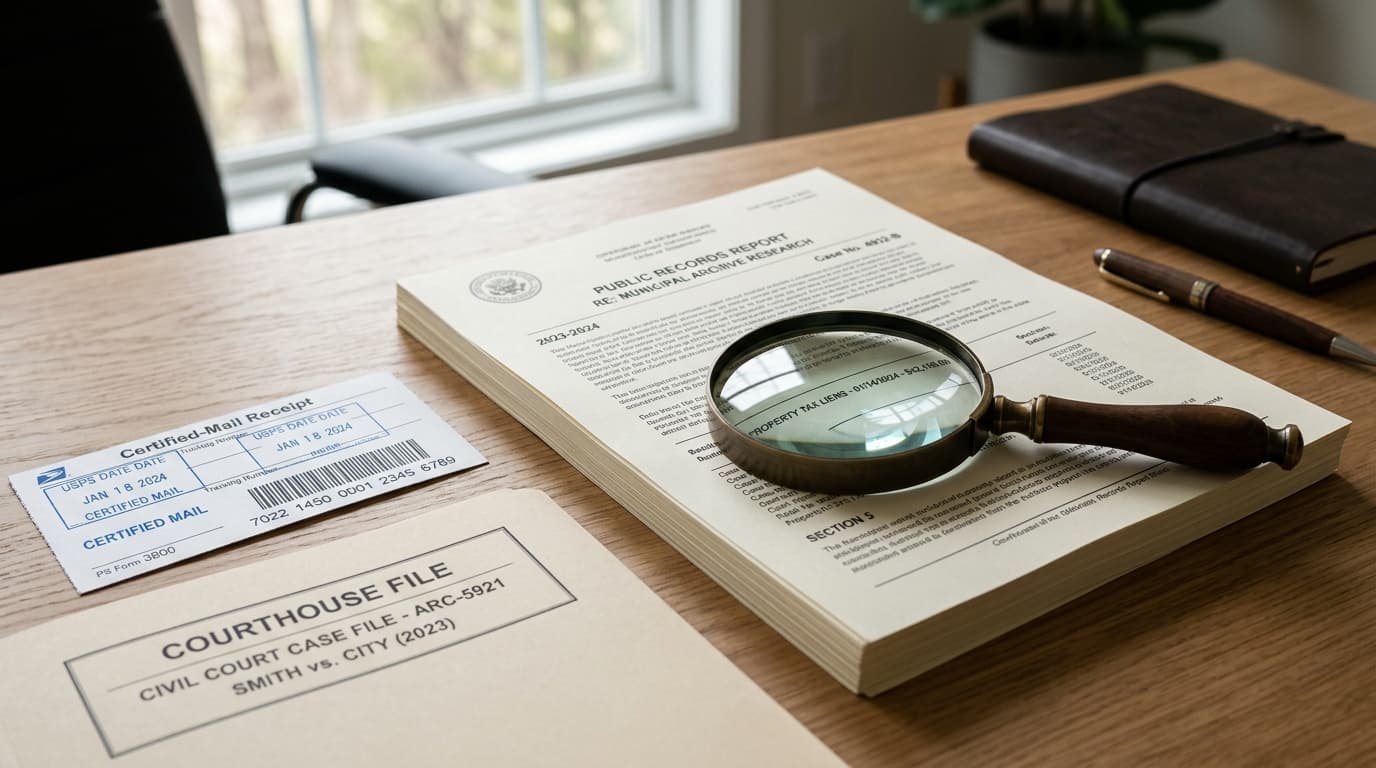
You can dispute online, but certified mail creates a clean paper trail. Include copies (not originals) of your ID and proofs. Keep the green USPS receipt.
- Mail to: LexisNexis Risk Solutions Consumer Center, P.O. Box 105108, Atlanta, GA 30348‑5108
- Subject: FCRA Dispute – Request for Reinvestigation and Method of Verification (FCRA §611)
Template language you can adapt:
"I am disputing the following items in my LexisNexis consumer file as inaccurate, incomplete, outdated, or unverifiable. Please conduct a reasonable reinvestigation under FCRA §611 and provide me with the method of verification, including the name, address, and telephone number of each furnisher and the precise sources you used. If you cannot verify the information with maximum possible accuracy, please delete or correct it and send me an updated consumer disclosure."
List each item with details: docket number, court, date, what’s wrong, and what the correct information should be. Attach supporting documents (e.g., discharge order, court printout showing vacated/dismissed).
What happens next (and realistic timelines)
- Investigation window: Typically ~30 days from receipt of your dispute. If you add new evidence midstream, they can extend briefly.
- Outcomes: corrected, deleted, updated with more detail, or verified as reported.
- If verified but you disagree: request the method of verification (who verified, when, and how). Escalate to the data furnisher and consider a CFPB complaint if the reinvestigation was superficial.
If you’re actively applying for financing, ask lenders to re‑pull after corrections. For mortgage timelines, also review rapid rescore to speed updates with participating lenders.
Security freeze: when it helps (and when it doesn’t)
A security freeze on LexisNexis can block certain pulls that don’t benefit you (for example, some pre‑screened offers). It won’t magically delete records, and some industries may require you to temporarily lift the freeze during applications.
- How to freeze: Use the LexisNexis portal or mail a freeze request to the Consumer Center (address above) with copies of your ID and proof of address.
- When to use: identity theft risk, excessive unsolicited pulls, or you’re not applying for new credit soon.
Bankruptcies, judgments, and public records: common fixes
Public records are the most error‑prone because they’re pulled from multiple sources. Examples we routinely see—and resolve with documentation:
- Bankruptcy mismatch: Chapter reported with the wrong filing date or still showing without discharge details. Provide the discharge order.
- Judgment not yours: Same name, different person. Provide a notarized identity statement, address history, and any court lookup showing different DOB.
- Duplicate or stale liens: Liens that were released years ago but still show open. Provide the release document from the recorder’s office.
After correction, some consumers also add positive trade lines to strengthen scores while the dust settles. See our guides on credit utilization and building primary revolving tradelines. Authorized user tradelines are a legitimate strategy when used wisely and transparently.
Sample dispute outline you can copy
- Header with name, SSN last 4, current + prior addresses, DOB, phone, and email
- Statement of dispute rights under FCRA §611 and request for method of verification
- Itemized list per record with docket, court, date, issue, and requested action
- Exhibits: ID, proof of address, court orders, discharge, releases, etc.
- Certification of accuracy, signature, date
If LexisNexis “verifies” without fixing obvious errors
Don’t stop at the first round if you have evidence. Send a second dispute referencing your first letter, add any new exhibits, and demand the method of verification (names, phone numbers, and addresses of the sources). If the response is vague or boilerplate, escalate:
- Dispute directly with the furnisher (e.g., court clerk or data vendor listed on your disclosure).
- File a CFPB complaint detailing dates, copies of letters, and the harm caused (denials, higher premiums, etc.).
- For mortgage timelines, coordinate with your loan officer and consider a rapid rescore after corrections.
How Crowned Credit helps
We run a full-file audit across the big three bureaus and specialty bureaus like LexisNexis. Then we dispute every negative item strategically using your FCRA rights—targeting accuracy, completeness, timeliness, and verifiability. We also guide you on adding positive credit (secured cards, credit-builder loans, or authorized user options) to accelerate score recovery and real approvals.
- Plans: Essential $150 enrollment + $99/mo, Accelerated $249 enrollment + $199/mo, or Momentum by custom quote, one‑time.
- Talk to a real person: 336‑310‑0090
Next steps (do this now)
- Request your LexisNexis consumer disclosure today.
- Highlight anything inaccurate, incomplete, outdated, or unverifiable.
- Send a certified dispute with exhibits and keep copies.
- When the results arrive, verify corrections and ask lenders to re‑pull if you were denied before.
- Want a team to run point? Book a consultation. We’ll audit your whole profile and take over the heavy lifting.
Helpful resources on our site
- FCRA 609 letter guide (what it is and when to use it)
- Hard inquiry removal
- Goodwill letter for late payments
- Pay for delete letter (collections)
- See pricing or book now
- Learn: Credit utilization • Learn: Secured cards • Learn: AU tradelines
CROA & results disclaimer: We never guarantee specific outcomes, score increases, or timelines. Credit improvement depends on your files, creditors, and the bureaus. Our role is to use your legal rights to challenge and correct anything that’s inaccurate, incomplete, outdated, or unverifiable—and to help you build new positive history the right way.
If you’re done wasting applications on silent data mistakes, book a call with Crowned Credit. We’ll pull your full picture, prioritize the fast wins, and get a plan in motion.