Account Closed by Credit Grantor? What It Means on Your Credit Report in 2026

Ashley Rivera
Credit Repair Specialist

You check your credit report, see the phrase account closed by credit grantor, and your first thought is usually some version of: Great. What did I do wrong?
Fair reaction. The wording sounds bad.
But here’s the truth: that remark by itself does not automatically mean you are in trouble. In a lot of cases, it simply means the lender closed the account instead of you. That can happen because of inactivity, a portfolio cleanup, a product change, fraud concerns, or a risk review. Sometimes there was a problem on the account. Sometimes there wasn’t.
The key is not to panic over the comment. The key is to figure out what kind of account was closed, why it was closed, and whether the closure changed anything important in your credit profile.
If you are trying to qualify for a mortgage, auto loan, apartment, or a better credit card, those details matter a lot more than the scary wording. And if the account is being reported inaccurately, that is where your rights under the FCRA start to matter.
If you want a professional review of the full file, you can book a consultation with Crowned Credit or compare plans on our pricing page.
Short answer: what does “account closed by credit grantor” mean?
It means the creditor closed the account, not you. That’s it at the most basic level.
Experian has explained that this remark is not automatically negative and is not the part that gets scored. What matters more is the rest of the tradeline:
- whether the account was paid as agreed
- whether there were late payments before it closed
- whether the balance is still high
- whether the closure hurt your utilization
- whether the account is being reported accurately across the bureaus
So if you only remember one thing from this article, remember this: the phrase itself is usually not the main problem; the surrounding data is.
Why a creditor might close your account
People assume lenders only close accounts when somebody misses payments. That does happen, but it is far from the only reason.
Here are some common reasons an account gets closed by the creditor:
- Inactivity. If you haven’t used the card in months or years, the issuer may shut it down.
- Risk review. A lender may lower exposure if your overall profile changed, your score dropped, or your debt climbed.
- Delinquencies or over-limit behavior. Missed payments can absolutely trigger a closure.
- Fraud or security concerns. Suspicious activity, lost cards, or compromised accounts can lead to closure and reissue.
- Product changes. Sometimes the issuer retires one card and moves customers into another product.
- Business decisions. A store card program may end, a lender may exit a segment, or underwriting standards may tighten.
Same comment. Very different situations.
That is why reading the remark in isolation is a mistake. A closed account with a perfect payment history is one thing. A recently closed card with 90-day late payments and a maxed-out balance is something else entirely.
Does “closed by credit grantor” hurt your credit score?
The comment itself usually does not hurt your score. But the closure can create side effects that do.
Here is the simple version:
- The remark is not the issue.
- The math around your profile may be.
For example, say you had three credit cards with a total of $10,000 in limits and $2,500 in balances. Your utilization was 25%.
Now imagine the lender closes a card with a $4,000 limit while your balances stay the same. Suddenly your available credit drops to $6,000. That same $2,500 balance now means you are using about 42% of your available revolving credit.
That jump can make your scores look worse, even though you did not spend another dollar.
If you need a deeper breakdown, read how credit utilization works and our guide on whether closing a credit card hurts your credit score.
When this comment is probably not a big deal
Sometimes this is mostly noise.
It is often less serious when:
- the account was closed in good standing
- the balance is zero
- you have plenty of other open revolving credit
- your overall utilization is still low
- the account was old but your profile is already strong and diversified
In that kind of file, the closure may be annoying, but it does not necessarily create a major lending problem. You may see no meaningful score change at all, or only a small one.
That said, if the closed account was one of your oldest cards or one of your biggest limits, I would still pay attention. Those are the closures that can quietly change your profile more than people expect.
When it is a problem
This gets more serious when one of these is true:
- The account closed with late payments attached.
- The card carried a high balance and your utilization shot up.
- You are about to apply for a mortgage, auto loan, or apartment.
- The account is being reported inaccurately.
- The lender closed multiple accounts at once.
Here is a common real-world example. Someone is sitting around a 621 mortgage score. A card issuer closes an unused $7,500 line. Nothing else changes, but utilization spikes and the file gets thinner. That person may now be fighting for a pricing tier, or even trying to recover enough points to get approved cleanly.
That is why timing matters. A closure that barely matters during a quiet season can become a real headache when you are 30 days from applying for financing.
How to tell whether the closure was harmless or risky
Pull all three reports and check the full tradeline. Don’t rely on a summary app.
Look at:
- account status — closed, charged off, paid, transferred, etc.
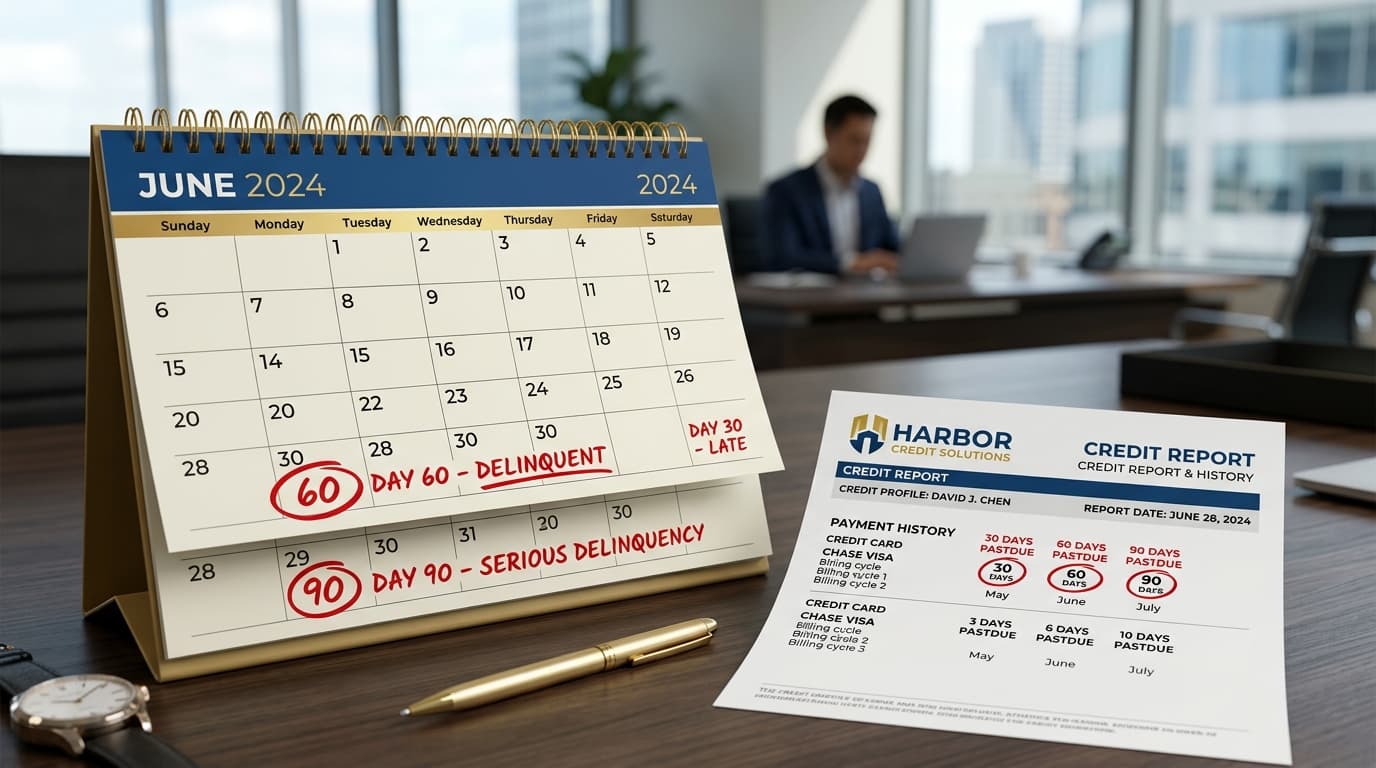
- payment history — were there any 30, 60, or 90-day lates?
- balance — is it zero, low, or still high?
- credit limit — did losing that limit materially raise utilization?
- remarks/comments — do they match what actually happened?
- consistency — is the same information being reported across Equifax, Experian, and TransUnion?
If you need help reading the details, start with our credit report guide and our learn page on understanding your credit report.
Can you dispute “closed by credit grantor”?
You can dispute it if it is inaccurate. You should not dispute accurate information just because you do not like how it looks.
Here is the right frame:
- If you closed the account and the report says the creditor did, that may be worth disputing.
- If the account should show paid as agreed but instead looks derogatory, that may be worth disputing.
- If the balance, dates, remarks, or payment history are wrong, that may be worth disputing.
- If the account is being reported accurately, the fix is usually not a dispute. It is a strategy problem.
This is where people waste time. They fire off weak disputes on accurate accounts, get nowhere, and then assume nothing can be done. In reality, the better move may be reducing utilization, protecting open lines, or attacking the accounts that are actually dragging the file down.
If you want the legal background, read your FCRA dispute rights and what the FCRA is.
What to do right now if a lender closed one of your cards
1. Check whether your utilization just changed
This is the first thing I would look at. A closed card with a decent limit can change your ratios fast.
If utilization jumped, lowering balances on your remaining cards may help more than obsessing over the comment itself.
2. Call the creditor and ask why it happened
Be direct. Was it inactivity? Risk review? A product conversion? Delinquency? Fraud? Sometimes the answer is simple, and sometimes they may even tell you whether reopening is possible.
3. Avoid stacking new applications out of panic
People see one account close, then immediately apply for three new cards to “fix” available credit. That can backfire fast if your profile is already shaky.
If you are thinking about adding a new line, be strategic. Understand the difference between hard vs. soft inquiries and whether you are actually improving the file or just adding more noise.
4. Fix any negative reporting attached to the account
If the bigger issue is not the closure but the late payments that came before it, focus there. A single inaccurate late mark can do more damage than the closure remark ever will.
That is where resources like our goodwill letter guide and late payment removal guide can help.
5. Protect the accounts you still have open
One closed card is manageable. A pattern of closures plus late payments plus high utilization becomes a bigger mess. Keep the remaining lines current, active, and under control.
What if the closure happened right before a mortgage or car loan?
That is where this issue goes from mildly annoying to strategically important.
If you are close to applying, do not guess. Have someone run the numbers on the current file. In many cases, the right move is not arguing about the closure. It is cleaning up the things that influence approval faster, like utilization, inaccurate negatives, or unresolved collections.
Read credit score requirements for a mortgage and how rapid rescore works if you are in that window.
CROA Disclosure: No company can legally promise a specific credit score increase, approval result, or timeline. Any score movement depends on your total profile, the information being reported, lender standards, and how quickly updates are reflected by the bureaus.
When professional credit repair makes sense
If the account was closed accurately and in good standing, you may not need full credit repair just for that one comment.
Professional help makes more sense when:
- the closed account also has inaccurate late payments, balances, or dates
- multiple negative items are hitting at once
- you are trying to qualify for financing on a deadline
- your reports are inconsistent across bureaus
- you need a plan for the full file, not just one remark
Crowned Credit helps clients challenge inaccurate, incomplete, outdated, and unverifiable negative items across all three bureaus while building a smarter strategy around the whole profile. If you want help, book now or call 336-310-0090.
Current pricing:
- Essential: $150 setup + $99/month
- Accelerated: $249 setup + $199/month
- Momentum: custom quote, one-time
The bottom line
“Account closed by credit grantor” is not automatically bad news. It usually means the lender closed the account, and the remark itself is not what damages scores.
What matters is whether the closure changed your utilization, whether the account carried negative history, and whether the reporting is accurate.
If the tradeline is wrong, dispute the inaccuracies. If the tradeline is accurate, stop fixating on the wording and focus on the parts of your file that actually move the needle. That is the difference between spinning your wheels and making real progress.
Disclaimer: Results vary based on each person’s credit profile, reporting history, and lender standards. Credit score impacts and timelines are never guaranteed. This content is for educational purposes only and should not be considered legal or financial advice. Crowned Credit assists clients in disputing inaccurate, incomplete, outdated, or unverifiable information on credit reports in accordance with the Fair Credit Reporting Act (FCRA) and the Credit Repair Organizations Act (CROA).