Charge-Off vs. Collection in 2026: What’s Worse for Your Credit?

Ashley Rivera
Credit Repair Specialist

You miss payments on a credit card for months. Then two ugly words start showing up on your credit report: charge-off and collection. A lot of people assume they mean the same thing. They do not.
That distinction matters because the strategy is different depending on what is actually being reported, who owns the debt now, and whether the account is being reported accurately, completely, and with enough documentation to survive a proper dispute.
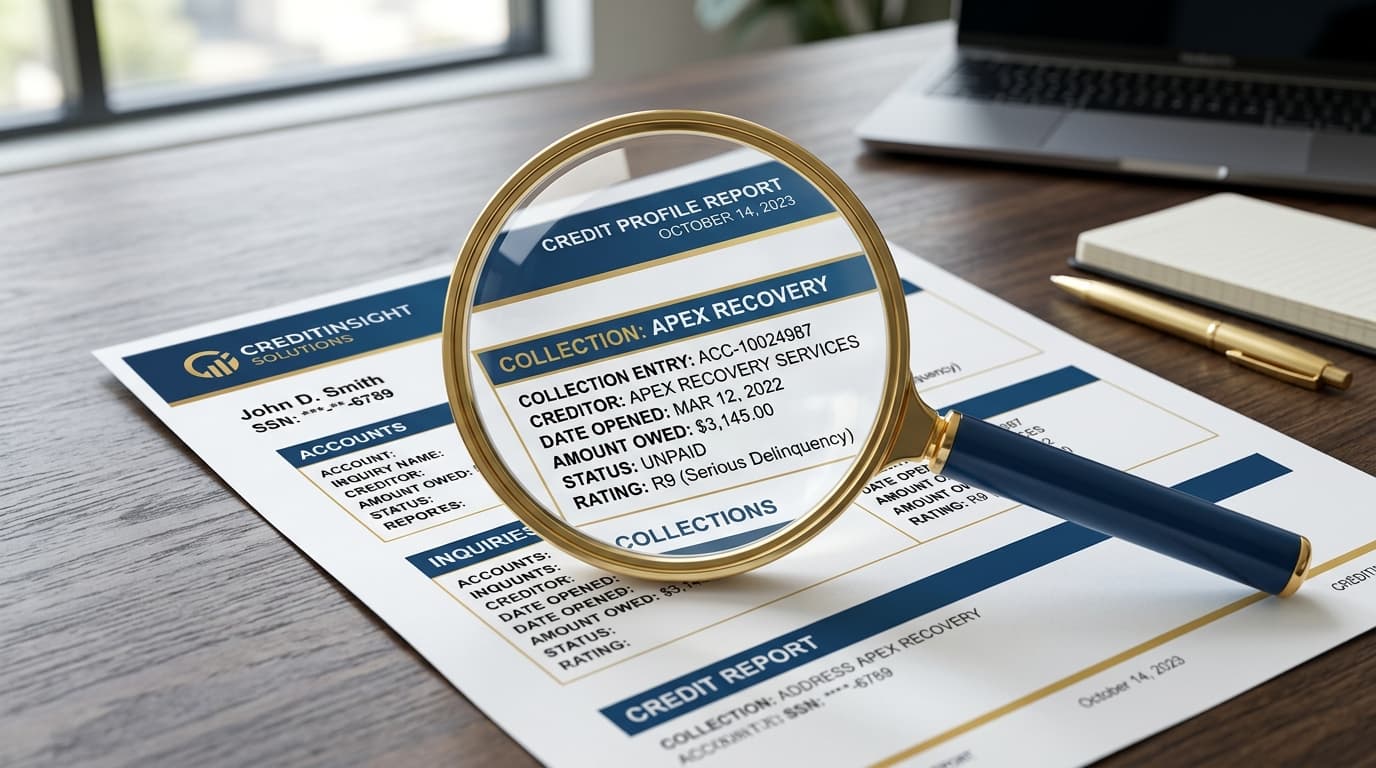
If you are trying to decide what to tackle first, here is the short version: a charge-off is usually the original creditor declaring the account a loss after prolonged nonpayment, while a collection is a separate recovery account that may appear after the debt is transferred or sold. In some cases, you end up with both. That is when people really get crushed, because one bad account turns into two negative entries tied to the same debt.
This guide breaks down the difference, which one is usually worse, how each affects your credit, and what to do if either one is sitting on your report right now. If you want a team to review the full file for you, you can book a consultation with Crowned Credit or compare plans on our pricing page.
What Is a Charge-Off?
A charge-off happens when an original creditor decides your account is unlikely to be collected through normal billing. For revolving accounts like credit cards, that usually happens after about 180 days of delinquency. The lender writes the account off as a loss for accounting purposes.
That does not mean the debt disappears. You can still owe it. The creditor can still collect, transfer it, or sell it.
On a credit report, a charge-off may show up with language like:
- Charged off
- Account charged off
- Profit and loss write-off
- Bad debt, charge-off
If you want the full mechanics, read our resource on how charge-offs work and our related blog on removing charge-offs from your credit report.
What Is a Collection?
A collection account usually appears after a debt is assigned to or purchased by a collection agency. That agency then starts trying to recover the balance. Collections can come from credit cards, personal loans, utility bills, medical debts, apartments, and more.
Sometimes the original creditor still owns the debt and just hires a collector. Other times the debt is sold outright. Either way, the collection agency may begin reporting its own tradeline to the bureaus.
That means a single unpaid account can create this sequence:
- Late payments stack up
- The original account is charged off
- The debt is moved or sold
- A separate collection account appears
That is why people often ask, "Why do I have two negative accounts for one debt?" A lot of the time, that is exactly what happened.
For a deeper breakdown, see what collections are and our guide on what to do when collections show on your report.
Charge-Off vs. Collection: The Real Difference
Here is the cleanest way to think about it.
- Charge-off: the original creditor is reporting that the account seriously defaulted and was written off internally
- Collection: a collector is reporting an effort to recover the debt after default
They are related, but they are not interchangeable.
A charge-off tells lenders, "This account went badly with the original creditor." A collection tells lenders, "This debt progressed far enough that outside recovery got involved." When both appear, the file looks more distressed than if you only had one negative mark.
Which One Hurts Your Credit More?
Most people want a simple answer. The honest answer is: both are serious, but a charge-off paired with a collection is often worse than either one alone.
If you force me to separate them, a charge-off from the original creditor is often viewed as the heavier core derogatory event because it reflects a prolonged default relationship with the lender itself. But from a scoring and underwriting standpoint, a fresh collection account can also be brutal, especially if it is recent.
Here is what lenders and scoring models typically care about:
- Recency: A new derogatory mark usually hurts more than an older one
- Severity: Charge-offs and collections are both major negatives, not minor dings
- Stacking: Multiple derogatories tied to the same debt can compound the damage
- Balance and status: Open, unpaid negative accounts often look worse than resolved ones, though "paid" does not automatically mean "removed"
So if you have a two-year-old paid collection and no charge-off, that may be less damaging than a brand-new unpaid charge-off. If you have a charge-off and a fresh collection from the same debt, that can be worse than either one standing alone.
How Much Can a Charge-Off or Collection Drop Your Score?
There is no universal number because your starting file matters. A person with a 760 score and very clean history can lose far more points from one serious derogatory than someone who is already sitting in the high 500s.
Still, the pattern is usually pretty consistent:
- A single major derogatory can cost dozens of points
- A clean file can see a much steeper drop than an already damaged file
- Two entries tied to the same debt can make approvals harder even beyond the raw score impact
That last part matters. People focus on score only. Underwriters also look at the story behind the file. A report showing late payments, a charge-off, and a collection paints a very different picture than a report showing one isolated old issue that has already aged.
CROA Disclosure: No company can legally guarantee a specific credit score increase or promise that a charge-off or collection will be removed within a certain timeframe. Results depend on your report data, creditor and bureau responses, and how the accounts are being reported.
Can You Have Both on the Same Debt?
Yes, and it is common.
Example: You stop paying a $4,800 credit card. After months of missed payments, the bank charges it off. Later, it sells the debt to a third-party collector. Now your report may show:
- The original credit card account as a charge-off
- A new collection account from the debt buyer
That does not automatically mean both entries are being reported correctly. The details still have to be accurate, complete, and verifiable under the Fair Credit Reporting Act. Dates, balances, ownership, account status, and other reporting fields matter. If one or both entries cannot be properly verified, they may be challengeable.
You can learn more about that process in our guide to how credit disputes work and our explainer on what the FCRA does for consumers.
How Long Do Charge-Offs and Collections Stay on Your Credit Report?
In general, both charge-offs and collections can remain on your credit report for about seven years from the original delinquency timeline, not seven years from when a collector bought the debt.
That distinction is huge.
If the account first went delinquent in June 2022, a later sale to a debt buyer in 2025 does not give the account a fresh seven-year life on your report. If a collector or bureau is effectively extending the timeline by reporting the dates incorrectly, that is the kind of issue that deserves a closer look.
Do not confuse the credit reporting period with the time limit to sue on a debt. Those are different rules. For that side of the equation, read our guide on the statute of limitations on debt.
What Should You Do First If You Have a Charge-Off or Collection?
Do not panic and do not start throwing money blindly at old debt before you understand the report.
A better first move looks like this:
- Pull all three credit reports and see exactly what is reporting
- Identify whether the account is a charge-off, a collection, or both
- Check the dates, balances, ownership, and account status
- Figure out whether the reporting is accurate and fully verifiable
- Decide on a strategy before paying, settling, or disputing
That order matters. People get in trouble when they act before they understand the file. A payment can change leverage. A settlement can update status without deleting the account. A rushed dispute can be weak if it is not targeting the right reporting problems.
Should You Dispute a Charge-Off or Collection?
If the account is being reported inaccurately, incompletely, inconsistently, or without sufficient verification, yes, it may make sense to dispute it.
Under the FCRA, credit bureaus and furnishers have duties when information is challenged. The point is not to send some lazy internet template and hope for magic. The point is to force the reporting party to stand behind the data they are publishing about you.
That can include reviewing issues like:
- Incorrect balance
- Wrong date of first delinquency
- Duplicate reporting tied to the same debt
- Inconsistent ownership or account status
- Missing or contradictory payment history details
- Collection reporting that does not line up with the original tradeline
Crowned Credit helps clients challenge negative accounts strategically using their consumer rights under federal law. That includes charge-offs, collections, late payments, and other damaging items when the reporting does not hold up the way it should.
Should You Pay It Off?
Sometimes yes. Sometimes no. This is where nuance matters.
Paying or settling a debt can make sense for legal, underwriting, or personal reasons. But people need to stop assuming that payment automatically removes the derogatory account from the report. Usually it does not. More often, the status changes to something like paid collection or charged-off, paid/settled.
That may still help in certain lending situations, but it is not the same as deletion.
This is why strategy matters before action. Depending on the age of the debt, the reporting issues involved, and your end goal, the better path may be to investigate the tradelines first, then decide whether settlement, validation, dispute work, or a combination makes the most sense.
A Simple Example
Say Marcus had a store card with a $2,300 balance. He lost income, missed payments, and stopped opening the statements because he did not want to look at them.
- Month 1 to 5: late payments pile up
- Month 6: the account is charged off by the original creditor
- Month 10: the debt is sold
- Month 11: a collection account appears on his reports
Marcus now thinks he has two separate debts. Really, it is one debt that created two reporting events. His next step should not be random. He needs to see whether both tradelines are reporting correctly, whether the dates line up, who owns the debt now, and what outcome he actually needs.
When Professional Help Makes Sense
If you have one old account and plenty of time, you may decide to handle the legwork yourself.
If your report has multiple derogatories, mixed dates, bureau inconsistencies, or both charge-offs and collections stacked on top of each other, professional help can save time and keep you from making expensive mistakes.
Crowned Credit offers three options:
- Essential: $150 setup + $99/month
- Accelerated: $249 setup + $199/month
- Momentum: custom quote, one-time
If you want us to review your credit report and map out the smartest next move, book a call or call 336-310-0090.
Bottom Line
A charge-off and a collection are not the same thing. A charge-off usually starts with the original creditor. A collection usually shows up after the debt moves into recovery. Either one can hurt. Both together can hit harder.
The right response is not guessing. It is reading the report carefully, checking the facts, and using the right strategy for what is actually there.
If you are staring at either of these right now and you want a real review instead of generic advice, book your consultation with Crowned Credit. We will break down the file, explain what is challengeable, and help you move with a plan.