How to Remove Charge-Offs From Your Credit Report in 2026

Ashley Rivera
Credit Repair Specialist
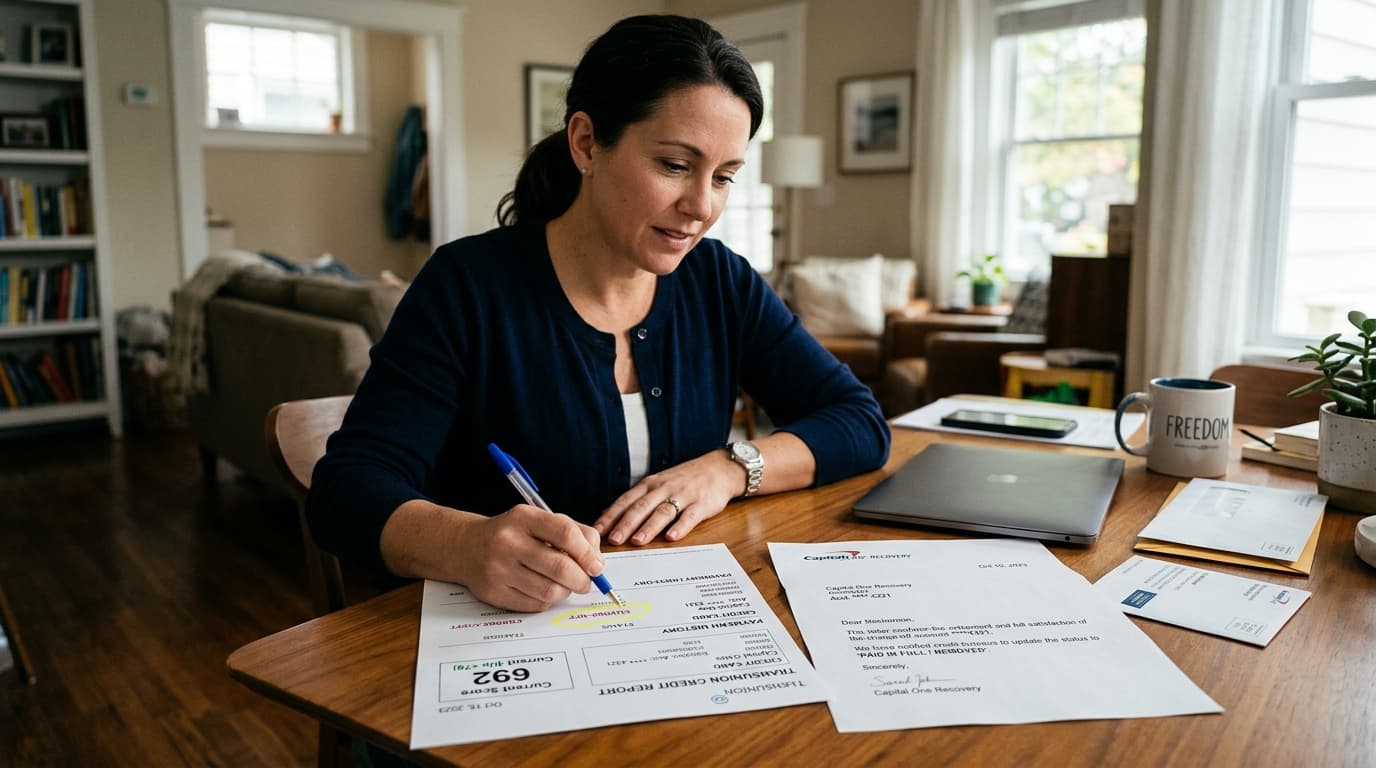
A charge-off sitting on your credit report feels like a financial scarlet letter. One day you're 150 days late on a credit card payment, and the next, your creditor writes the debt off as a loss — and your credit score tanks 80 to 130 points overnight. Suddenly, that mortgage you were eyeing? Gone. The auto loan with a decent rate? Not happening.
But here's what most people don't realize: a charge-off on your credit report doesn't mean you're stuck with it for seven years. Under the Fair Credit Reporting Act (FCRA), you have powerful rights that let you challenge these entries — and in many cases, get them removed entirely.
We've helped thousands of clients at Crowned Credit tackle charge-offs head-on. This guide breaks down exactly what a charge-off is, how it destroys your credit, and the specific strategies that actually work to get them off your report in 2026.
What Exactly Is a Charge-Off?
A charge-off happens when a creditor decides your debt is unlikely to be collected. Legally, creditors are required to charge off consumer debts after 180 days (about 6 months) of non-payment. This is an accounting move — the creditor writes your balance off as a loss on their books.
But — and this is critical — a charge-off does not mean you no longer owe the money. You still owe every penny. The creditor can still pursue collection, sell the debt to a collection agency, or sue you for the balance. The charge-off is simply their acknowledgment that they don't expect you to pay voluntarily.
Here's the timeline of how it typically plays out:
- Day 1-30: You miss a payment. A late payment gets reported to the credit bureaus.
- Day 31-60: Another missed payment. Your score drops further.
- Day 61-120: The creditor ramps up calls and letters. Each missed payment compounds the damage.
- Day 121-180: Final notices arrive. The creditor prepares to write the account off.
- Day 180+: The account is officially charged off. This is the biggest single hit to your credit score.
After the charge-off, one of three things usually happens: the original creditor continues attempting to collect, they hand it to an internal recovery department, or they sell the debt to a third-party collection agency — which means you could end up with both a charge-off and a separate collections entry on your report.
How Much Does a Charge-Off Actually Hurt Your Score?
The damage depends on where your score was before the charge-off hit. Counterintuitively, people with higher scores get hit harder:
- Starting score of 780: A charge-off can drop you to 640-670 — a 110-140 point hit
- Starting score of 680: Expect a drop to 570-610 — roughly 70-110 points
- Starting score of 580: You might lose 40-60 points, landing around 520-540
The reason? Credit scoring models penalize unexpected negative behavior more heavily. Someone at 780 with a clean history getting a charge-off is a bigger red flag to lenders than someone at 580 who already has negative marks.
And the damage compounds. A charge-off affects multiple scoring factors simultaneously:
- Payment history (35% of your score): The missed payments leading up to the charge-off plus the charge-off itself
- Credit utilization (30%): If it's a revolving account, the balance-to-limit ratio goes haywire
- Length of credit history (15%): Losing an account that was in good standing shortens your positive history
- Credit mix (10%): Depending on the account type, this can shift too
How Long Does a Charge-Off Stay on Your Credit Report?
Under the FCRA (specifically Section 605), a charge-off can remain on your credit report for seven years. But the clock doesn't start when the charge-off happens. It starts 180 days after the date of first delinquency — the first missed payment that led to the charge-off.
So if you missed your first payment on January 15, 2023, and the account was charged off on July 15, 2023, the seven-year clock started around July 15, 2023 (180 days from first delinquency). The charge-off should fall off your report by approximately July 2030.
One thing to watch: debt collectors sometimes try to re-age accounts by reporting an incorrect date of first delinquency. If you see a charge-off with a date that doesn't match your records, that's a clear FCRA violation — and grounds for dispute.
5 Strategies to Remove Charge-Offs From Your Credit Report
Seven years is a long time to wait. Here are the actual methods that work to get charge-offs removed sooner.
Strategy 1: Dispute Under the FCRA
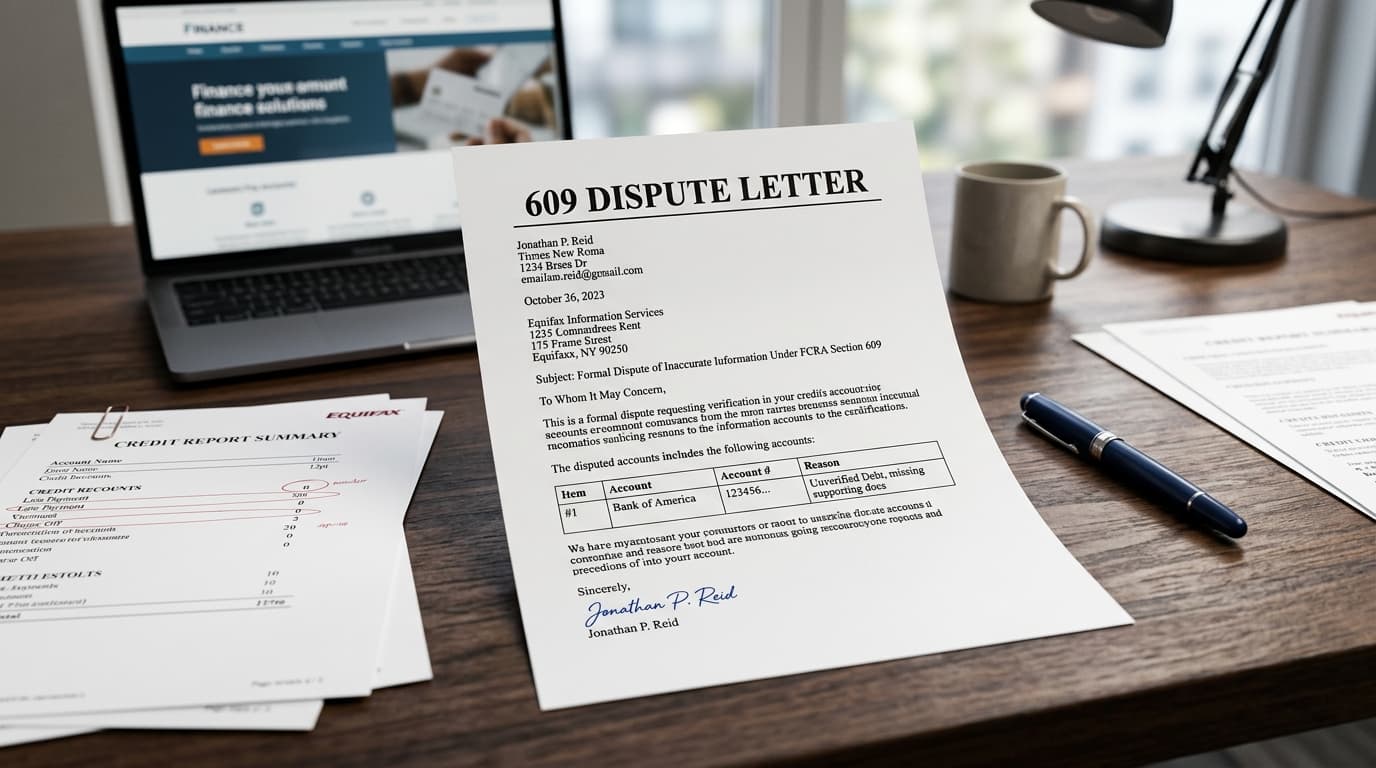
This is the most powerful tool in your arsenal. Under Section 611 of the FCRA, every item on your credit report must be accurate, complete, and verifiable. If a charge-off fails any one of those three tests, the credit bureau is legally required to remove it.
When you file a dispute, the credit bureau has 30 days to investigate (45 days if you submit additional documentation). They contact the creditor, who then has to verify the account details. Here's what makes this effective: creditors don't always keep perfect records. Old accounts get transferred between departments, sold to collectors, merged during acquisitions — and along the way, details get lost or garbled.
Common inaccuracies to dispute on charge-offs:
- Wrong balance amount — Does the reported balance match what you actually owed?
- Incorrect date of first delinquency — This affects when it should fall off your report
- Wrong account number — Even a single digit off makes the entry disputable
- Incorrect payment history — Were payments before the charge-off reported accurately?
- Account listed as open when it should be closed — A charged-off account should show as closed
- Wrong original creditor — Especially common when debts are sold
- Missing charge-off date — If the date isn't reported, the entry is incomplete
Under the FCRA, if the creditor can't verify every detail of the account within the investigation window, the credit bureau must delete the entry. This isn't a loophole — it's your federally protected right.
Strategy 2: Request Validation From the Debt Holder
If your charged-off debt has been sold to a collection agency, you have a separate right under the Fair Debt Collection Practices Act (FDCPA). Within 30 days of first contact from a collector, you can send a debt validation letter requesting proof that:
- The debt is actually yours
- The amount is correct
- They have the legal right to collect
- There's a clear chain of ownership from the original creditor
If the collector can't provide adequate validation, they're legally barred from continuing collection efforts — and the account should be removed from your report. Debt buyers, in particular, often lack original documentation because they purchased debts in bulk for pennies on the dollar.
Strategy 3: Negotiate a Pay-for-Delete Agreement
This one's straightforward but requires negotiation skills. You contact the creditor or collection agency and offer to pay part or all of the balance in exchange for them removing the charge-off from your credit report.
A few tips that make this more effective:
- Always get the agreement in writing before you pay anything. A verbal promise over the phone is worthless.
- Start by offering 30-40% of the balance if the debt has been sold to a collector. They likely bought it for 4-8 cents on the dollar, so even 30% is a massive profit for them.
- Use certified mail with return receipt. You want a paper trail.
- Know that creditors aren't legally obligated to agree. Some will, some won't. Original creditors are less likely to agree than third-party collectors.
Fair warning: there's no guarantee the creditor will actually follow through, even with a written agreement. But for many people, this is a viable path — especially when combined with disputing any remaining reporting errors afterward.
Strategy 4: Send a Goodwill Letter
If you've already paid the charged-off debt (or it's been settled), a goodwill letter asks the creditor to remove the entry as a gesture of goodwill. This works best when:
- You have a legitimate reason for the missed payments (job loss, medical emergency, divorce)
- You've since established a positive payment history
- The creditor values the customer relationship
Goodwill letters work better with original creditors (banks, credit card companies) than with collection agencies. Be genuine, be specific about your circumstances, and make it clear you've turned things around. There's no legal obligation for them to comply, but some creditors will — especially if you're a current customer.
Strategy 5: Work With a Professional Credit Repair Team
There's a reason professional credit repair exists. Disputing charge-offs effectively isn't just about sending form letters to the bureaus. It requires knowing which inconsistencies to target, how to escalate when bureaus rubber-stamp investigations, when to involve the CFPB, and how to time disputes for maximum impact.
At Crowned Credit, charge-off removal is one of the most common things we handle. Our team uses FCRA-based dispute strategies that go far beyond the basic online dispute form. We analyze your full credit report, identify every disputable detail on each charge-off, and systematically challenge them across all three bureaus — Equifax, Experian, and TransUnion.
Our plans start at $150 enrollment + $99/month for the Essential plan, or $249 enrollment + $199/month for the Accelerated plan (which includes faster dispute cycles and more aggressive strategies). For clients who want everything handled at once, our Momentum plan is a one-time, prepaid investment priced by custom quote.
Should You Pay a Charge-Off Before Disputing?
This is one of the most common questions we get, and the answer matters more than you'd think.
Generally: dispute first, pay second. Here's why.
Paying a charge-off changes the status from "charged off" to "charged off — paid" or "charged off — settled." While that's slightly better in the eyes of some lenders, it does not remove the charge-off from your report and often has minimal impact on your score. You've now paid the debt but still have the negative mark.
Worse, paying can actually reset certain timelines. While it shouldn't reset the seven-year FCRA reporting clock (that's tied to the original date of first delinquency), paying an old debt can restart the statute of limitations for lawsuits in some states — meaning the creditor could potentially sue you for any remaining balance.
The smarter move: dispute the charge-off under the FCRA first. If it gets removed, you're done. If it doesn't, then consider negotiating a pay-for-delete. This way, you preserve your leverage.
Watch Out for "Zombie Debt" Charge-Offs
Zombie debt is an old charge-off that suddenly reappears on your credit report — sometimes years after you thought it was resolved. This happens when collectors buy old debt portfolios and report them as new accounts with recent dates.
This is almost always an FCRA violation. The seven-year reporting period is based on the original date of first delinquency, not when a new collector acquires the debt. If you spot this, dispute immediately, file a CFPB complaint, and document everything — willful violations can entitle you to damages.
The Statute of Limitations Factor
Don't confuse the FCRA's seven-year reporting period with your state's statute of limitations on debt. The FCRA clock governs how long a charge-off stays on your report. The state clock determines how long a creditor can sue you — and those timelines are often very different. In North Carolina, for example, the statute of limitations on most debts is 3 years, far shorter than the reporting period. Knowing this distinction gives you real leverage in negotiations.
Charge-Off Disputes: DIY vs. Professional Help
You absolutely can dispute charge-offs yourself. The FCRA gives every consumer that right. Here's the honest breakdown of when DIY works and when professional help makes more sense:
DIY might work if:
- You have one or two charge-offs with clear, obvious errors
- The debts are relatively recent and the original creditor still holds them
- You have time to write detailed dispute letters, track deadlines, and follow up
- You're comfortable reading credit reports and identifying inaccuracies
Professional help makes more sense if:
- You have multiple charge-offs across different creditors
- Debts have been sold to collectors (the paper trail gets murky)
- Previous disputes came back "verified" without real investigation
- You're working toward a specific goal — mortgage approval, auto financing, apartment lease — and need results on a timeline
- You'd rather have experts handle the back-and-forth while you focus on your life
At Crowned Credit, we handle the entire process: pulling your reports, analyzing every entry, crafting targeted disputes, following up when bureaus drag their feet, and escalating when necessary. You can book a free consultation to see exactly what's on your report and what we can do about it.
3 Mistakes That Make Charge-Offs Harder to Remove
We see these constantly. Avoid them.
1. Using generic dispute templates. The credit bureaus see millions of disputes. If your letter looks like it was copied from a template site (because it was), it's more likely to get a rubber-stamp "verified" response. Specific, detailed disputes that reference exact account details and cite specific FCRA sections get taken more seriously.
2. Disputing everything at once. Filing disputes on 15 items simultaneously can trigger the bureaus to classify your disputes as "frivolous" under Section 611(a)(3) of the FCRA, allowing them to skip the investigation entirely. A strategic, phased approach works better.
3. Ignoring the other entries. A charge-off rarely exists in isolation. There are usually late payment entries leading up to it, possibly a collection account afterward, and sometimes a judgment if the creditor sued. All of these need to be addressed together — removing the charge-off but leaving the associated late payments still hurts your score.
What Happens After a Charge-Off Is Removed?
When a charge-off gets deleted from your credit report, the score improvement can be dramatic — though it varies based on the rest of your credit profile. Clients typically see:
- 40-100+ point increase when a single charge-off is removed from an otherwise clean report
- 15-40 point increase per charge-off removed when multiple negative items exist
- Immediate improvement in approval odds for credit cards, auto loans, and mortgages
The score recalculates as soon as the bureau reflects the deletion — usually within one billing cycle.
Take Action on Your Charge-Offs Today
Every month a charge-off sits on your report is another month of higher interest rates, denied applications, and missed opportunities. Whether you tackle it yourself or get professional help, the key is to start now.
If you want expert help removing charge-offs and other negative items from your credit report, schedule a free consultation with Crowned Credit. We'll review your report, identify what's disputable, and lay out a clear plan to get your credit back on track. You can also call us directly at 336-310-0090.
Disclaimer: Credit repair results vary by individual. No company can guarantee specific credit score improvements or the removal of accurate, verifiable information from your credit report. Crowned Credit operates in compliance with the Credit Repair Organizations Act (CROA) and all applicable federal and state regulations.