Deficiency Balance After Repossession in 2026: What You Still Owe and How to Handle It

Ashley Rivera
Credit Repair Specialist
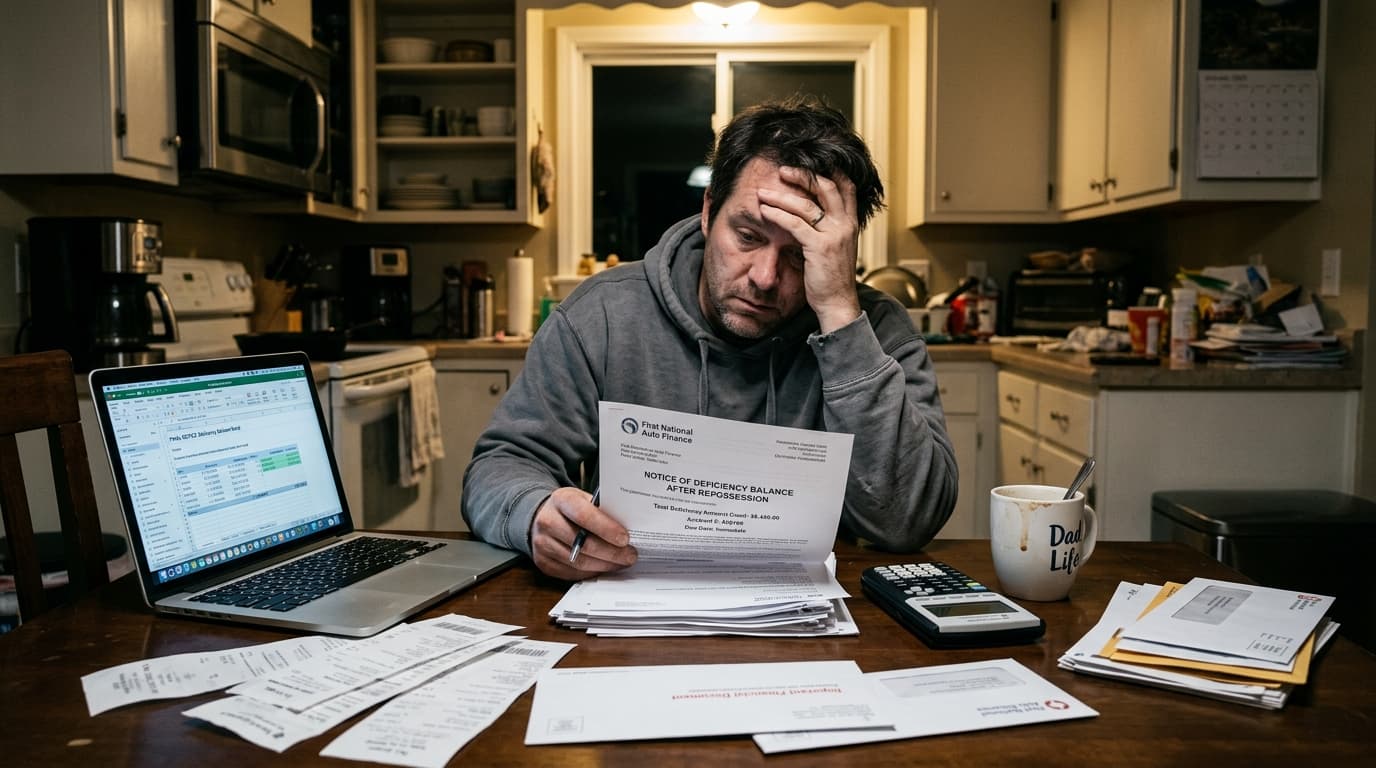
Your car gets repossessed, and a lot of people assume that is the end of the debt. It usually is not. In many cases, the lender sells the vehicle, applies the sale proceeds to your loan, adds repossession and sale costs, and then sends you a bill for the difference. That leftover amount is called a deficiency balance.
This catches people off guard all the time. Someone loses the car, thinks the lender has already been made whole, then gets hit with a $6,800 balance, collection calls, and a credit report that just got worse.
If that is where you are, the move is not to panic. The move is to understand the math, check whether the lender followed the rules, and figure out whether you should negotiate, dispute, or prepare for collection activity. If you want help reviewing the full situation, Crowned Credit can walk you through it. You can book a consultation or compare plans on our pricing page.
What Is a Deficiency Balance?
A deficiency balance is the amount still owed on an auto loan after a repossessed vehicle is sold and the sale proceeds are applied to the account.
Here is a simple example:
- You still owe $18,500 on your car loan
- The lender repossesses the car
- The car sells at auction for $11,000
- The lender adds $1,200 in repossession, storage, and sale fees
Now the math looks like this:
- $18,500 remaining loan balance
- + $1,200 fees
- - $11,000 sale proceeds
- = $8,700 deficiency balance
That $8,700 can still be collected, and in many situations it can be reported, assigned, or sued on depending on state law and the facts of the account.
Why the Balance Can Be So High
People usually expect the car sale to wipe out most of what they owe. That is not how repossession sales usually go.
Repossessed vehicles are often sold at wholesale or auction prices, not the number you think the car is worth on Facebook Marketplace. On top of that, lenders may add:
- Late fees
- Repossession fees
- Storage fees
- Auction or sale fees
- Attorney or collection costs where allowed
So even if your car looked like it was worth around $15,000 to you, the lender may only net $10,000 or $11,000 after the sale process. That gap is where deficiency balances get ugly fast.
If you are trying to understand the earlier stage of the problem, read our guides on repossession and credit, how voluntary repossession affects credit, and how repossessions are reported.
Are You Always Legally Responsible for It?
Not always, and this is where details matter.
In many states, a lender can pursue a deficiency balance after repossession. But the lender generally has to follow state-specific repossession and notice rules. Depending on the state and the contract, mistakes in the process can affect how much the lender can collect or whether it can collect at all.
Issues that can matter include:
- Whether the lender sent the required pre-sale or post-sale notices
- Whether the sale was conducted in a commercially reasonable way
- Whether the fees added were valid and documented
- Whether state law limits deficiency claims in certain transactions
- Whether the statute of limitations has expired
That does not mean every deficiency balance disappears if you dispute it. It means you should not assume the bill is automatically correct just because the lender mailed it.
If you are checking timelines, our state-by-state statute of limitations guide is a useful place to start.
What Shows Up on Your Credit Report?
After a repossession, there are usually two separate issues to think about:
- The repossession itself
- The remaining balance or collection activity tied to the loan
The original auto tradeline may show severe delinquency, charge-off language, repossession remarks, or a balance status update. If the remaining debt is assigned or sold, a separate collection account may also appear.
That is where people get hit twice. First by the repo entry, then by the unresolved deficiency balance.
Under the FCRA, what gets reported has to be accurate, complete, and properly verifiable. If the balance is wrong, the dates are inconsistent, the same debt is being reported in a misleading way, or the account details do not line up across bureaus, that is something you should challenge. Crowned Credit helps clients review negative items strategically and dispute reporting that is inaccurate, inconsistent, incomplete, or cannot be properly verified.
How Much Does a Deficiency Balance Hurt Your Credit?
The biggest damage usually starts before the actual repossession. By the time a lender takes the car, the account often already has multiple late payments, serious delinquency, and maybe a charge-off status building in the background.
The deficiency balance can make things worse if:
- The lender keeps reporting a large balance owed
- The account is sent to collections
- The unpaid balance triggers more collection pressure or underwriting concerns when lenders review your file
- You apply for new credit while the file still looks unstable
What matters most is not guessing at the point drop. It is knowing what is actually reporting right now and what lenders will see when they pull your file.
CROA Disclosure: No company can legally guarantee a specific credit score increase, loan approval, or result within a specific timeframe. Credit outcomes depend on your full profile, the information being reported, whether items are accurate and verifiable, and how creditors and bureaus respond.
Voluntary Repossession Does Not Automatically Solve This
A lot of consumers hear the phrase voluntary repossession and assume it is a cleaner outcome. It can reduce towing drama and sometimes save some fees, but it does not automatically wipe out the remaining debt.
If you voluntarily surrender the vehicle, the lender can still sell it and calculate a deficiency balance afterward. In other words, choosing to give the car back does not usually mean the lender agrees to call the account paid.
That is why you want the exact terms in writing if you are negotiating any kind of surrender or settlement. Assumptions are expensive here.
What To Do Right After You Get the Notice
If a lender or collector says you still owe money after repossession, do these five things first:
- Get the paperwork. You want the loan history, sale notice, post-sale accounting, and a breakdown of fees.
- Check the numbers. Compare the remaining balance, sale price, and added costs. Look for fees that seem inflated, duplicated, or unexplained.
- Review your credit reports. Make sure the account is being reported consistently across all three bureaus.
- Check the age of the debt. State collection timelines matter, especially if the repo happened a while ago.
- Do not promise money on impulse. If you plan to negotiate, know the facts before you start talking numbers.
This is where many people make a bad situation worse. They panic, agree to a payment they cannot sustain, then re-default and end up with the same problem plus fresh collection activity.
Can You Negotiate a Deficiency Balance?
Yes, often you can. Whether the best move is a lump-sum settlement, a payment plan, or a dispute-first strategy depends on who holds the debt and how solid their documentation is.
Here is the practical reality:
- If the lender still owns the debt, settlements may be tougher but still possible
- If the deficiency balance is with a third-party collector, flexibility may increase
- If the documentation is weak or reporting is sloppy, that changes your leverage
Example. Say you owe a claimed deficiency balance of $7,400. After reviewing the file, you notice the sale fees are vague and the reporting is inconsistent across bureaus. That does not guarantee removal, but it absolutely changes the conversation. Now you are not just calling to beg for mercy. You are calling from a position of detail.
If settlement is on the table, get every term in writing before paying. You want the amount, due date, how the account will be treated after payment, and confirmation of whether any balance will remain.
If you need a starting point on negotiation strategy, read how to negotiate debt settlement.
When a Dispute Makes More Sense
Not every deficiency balance should be handled the same way.
A dispute is worth considering when:
- The reported balance does not match the lender's accounting
- The dates are wrong
- The same debt appears duplicated
- The lender or collector cannot clearly support the amount claimed
- The account status is misleading after sale, assignment, or settlement
Under the FCRA, furnishers have to report accurately and be able to verify what they report. That standard matters. A balance does not stay on your report just because a company typed it into a system once.
If you want a deeper foundation, read what the FCRA is, how credit disputes work, and common credit report errors.
What If You Get Sued for the Balance?
Do not ignore it.
That sounds obvious, but people still freeze up when court papers arrive. Ignoring a lawsuit can turn a messy deficiency balance into a default judgment, which creates a bigger collection problem.
If you are sued, you may need to talk to a consumer attorney in your state quickly, especially if:
- You think the lender failed to follow repossession rules
- The amount looks inflated
- The debt is older than you expected
- You are not even sure the plaintiff owns the account
Credit repair and legal defense are not the same thing, but they often overlap in the real world. The legal side determines collectability. The credit side determines what continues damaging your file and what can be challenged or cleaned up.
A Real-World Scenario
Imagine Andre falls behind on a $24,000 auto loan after hours get cut at work. The lender repossesses the vehicle when the balance is around $19,300. The car later sells for $12,100, and another $1,450 in fees gets added. Now Andre is being told he owes $8,650.
He has two choices.
Choice one, he assumes the number is final, ignores the credit reporting, and waits for collections to intensify.
Choice two, he gets the post-sale accounting, checks whether the fees are supported, reviews all three credit reports, and figures out whether to dispute, settle, or both.
That second path is slower on day one, but it usually saves more money and more damage.
When To Bring In Professional Help
You may want help if:
- You are dealing with both a repossession and a collection account
- The deficiency balance is large
- You are planning for a mortgage or auto loan soon
- The reporting is inconsistent across bureaus
- You need someone to help separate valid debt issues from reporting errors
Crowned Credit works with clients in exactly that spot. We review the credit file, identify what is actually hurting you, and challenge negative reporting strategically where it is inaccurate, inconsistent, incomplete, or not properly verifiable. If you want help, call 336-310-0090 or book now.
Current pricing:
- Essential: $150 setup + $99/month
- Accelerated: $249 setup + $199/month
- Momentum: custom quote, one-time
Bottom Line
A repossession does not always end the debt. If the lender sells the car for less than what you owe, a deficiency balance can follow you afterward, and it can become both a collection problem and a credit reporting problem.
The smart move is to slow down, verify the numbers, review the reporting, and choose the right response based on facts, not fear. If you want a second set of eyes before you make your next move, book a consultation. You can also explore more education in our learning center.