Credit Repair in North Carolina: Complete Local Guide 2026

Ashley Rivera
Credit Repair Specialist
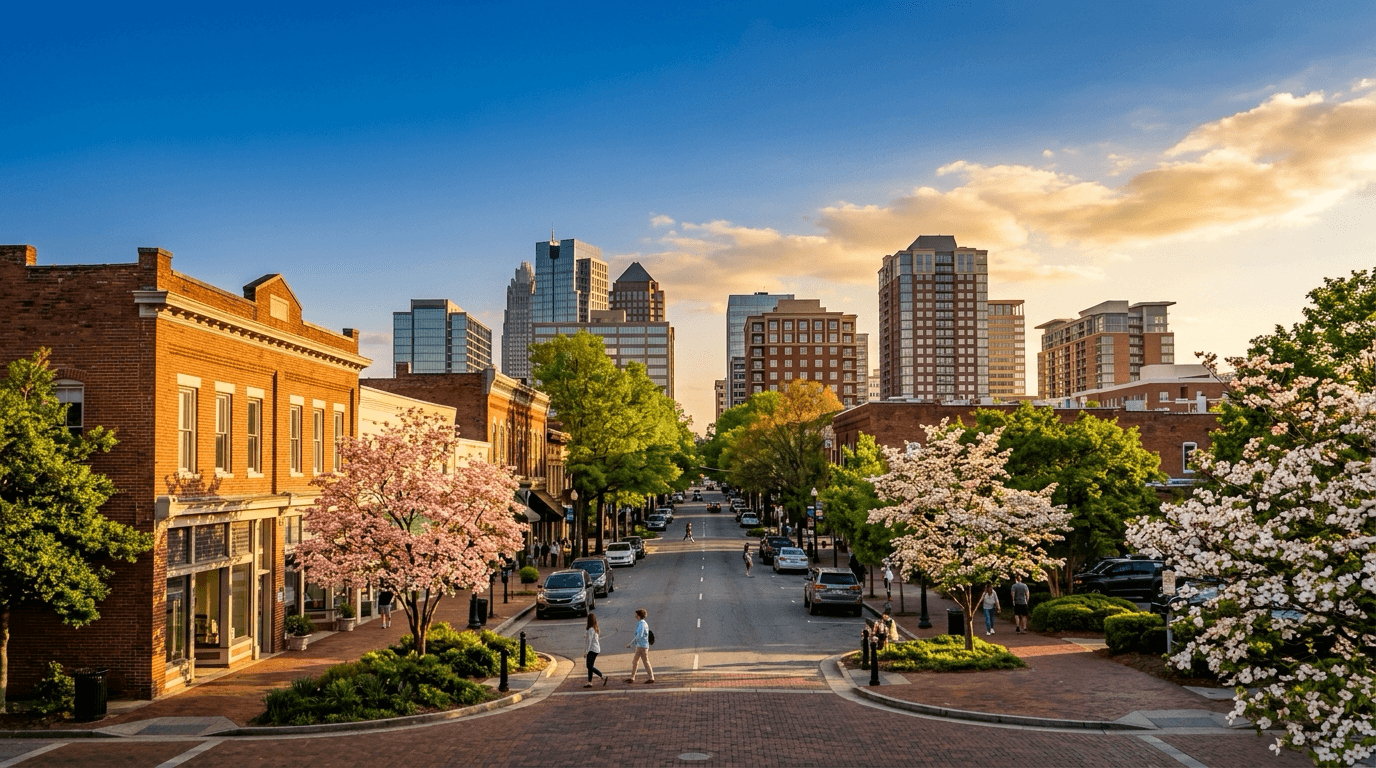
If you're searching for credit repair in North Carolina — whether that's a Google search for "Greensboro NC credit repair" at midnight or asking a coworker in Charlotte who they used — this guide is built for you. We're Crowned Credit, a credit repair company headquartered in Greensboro, North Carolina, and we work with clients across the state: Charlotte, Raleigh, Durham, Winston-Salem, Asheville, Wilmington, Fayetteville, and small towns in between.
This page covers what most local guides skip: the actual North Carolina laws that protect you when a debt collector calls, how credit looks in NC compared to the national average, what makes credit repair in a city like Charlotte different from Greensboro, and how our process works. No fluff, no guaranteed score promises (those are illegal — more on that later), just a clear local-expert breakdown.
If you'd rather skip ahead and talk to someone, call us at 336-310-0090 or visit getcrownedcredit.com.
North Carolina Credit Snapshot: How We Compare
Before you fix anything, it helps to see where North Carolina sits on the national credit map.
According to Experian's state-by-state FICO data reported in 2023, the average FICO® score in North Carolina is approximately 709 — just under the U.S. average of around 715. That puts NC squarely in the "good" credit tier (670–739), but it also means a large share of North Carolinians are sitting just below "very good" (740+), where the best rates and approvals live. Moving from 709 to 740 can be the difference between qualifying for a mortgage at a competitive rate and getting denied or hit with a higher payment.
A few patterns we see repeatedly with North Carolina clients:
- Medical collections. Medical debt is one of the most common items dragging NC credit reports down. The good news: as of 2023, the three major bureaus (Experian, Equifax, TransUnion) stopped reporting paid medical collections and medical collections under $500, and unpaid medical collections don't appear on a credit report for the first year.
- Old utility and telecom accounts. Duke Energy, Spectrum, AT&T — leftover balances from previous addresses are very common in NC, especially with the state's high mobility (people moving between Charlotte, Raleigh, and the Triad for jobs).
- Auto loan delinquencies. With limited public transit in most NC cities, car payments are non-negotiable — and when budgets tighten, auto loans are often the first place damage shows up.
- Student loan reporting errors. With major universities across the state (UNC, NC State, NC A&T, UNCG, Duke, ECU, App State), student loan account confusion — wrong balances, duplicate reporting, missed deferment updates — is something we see weekly.
The takeaway: NC consumers aren't dramatically different from the national average, but the mix of issues tends to lean toward medical, utility, and auto — and those are exactly the categories where consumer protections (federal and state) give you the most leverage.
North Carolina Credit Repair Laws You Should Know
This section is the one most credit repair sites get wrong or skip entirely. North Carolina has some of the strongest consumer protections in the country when it comes to debt collection — and knowing them changes everything about how you approach repair.
The 3-Year Statute of Limitations on Debt
In North Carolina, the statute of limitations on most consumer debt is 3 years under N.C. Gen. Stat. § 1-52. That includes credit cards, medical debt, personal loans, and most written and oral contracts. The clock generally starts from the date of your last payment or activity on the account.
What this means in plain English: after 3 years, a creditor or debt collector generally cannot successfully sue you to collect an old consumer debt in NC. They can still try to collect it, and the debt can still appear on your credit report (negative items typically report for up to 7 years), but the legal teeth are gone.
Critical caveat: making even a small payment on an old debt can restart the clock in many situations. Before you respond to any collector on an old account, know exactly how old the debt is and what you might be reviving.
The North Carolina Debt Collection Act
NC has its own Debt Collection Act (N.C. Gen. Stat. § 58-70-115) that goes beyond the federal Fair Debt Collection Practices Act (FDCPA). Under NC law, collectors are prohibited from:
- Threatening violence or harm
- Using obscene or profane language
- Calling repeatedly with intent to harass
- Making false representations about the debt, your obligations, or legal consequences
- Communicating with you at unreasonable hours or at work after you've told them to stop
- Misrepresenting themselves as attorneys, government officials, or law enforcement
Violations can mean civil penalties — and crucially, NC also covers original creditors, not just third-party collectors (a wider scope than federal FDCPA, which mostly covers third-party collectors).
How to File a Complaint in NC
If you believe a collector has violated your rights, you can file a complaint with:
- North Carolina Department of Justice / Attorney General's Office — Consumer Protection Division, Hotline: (877) 566-7226 or (919) 716-6000
- Consumer Financial Protection Bureau (CFPB) — federal complaints at consumerfinance.gov
- Better Business Bureau — for collector reputation issues
Keep records. Save voicemails. Note dates and times of calls. That documentation is what turns "I think they're harassing me" into a winnable complaint.
Credit Repair Services Act (North Carolina)
NC also has its own Credit Repair Services Act (N.C. Gen. Stat. § 66-220 et seq.) that regulates how credit repair companies operate in the state — including required written contracts, the right to cancel within a set period, and prohibitions against demanding payment for services not yet rendered. A legitimate NC credit repair company will give you a contract, explain your cancellation rights, and never guarantee a specific score outcome (because outcomes can't be guaranteed — they depend on what's actually on your report and how creditors respond).
If a credit repair company in NC tells you they can guarantee a specific score jump or promises to remove accurate negative items, that's a red flag. Walk away.
Credit Repair in Greensboro, NC
Greensboro is home base for us — Crowned Credit is headquartered in Greensboro, North Carolina, and we know the local economy inside and out.
Greensboro sits at the heart of the Piedmont Triad (alongside Winston-Salem and High Point) with a population of around 300,000+. The local economy is anchored by:
- Higher education — North Carolina A&T State University (the largest HBCU in the country), UNCG, Guilford College, NC A&T's expanding research footprint
- Manufacturing and logistics — Honda Jet, Volvo, Mack Trucks, and a major FedEx hub at PTI Airport
- Healthcare — Cone Health is one of the largest employers in the region
What this mix produces, from a credit standpoint:
- A large college and recent-graduate population with thin credit files and early-career student loan reporting issues
- Manufacturing and shift-work households where a single income disruption (layoff, plant pause, overtime cut) can quickly cascade into late payments
- Healthcare workers with strong incomes but often-overlooked medical collections from their own family's care
Common Greensboro credit issues we see weekly: late payments on Cone Health billing portals that were never properly resolved, old utility accounts from Duke Energy or Piedmont Natural Gas, repossession reporting from local auto dealers, and student loan servicer transfers (Nelnet, MOHELA, Aidvantage) creating duplicate or inaccurate entries.
Being local matters here in a practical way: if you need to drop off a document, mail something to our office, or talk to a team that understands the difference between living in Lindley Park and Adams Farm, that's available.
Greensboro service area includes: Greensboro, High Point, Jamestown, Summerfield, Oak Ridge, Stokesdale, Pleasant Garden, Whitsett, and surrounding Guilford County.
If you're in Greensboro or the Triad and need local credit repair support, we're here. Learn more about our credit repair services in Greensboro, NC.
Credit Repair in Charlotte, NC
Charlotte is the largest city in North Carolina and one of the most important financial hubs in the United States — home to Bank of America's global headquarters and Truist's headquarters, plus major operations for Wells Fargo, Ally, and dozens of fintech and insurance employers. Mecklenburg County's population is over 1.1 million, and Charlotte continues to grow faster than almost any other major city in the Southeast.
What that means for credit repair in Charlotte:
- Higher income, higher stakes. Charlotte's median household income runs above the NC state average, which means credit issues here often involve larger balances — bigger auto loans, jumbo or near-jumbo mortgages, higher credit card limits. A 50-point score swing in Charlotte can mean tens of thousands of dollars in interest over the life of a mortgage.
- Fast-moving relocations. With so many corporate transfers in and out of Charlotte, we see a lot of "I just moved here for a job and my apartment denied me" or "I'm pre-approved but the underwriter wants me to clean up two items first" cases.
- Financial industry employees with their own credit issues — often medical, divorce-related, or one-off late payments that wrecked an otherwise clean file.
- South End, Uptown, Ballantyne, NoDa, Plaza Midwood, University City — high-rent neighborhoods where landlords pull credit aggressively and a single collection can block a lease.
We're expanding Charlotte operations in 2026, with a focus on serving more clients in Mecklenburg County and the surrounding Charlotte metro (including Concord, Huntersville, Matthews, Pineville, Indian Trail, Mint Hill, and Fort Mill, SC for cross-border clients).
If you're in Charlotte and a closing date is looming, time is the variable that matters most. Don't wait until the underwriter sends the conditions list — start the cleanup early. Read more: Credit Repair in Charlotte, NC.
Credit Repair in Raleigh, Durham & the Research Triangle
The Triangle — Raleigh, Durham, Cary, Chapel Hill, and Research Triangle Park — has a different credit profile than the rest of NC. The combination of NC State, Duke, UNC-Chapel Hill, the RTP biotech and tech employer base, and a heavy concentration of state government jobs means the area tends to skew toward higher average credit scores and more stable employment.
But that doesn't mean credit issues are rare here. What we see in the Triangle:
- Tech and biotech professionals with thin files (recent graduates of NC State or Duke who never built revolving credit) who get rejected for first mortgages despite high incomes
- Healthcare workers at Duke Health, UNC Health, WakeMed — same medical billing chaos as everywhere else, sometimes affecting their own credit
- Real estate-driven applications — with home prices in Cary, Apex, Holly Springs, North Raleigh, and Durham's growing neighborhoods, mortgage qualifying is competitive and every point matters
- Identity theft and report mix-ups — common in transient university populations and with people who share first/last names
Raleigh, Durham, Cary, Chapel Hill, Apex, Morrisville, Holly Springs, Wake Forest, Garner, Fuquay-Varina — we serve all of it, fully remotely. Explore our services: Credit Repair in Raleigh, NC and Credit Repair in Durham, NC.
Other North Carolina Cities We Serve
Credit repair in NC isn't just about the big three. We work with clients across the state, including:
- Winston-Salem & the rest of the Triad — Forsyth County, Davidson County. Similar manufacturing and healthcare mix to Greensboro. See: Credit Repair in Winston-Salem, NC.
- Asheville and Western NC — Buncombe, Henderson, Madison counties. Heavy on hospitality and small-business owners — credit issues often tied to seasonal income.
- Fayetteville & the Sandhills — Cumberland County, with a strong military presence at Fort Liberty (formerly Fort Bragg). PCS-related credit issues, deployment-related billing problems, and SCRA-protected accounts are common.
- Wilmington & the Coast — New Hanover, Brunswick, Pender counties. Tourism-driven income volatility and storm/insurance-related debt issues.
- Hickory, Gastonia, Concord, Kannapolis, Salisbury, Mooresville — the Charlotte metro extends well beyond Mecklenburg.
- Greenville, New Bern, Jacksonville — Eastern NC, including military-heavy areas around Camp Lejeune and Cherry Point.
- Rural NC — we serve clients in every county. Geography isn't a barrier; our process is remote-first with optional local touchpoints.
If your town isn't named, that doesn't mean we don't serve it. If you live in North Carolina, we work with you.
Why Choose a North Carolina-Based Credit Repair Company
There are national credit repair companies — some of them publicly traded — that will happily take your money from anywhere. So why pick a local NC company?
State-law expertise. Federal law (FCRA, FDCPA) is only half the picture. The North Carolina Debt Collection Act, the NC Credit Repair Services Act, the 3-year statute of limitations, and the NC Attorney General's complaint process are tools national companies rarely use because their staff isn't trained in them. We know the state-specific levers.
Local accountability. Our office is in Greensboro. Our phone number — 336-310-0090 — is an NC area code. You can drive to us. National call-center operations don't offer that.
Time zone alignment. Eastern Time. When you call during business hours, you're talking to a team that's actually in your time zone (or running on it). No "we'll get back to you tomorrow" because the support team is on a different continent and you're already asleep.
Court and process familiarity. When something escalates — a creditor lawsuit, a wage garnishment threat, a debt collector who won't back off — knowing NC small claims and district court procedure matters. We don't represent you legally (we're not attorneys), but we know when and where to point you.
Skin in the game. We live here. Our reputation in Greensboro, Charlotte, Raleigh, and across the state is the business. National companies can churn through unhappy clients in a market they'll never visit. We can't.
Real NC Client Stories
The quickest way to understand what credit repair actually looks like in North Carolina is to see it through the eyes of clients who've sat where you're sitting. The stories below are composites — drawn from patterns we see again and again across NC, with names and identifying details changed to protect privacy. They are not guarantees of outcomes (outcomes depend on your specific file and creditor responses), but they are representative of the work.
Marcus — Greensboro Manufacturing Worker, Plant Closure to Recovery
Marcus came to us after his Guilford County manufacturing plant ran a six-month production pause. He'd been a reliable employee for nine years, but two missed credit card payments and a 45-day late on his truck loan landed on his report before he could catch up. His score had dropped from the mid-700s into the low 600s, and he was worried his daughter's upcoming college enrollment would force him to co-sign on private loans he couldn't qualify for.
We pulled all three bureau reports and found something Marcus hadn't noticed: one of the late payments was actually reporting twice (once by the original creditor, once by an in-house collections department), and a closed Cone Health balance from years earlier was still showing as open. Over a six-month plan, we disputed the duplicate reporting, validated the medical entry, and helped Marcus draft a goodwill letter to his auto lender explaining the plant closure. By month six, the duplicate late was gone, the medical item had been deleted, and his auto lender had agreed to remove one of the late marks as a one-time courtesy. He didn't need the co-sign.
Jasmine — Charlotte Banking Professional, Old Student Loan Collections
Jasmine works in commercial banking in Uptown Charlotte. Strong income, clean recent history, lived in a South End high-rise. On paper, she should have been a slam-dunk approval for the Ballantyne townhouse she wanted to buy. The problem: two private student loan collections from her undergrad years at a school she'd transferred out of — both old, both small (under $1,200 combined), both dragging her score into the high 600s when her file otherwise read like a 760.
Jasmine had tried to handle it herself once and gotten nowhere. We took a layered approach: debt validation letters to both collectors (one couldn't produce documentation and the entry was deleted), and a carefully written goodwill letter to the second, leveraging her nearly decade-long clean payment history since graduation. The second collector agreed to a pay-for-delete in writing for the full balance. Within four months, both items were off her report, her score crossed into the mid-740s, and her underwriter cleared the file without conditions.
Diana — Fayetteville Military Spouse, Deployment-Era Address Mix-Up
Diana's husband had been stationed at Fort Liberty (the post formerly known as Fort Bragg), and during a 2022 deployment they'd had mail forwarded between three addresses inside of fourteen months. Somewhere in that shuffle, a utility bill and a small medical copay never reached them — both eventually landed in collections, both started reporting, and Diana only found out when their landlord ran credit for their new place off-post and the application was denied.
Neither collection was large. The problem was the principle: both stemmed from a mailing address error during an active-duty deployment, and Diana had documentation. We helped her file a dispute citing the address discrepancy with all three bureaus, included her husband's deployment orders as supporting documentation, and sent debt validation letters to both collectors. The utility item was removed within 30 days for lack of verification. The medical collection was deleted after we pointed the collector to the deployment-era address timeline. Their next rental application went through clean.
Robert — Raleigh Tech Worker, Untangling Joint Accounts After Divorce
Robert is a software engineer at an RTP-area company. His divorce finalized in 2024, and what looked like a clean separation on paper turned into a credit report tangle: two joint credit cards his ex-spouse had kept using past the agreed cutoff, a joint auto loan that had a 30-day late after the trade-off date, and an authorized-user account that should have been removed but kept reporting.
This kind of file takes patience. Over fourteen months, we walked Robert through removing himself as authorized user on the lingering account (a phone call, but one most people don't make), disputed the post-separation lateness on the auto loan with supporting documentation from the divorce decree, and pushed both joint credit card issuers to clean up reporting that didn't accurately reflect who was responsible for what. Some items came off quickly. Others took multiple rounds. By the end of the fourteen-month engagement, Robert's score had moved from the low 600s into the mid-720s, and he closed on a Cary townhome the following spring.
How Crowned Credit Works
Here's the actual process — no marketing fluff.
Step 1: Free Credit Consultation
You book a call. We pull a copy of your credit report (with your authorization) and review every account across all three bureaus. We tell you what's there, what's likely disputable, what's accurate-and-staying, and what your realistic path forward looks like. No high-pressure sale. If credit repair isn't the right move for your situation, we'll tell you.
Step 2: Pick a Plan
We offer two main plans. Both are month-to-month — no long contracts.
- Essential — $150 setup + $99/month. Our standard credit repair program covering disputes across all three bureaus, monthly progress updates, and access to our team.
- Accelerated — $249 setup + $199/month. For clients who need faster, more aggressive work — higher dispute volume, more creditor interventions, and priority support. Recommended when you have a deadline (mortgage, auto loan, lease) or a heavy file.
We also offer specialized plans for couples and one-time intensive options — we'll match you to the right fit on the consultation call. See all options: Crowned Credit Pricing.
Step 3: We Go to Work
We dispute inaccurate, unverifiable, or outdated items with the three credit bureaus and, where appropriate, with the original creditors and collectors directly. We use your federal rights under the FCRA (Fair Credit Reporting Act) and FDCPA, plus NC state protections, to push for removals and corrections.
You get monthly updates showing what was sent, what came back, and what's next.
Step 4: You Build the Other Half
Removing negatives is half the equation. The other half is building positive credit — on-time payments, healthy credit utilization, a thoughtful credit mix. We coach you through that part too, with practical guidance on which moves actually move scores (and which ones are myths).
Important YMYL Disclosure
We don't guarantee score outcomes. No legitimate credit repair company can. Outcomes depend on:
- What's actually on your report
- How creditors and bureaus respond to disputes
- Your own ongoing credit behavior
- Time
What we can guarantee: that we'll work your file with real effort, follow your federal and NC rights to the letter, and communicate clearly about what's happening. If you ever feel we're not doing that, you can cancel.
Frequently Asked Questions
Is credit repair legal in North Carolina?
Yes. Credit repair is legal under both federal law (the Credit Repair Organizations Act) and North Carolina law (the NC Credit Repair Services Act). Legitimate companies must provide written contracts, honor cancellation rights, and cannot demand upfront payment for unperformed services or guarantee specific score outcomes.
How long does credit repair take in NC?
It varies. Federal law requires credit bureaus to investigate disputes within 30 days (sometimes extended to 45). Most clients see initial responses within 30–45 days of starting. Meaningful score improvement usually takes 3–6 months; complex files can take longer. Anyone promising results in 7 days is overselling.
Can items be removed from my credit report even if they're accurate?
Maybe. Accurate items that are still within the reporting window (typically 7 years for most negatives, 10 for Chapter 7 bankruptcy) are not legally required to be removed by the bureaus. However, the dispute process often reveals inaccuracies — wrong dates, wrong balances, accounts that can't be verified — that lead to removals. Some collectors and creditors also agree to remove accurate items via negotiation (pay-for-delete, goodwill letters, debt validation failures).
What's the statute of limitations on debt in North Carolina?
3 years for most consumer debts (credit cards, medical bills, personal loans), under N.C. Gen. Stat. § 1-52. After 3 years from the last payment or account activity, a creditor generally cannot successfully sue you to collect. They can still ask for payment, and the debt can still appear on your report (up to 7 years for most items), but their legal options narrow significantly.
Will paying off old collections help my credit score?
It depends. Under newer scoring models (FICO 9, FICO 10, VantageScore 3.0 and 4.0), paid collections hurt less than unpaid ones. Under older models (FICO 8, still widely used), paid collections can still drag your score. The strategic move is often to negotiate a "pay-for-delete" — payment in exchange for removal — but get it in writing first. And remember: paying or even acknowledging an old debt in NC can restart the 3-year statute of limitations clock.
Can I do credit repair myself for free?
Yes, technically. You have the right to dispute items on your credit report for free with each bureau (annualcreditreport.com gives you free copies; bureau websites accept disputes). What you're paying a credit repair company for is expertise, time, persistence, and knowing which dispute strategies work in which situations. Many people who try DIY repair give up after one round of "verified" responses — that's where professionals continue.
Will credit repair hurt my credit score?
No. The dispute process itself does not lower your score. Closing accounts during the process can — we coach clients on what not to do.
Do I need to live in Greensboro, Charlotte, or Raleigh to work with Crowned Credit?
No. We serve clients statewide across NC and beyond. Most of the work is remote — calls, emails, secure document upload — but our HQ is in Greensboro for clients who prefer in-person touchpoints.
Can credit repair help me qualify for a mortgage in NC?
Often, yes. Many of our NC clients come to us specifically because a lender said "come back when your score is X" or "we need these two items resolved before we can close." Mortgage timelines are tight — start early, and tell us the closing date so we can prioritize correctly.
What if a debt collector is calling me from out of state — does NC law still apply?
Generally, yes — if you live in NC, NC consumer protections apply to communications and collection attempts made against you here. NC's Debt Collection Act and the federal FDCPA both apply. File complaints with the NC Attorney General and CFPB if you're being harassed.
How much does credit repair cost in North Carolina?
NC law prohibits credit repair companies from charging for services not yet performed. Pricing varies by company. At Crowned Credit, our public plans start at $150 setup + $99/month (Essential) and $249 setup + $199/month (Accelerated). There are no long-term contracts — month-to-month, cancel anytime.
What's the difference between credit repair and debt settlement?
Credit repair focuses on correcting your credit report — disputing inaccurate, unverifiable, or outdated items. Debt settlement focuses on negotiating with creditors to pay less than you owe on existing balances. They serve different goals. Some clients need one, some need both, and the strategies can overlap — but they're not the same service, and any company that conflates them is one to be cautious of.
Get Started: Credit Repair in North Carolina
If you've made it this far, you already know more about NC credit repair than 90% of people sitting across from a lender. The next move is simple: book a free consultation, and let's look at your actual report.
📞 Call us: 336-310-0090
🌐 Online: getcrownedcredit.com
📍 Headquartered: Greensboro, North Carolina
🗺️ Service area: All of North Carolina — and clients beyond
No long contracts. No score guarantees (those are illegal). Just a local team, working your file, telling you the truth about what's possible.