Credit RepairMay 31, 20268 min read
Do Payday Loans Affect Your Credit Score? The Truth About Payday Lending and Credit Reports in 2026

Ashley Rivera
Credit Repair Specialist
Do Payday Loans Show Up on Your Credit Report?
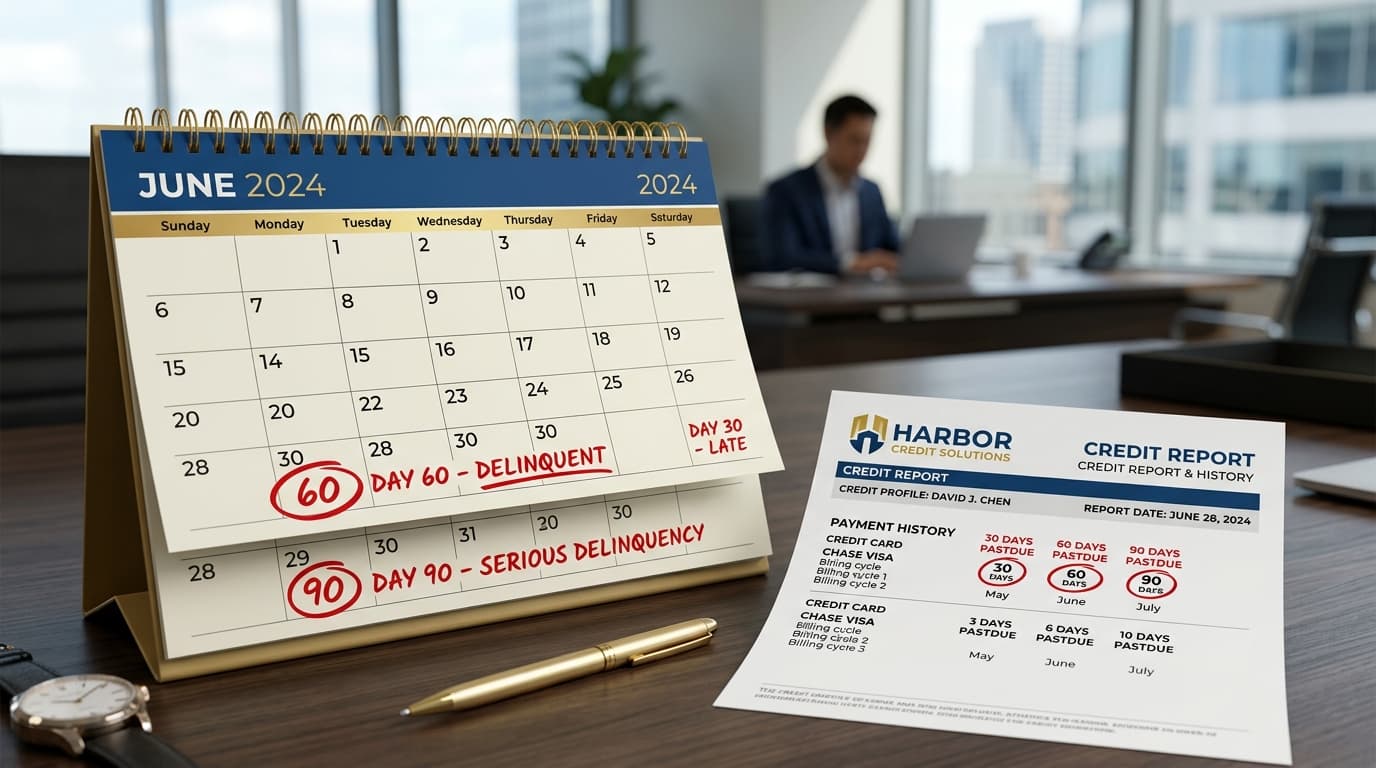
Here's the thing most payday lenders won't tell you upfront: **they typically don't report your loan to the credit bureaus.** Not when you apply. Not when you borrow. Not even when you pay it back on time. Why? Because payday lenders aren't traditional lenders. They're operating in a different ecosystem. Most don't want to deal with the cost and compliance burden of reporting to Equifax, Experian, and TransUnion. This cuts both ways:- Good news: If you pay the loan back on time, it won't help your credit. But it also won't hurt it.
- Bad news: If you default or the loan goes to collections, that will show up—and it'll wreck your score.
Hard Pull vs. Soft Pull: Does Applying for a Payday Loan Hurt Your Credit?
Most payday lenders perform a soft credit check when you apply. Soft pulls don't affect your credit score. They're just the lender peeking at your credit to verify your identity or assess basic risk. But some payday lenders—especially the ones trying to look more "legitimate"—do hard credit checks. Hard inquiries do affect your score, usually dropping it by 5-10 points. One hard inquiry isn't a disaster. But if you're applying to multiple payday lenders in a short window (which people often do when they're desperate), those hard pulls stack up. Five applications = five hard inquiries = 25-50 point drop. How to tell if a payday lender does hard or soft pulls:- Read the fine print on their application (look for phrases like "credit check" or "hard inquiry").
- Ask the lender directly before submitting your application.
- Check your credit report after applying—hard inquiries show up immediately.
When Payday Loans DO Hurt Your Credit
Even if your payday lender doesn't report to the credit bureaus, these loans can still damage your credit. Here's how:1. The Loan Goes to Collections
If you can't pay back the payday loan, the lender will eventually send your debt to a collection agency. And collection agencies absolutely report to the credit bureaus. A collection account is one of the most damaging items that can hit your credit report. It can drop your score by 50-100 points overnight. Collections stay on your report for up to seven years from the date the original debt became delinquent. Even a small payday loan—$300, $500—can show up as a collection and torpedo your score.2. The Lender Sues You and Wins a Judgment
If you ignore the debt long enough, the payday lender (or the collection agency) might sue you. If they win, they get a civil judgment against you. Judgments used to appear on credit reports, but the three major bureaus stopped reporting them in 2017. However, judgments can still hurt you in other ways:- They're public records that lenders can search independently.
- The judgment creditor can garnish your wages or freeze your bank account, making it harder to pay other bills on time—which will hurt your credit.
3. You Can't Pay Your Other Bills Because of the Loan
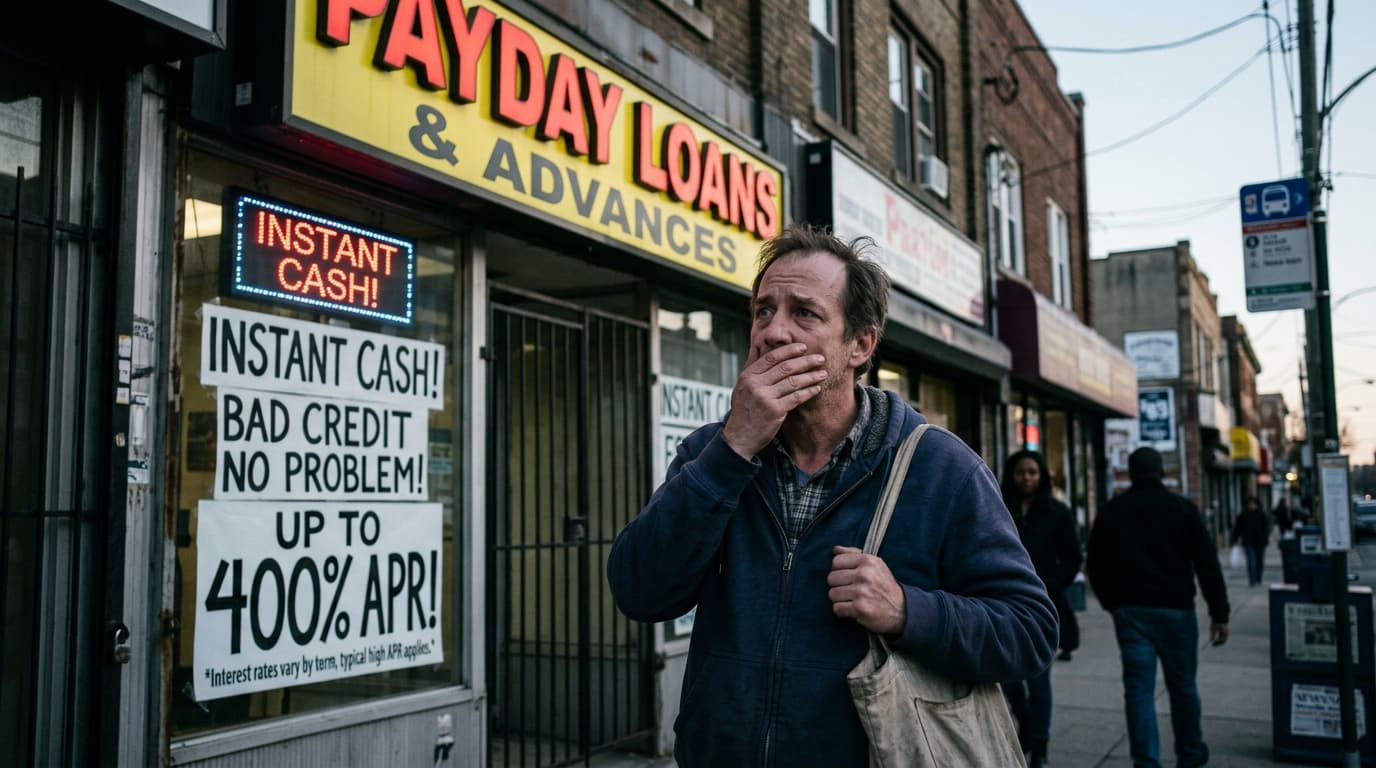
This is the hidden credit killer. Payday loans come with astronomical interest rates—often 300-400% APR or higher. What starts as a $300 loan can balloon to $500+ after fees and rollovers. When you're stuck in the payday loan cycle, something else usually gets sacrificed:- Your credit card payment is late.
- Your car loan payment bounces.
- Your utilities go unpaid, and the account eventually hits collections.
The Payday Loan Trap: Why These Loans Are So Dangerous
Payday loans are designed to trap you. That's not conspiracy talk—it's their business model. Here's how it works:- You borrow $300.
- The lender charges a $45 "fee" (that's 15% for a two-week loan, which works out to nearly 400% APR).
- Two weeks later, you owe $345.
- But you don't have $345. You barely had the money to survive before the loan.
- So you "roll over" the loan. Now you owe another $45 fee.
- Two weeks later, you still can't pay. Another rollover. Another $45.
Better Alternatives to Payday Loans
If you're considering a payday loan, I get it. You're in a tight spot. But there are better options that won't sabotage your financial future:1. Credit Union Payday Alternative Loans (PALs)
Many federal credit unions offer Payday Alternative Loans with interest rates capped at 28% APR—a fraction of what payday lenders charge. You can borrow up to $2,000 and have 1-6 months to pay it back. You'll need to be a credit union member, but joining is usually easy and cheap ($5-25).2. Cash Advance Apps
Apps like Earnin, Dave, and Brigit let you access a portion of your paycheck before payday. They typically charge $0-8 in fees (some work on tips), and there's no interest. These aren't perfect—you're still borrowing from your next paycheck—but they're infinitely better than payday loans.3. Negotiate with Your Creditors
If you're behind on bills, call your creditors before you take out a payday loan. Many will work with you:- Utility companies often have hardship programs.
- Credit card issuers might reduce your minimum payment temporarily.
- Medical providers will usually set up payment plans.
4. Sell or Pawn Items You Don't Need
Got an old iPhone, gaming console, or jewelry? Selling or pawning can get you fast cash without the debt trap. Facebook Marketplace, OfferUp, and local pawn shops are all options.5. Ask for Help
I know this one's hard. But if you have family or friends who can lend you money interest-free, swallow your pride and ask. Pay them back as promised, and you'll avoid both the debt trap and the credit damage.What to Do If a Payday Loan Has Already Damaged Your Credit
If payday loan debt has already hit your credit report—whether as a late payment, collection, or charged-off account—you're not stuck with it forever.1. Verify the Debt Is Accurate
Under the Fair Credit Reporting Act (FCRA), creditors and collection agencies must verify everything they report to the credit bureaus. If they can't prove the debt is accurate, it has to be removed. Send a debt validation letter to the collection agency demanding proof. Many collection agencies buy debt in bulk and don't have proper documentation. If they can't validate it, the item comes off your report.2. Dispute the Item with the Credit Bureaus
You can also dispute the item directly with Equifax, Experian, and TransUnion. File disputes online or by mail, and force the bureaus to investigate. The bureaus have 30 days to verify the item. If they can't, it gets deleted.3. Negotiate a Pay-for-Delete Agreement
If the debt is valid and you can afford to pay it, consider negotiating a pay-for-delete agreement. You offer to pay the debt in full (or settle for less) in exchange for the collection agency removing the negative item from your credit report. Not all collectors will agree, but it's worth trying—especially on smaller debts.4. Work with a Professional Credit Repair Company
If your credit is a mess and you're overwhelmed, a professional credit repair company can handle the heavy lifting. At Crowned Credit, we specialize in removing negative items—collections, charge-offs, late payments—from credit reports using strategic disputes under the FCRA. Our team knows how to challenge items effectively and push the bureaus and creditors to verify or remove them. We offer three pricing tiers:- Essential: $150 setup + $99/month—best for straightforward credit repair.
- Accelerated: $249 setup + $199/month—aggressive dispute strategy for faster results.
- Momentum: custom quote, one-time—intensive 90-day credit overhaul.
Disclaimer: Crowned Credit does not guarantee specific credit score increases or timelines. Results vary based on individual credit profiles, the accuracy of reported information, and creditor/bureau responses. As required by the Credit Repair Organizations Act (CROA), you have the right to dispute credit report errors yourself at no cost.
The Bottom Line on Payday Loans and Your Credit
Most payday loans won't show up on your credit report—unless you can't pay them back. But even if they stay invisible, they can destroy your credit indirectly by trapping you in a debt cycle that forces you to miss other payments. Here's what you need to remember:- Payday lenders usually don't report to credit bureaus (soft pulls won't hurt your score).
- But if you default, the debt will likely go to collections—and that will tank your score.
- Payday loans have predatory interest rates (300-400% APR) that trap borrowers in endless rollovers.
- Better alternatives exist: credit union PALs, cash advance apps, negotiating with creditors, or asking for help.
- If payday loan debt has already damaged your credit, you can fight back with validation letters, disputes, pay-for-delete, or professional credit repair.