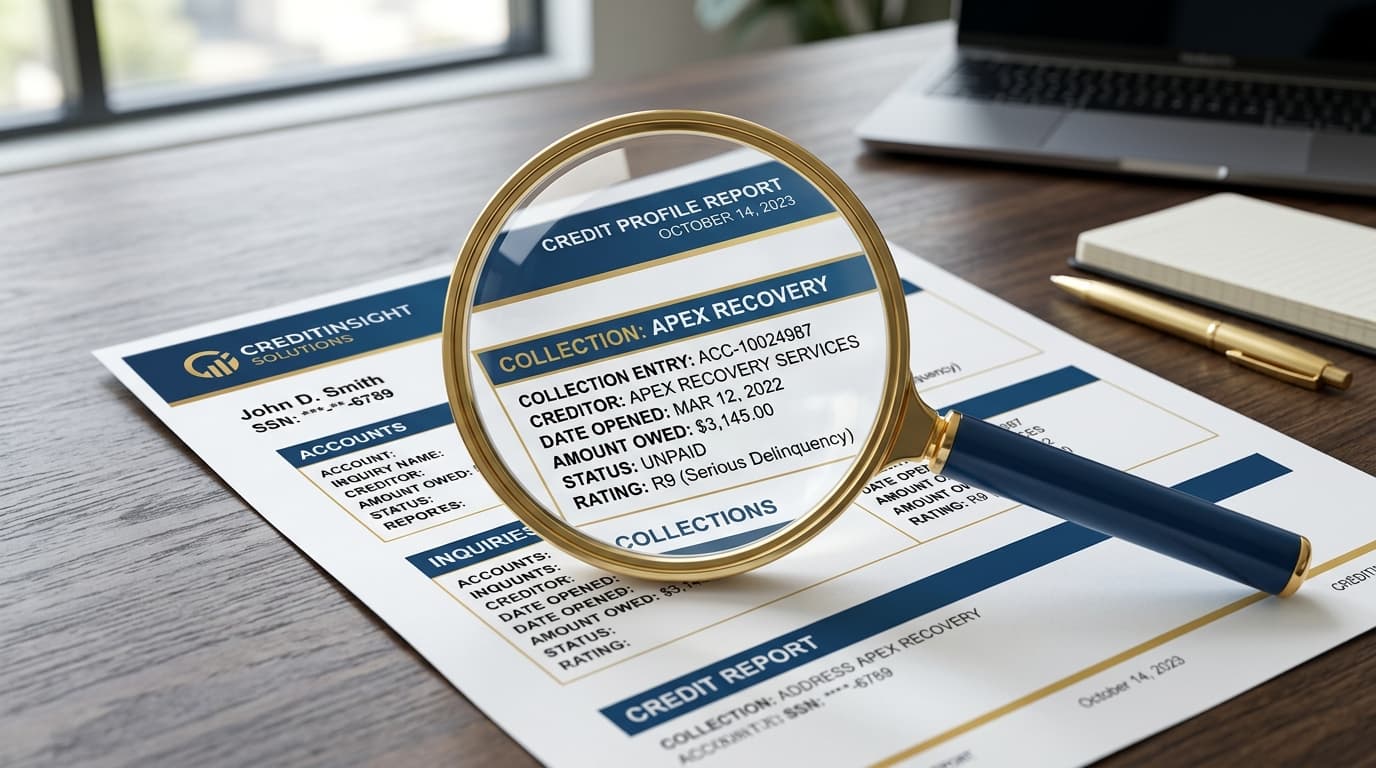
The Real Cost of Credit Report Errors in 2026: How Mistakes Could Be Blocking Your Financial Future

Ashley Rivera
Credit Repair Specialist

The Numbers Don't Lie: Credit Report Errors Are Common and Damaging
According to a Federal Trade Commission study, one in five consumers has an error on at least one of their three credit reports. That's 20% of Americans walking around with inaccurate information that could be dragging their scores down.
And the consequences are immediate:
- 48% of loan applicants were denied over the past 12 months, according to a 2026 Bankrate survey
- Four U.S. senators sent letters to credit bureaus after discovering consumers were getting denied mortgages and housing "simply due to an error on their report" that wasn't corrected
- Credit reporting complaints made up 86% of all complaints the CFPB received between January 2024 and June 2025
These aren't hypothetical scenarios. Real people are losing real opportunities because of mistakes they didn't make.
What Credit Report Errors Actually Cost You
1. Denied Mortgage Applications (And Thousands in Lost Savings)
You've saved your down payment. You found the perfect house. Then your mortgage lender pulls your credit and sees a 620 score instead of the 680 you thought you had.
That 60-point difference? It came from a collections account that isn't yours and a late payment incorrectly reported by a creditor who had the wrong Social Security number.
Now you're either denied completely or forced into a higher interest rate. On a $300,000 mortgage, the difference between a 6.5% rate and a 7.5% rate is over $63,000 in extra interest over 30 years.
All because of an error that shouldn't have been there in the first place.
2. Apartment Rejections
Landlords run credit checks. A credit report error that tanks your score can mean getting passed over for rentals — especially in competitive markets where multiple applicants are vying for the same unit.
Some landlords won't even consider applicants below a certain score threshold. So if that error dropped you from 720 to 650, you might not even get a call back.
And if you do get approved? You'll likely pay a higher security deposit. Some landlords charge an extra month's rent for applicants with lower scores.
3. Higher Insurance Premiums
Yes, your credit affects your car and homeowners insurance rates in most states. Insurance companies use credit-based insurance scores to determine how much you'll pay.
According to recent data, drivers with poor credit can pay up to 88% more for car insurance than those with excellent credit — even with identical driving records.
A credit report error that knocks 50-100 points off your score could mean paying an extra $500-$1,200 per year on insurance. That's real money leaving your bank account every month.
Related: How Your Credit Score Affects Insurance Rates in 2026
4. Job Rejections (Especially in Financial or Sensitive Roles)
Many employers run credit checks as part of their background screening process — particularly for roles that involve handling money, sensitive data, or security clearances.
An error-riddled credit report can make you look financially irresponsible, even if you've never missed a payment in your life. Employers might see collections, charge-offs, or high balances that don't actually reflect your real financial situation.
The result? You get passed over for the job without ever knowing why.
5. Credit Card and Loan Denials
Trying to finance a car? Apply for a credit card with a decent rewards program? Get approved for a personal loan?
Credit report errors can get you denied outright or approved with terrible terms:
- Higher interest rates: If you're approved at all, you're paying more
- Lower credit limits: Making it harder to manage your finances or improve your utilization ratio
- More fees: Annual fees, higher origination fees, and other costs that better-credit borrowers don't pay
Over a lifetime, these higher costs add up to tens of thousands of dollars — all because someone reported something inaccurately.
6. The Emotional and Mental Toll
Beyond the financial damage, credit report errors take a serious emotional toll:
- Stress and anxiety about your financial reputation
- Hours wasted trying to dispute errors with unresponsive credit bureaus
- Delayed life plans — buying a home, starting a business, or making a major purchase
- Feeling powerless when the system seems rigged against you
Some people spend months or even years trying to fix errors that should have been resolved in 30 days under the Fair Credit Reporting Act (FCRA).
Why Are Credit Bureaus Fixing Fewer Errors in 2026?
The drop in error correction rates isn't an accident. Here's what's happening:
Automated Dispute Systems Are Failing Consumers
Credit bureaus rely heavily on automated systems to process disputes. These systems often check a box that says "verified" without any real human review.
When you dispute an error, the bureau forwards it to the creditor who reported it. If the creditor says "yep, looks right to us," the error stays — even if you provided documentation proving it's wrong.
No Real Incentive to Fix Errors Quickly
Credit bureaus make money from creditors and lenders, not consumers. There's little financial incentive for them to prioritize your dispute when it takes time and resources to investigate properly.
The result? Generic responses like "verified as accurate" or "investigated and confirmed" without any real explanation of what was actually reviewed.
Legal Protections Aren't Being Enforced
The FCRA requires credit bureaus to conduct a "reasonable investigation" within 30 days. But what counts as "reasonable" is often debated.
Consumer advocates argue that clicking a few buttons in an automated system doesn't meet the legal standard. But unless you're willing to sue (which most people can't afford to do), there's not much recourse.
What You Can Do When You Find a Credit Report Error
If you spot an error on your credit report, here's your action plan:
Step 1: Document Everything
Before you dispute anything, gather proof:
- Bank statements showing on-time payments
- Receipts or confirmation emails
- Letters from creditors
- Screenshots of online account statements
The more documentation you have, the harder it is for the bureau to dismiss your dispute.
Step 2: Dispute with All Three Bureaus
An error on one credit report doesn't always show up on all three. But you need to dispute with each bureau separately:
- Experian
- TransUnion
- Equifax
Send your dispute in writing via certified mail so you have proof it was received. Online disputes are faster, but they're easier for bureaus to dismiss with generic responses.
Related: How to Dispute Errors on Your Credit Report in 2026: A Step-by-Step Guide
Step 3: Dispute with the Creditor Directly
Don't just rely on the credit bureau. Contact the creditor or collection agency that reported the error and demand they correct it.
Under the FCRA, creditors have a duty to report accurate information. If they can't verify the debt or account, they're legally required to stop reporting it.
Step 4: File a CFPB Complaint
If the credit bureau ignores your dispute or gives you a runaround, file a complaint with the Consumer Financial Protection Bureau at consumerfinance.gov.
CFPB complaints get forwarded to the company, and they're required to respond. It's not a guarantee of success, but it adds pressure.
Step 5: Consider Professional Help
If you've disputed errors multiple times and gotten nowhere, it might be time to bring in professionals.
Credit repair companies like Crowned Credit know how to navigate the dispute process, escalate issues, and apply legal pressure when bureaus drag their feet.
We've helped thousands of clients remove inaccurate information that was blocking their financial goals. Whether it's collections that don't belong to you, late payments reported by mistake, or accounts opened by identity thieves, we handle the process so you don't have to.
Book a free consultation to see if we can help.
The Bottom Line: Don't Let Credit Report Errors Cost You Thousands
Credit report errors aren't just annoying paperwork issues. They're financial landmines that can cost you:
- $63,000+ in extra mortgage interest
- $1,200+ per year in higher insurance rates
- Job opportunities you'll never know you lost
- Years of delayed life plans while you fight to get the mistake fixed
The Fair Credit Reporting Act gives you rights. But those rights only matter if you're willing to fight for them.
Check your credit reports regularly (you're entitled to a free report from each bureau every year at AnnualCreditReport.com). If you find something that shouldn't be there, don't assume it will fix itself.
Dispute it. Document it. Escalate it. And if you need backup, we're here.
Phone: 336-310-0090
Pricing: Essential plan starts at $150 + $99/month. See all pricing options here.
CROA Disclosure: Crowned Credit does not guarantee specific outcomes or timelines. Results vary by individual circumstance. You have the right to dispute credit report errors yourself at no cost.