How to Rebuild Credit After Bankruptcy in 2026: A Real-World Recovery Plan

Ashley Rivera
Credit Repair Specialist

You got the discharge letter. The bankruptcy is final. And now you're staring at a credit score that feels like it belongs to someone else.
Here's what nobody tells you: bankruptcy isn't the end of your credit story. For a lot of people, it's actually the turning point. The debt is gone. The slate is wiped. And while that bankruptcy filing will sit on your credit report for 7 to 10 years, your score can start climbing back up way sooner than that.
We've worked with clients at Crowned Credit who came to us post-bankruptcy with scores in the low 400s. Within 12 to 18 months, many of them were back in the 600s — some even higher. It takes a plan, consistency, and knowing which moves actually matter. That's what this guide is about.
Chapter 7 vs. Chapter 13: How Each Affects Your Credit
Before you map out your recovery, you need to understand what type of bankruptcy you filed and how long it sticks around.
Chapter 7 bankruptcy wipes out most unsecured debt (credit cards, medical bills, personal loans). It stays on your credit report for 10 years from the filing date. The process takes about 3 to 6 months from filing to discharge.
Chapter 13 bankruptcy restructures your debt into a 3- to 5-year repayment plan. It stays on your credit report for 7 years from the filing date. Because you're repaying a portion of what you owe, some lenders view Chapter 13 slightly more favorably.
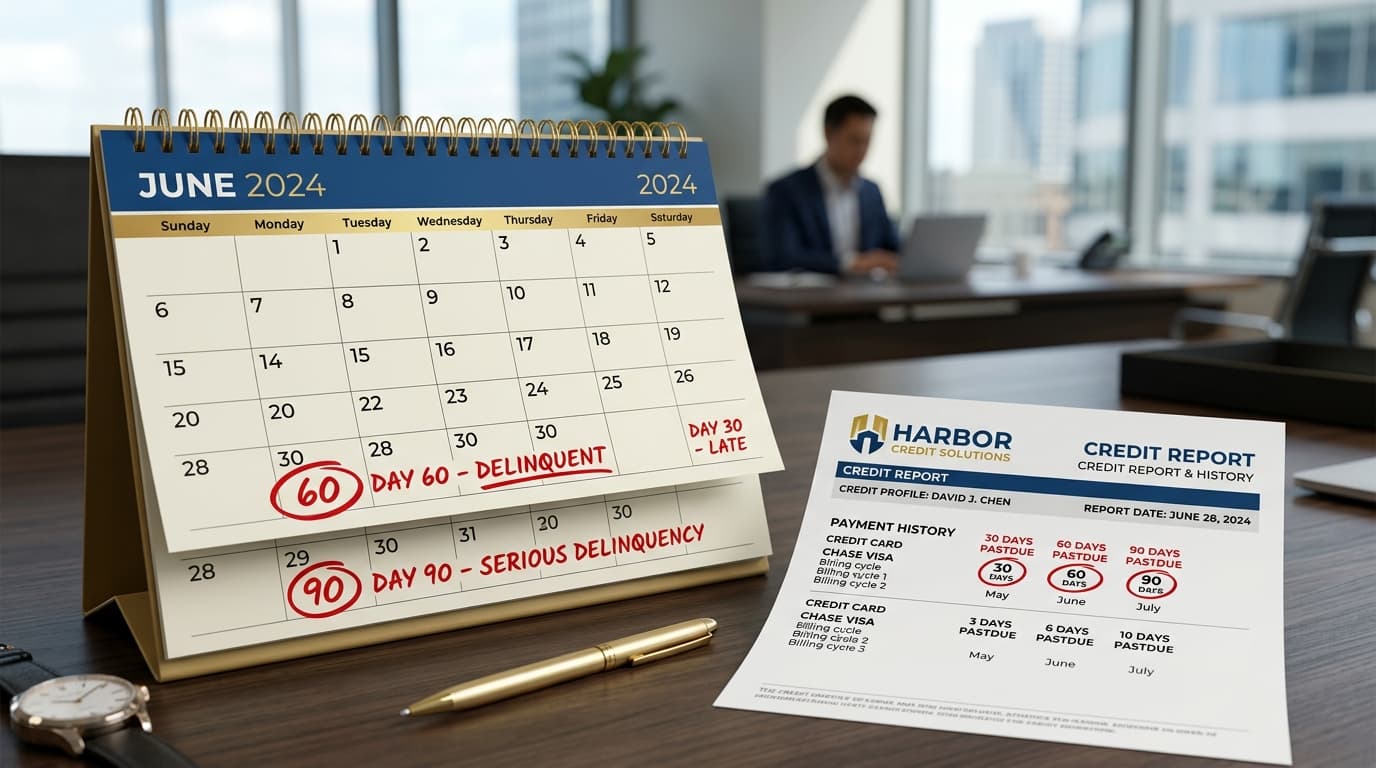
Here's the part that matters: even though the bankruptcy notation lingers for years, its impact on your score fades over time. A bankruptcy from 8 years ago barely registers compared to one from 8 months ago. Your recent credit behavior carries far more weight.
Step 1: Pull Your Credit Reports and Check for Errors
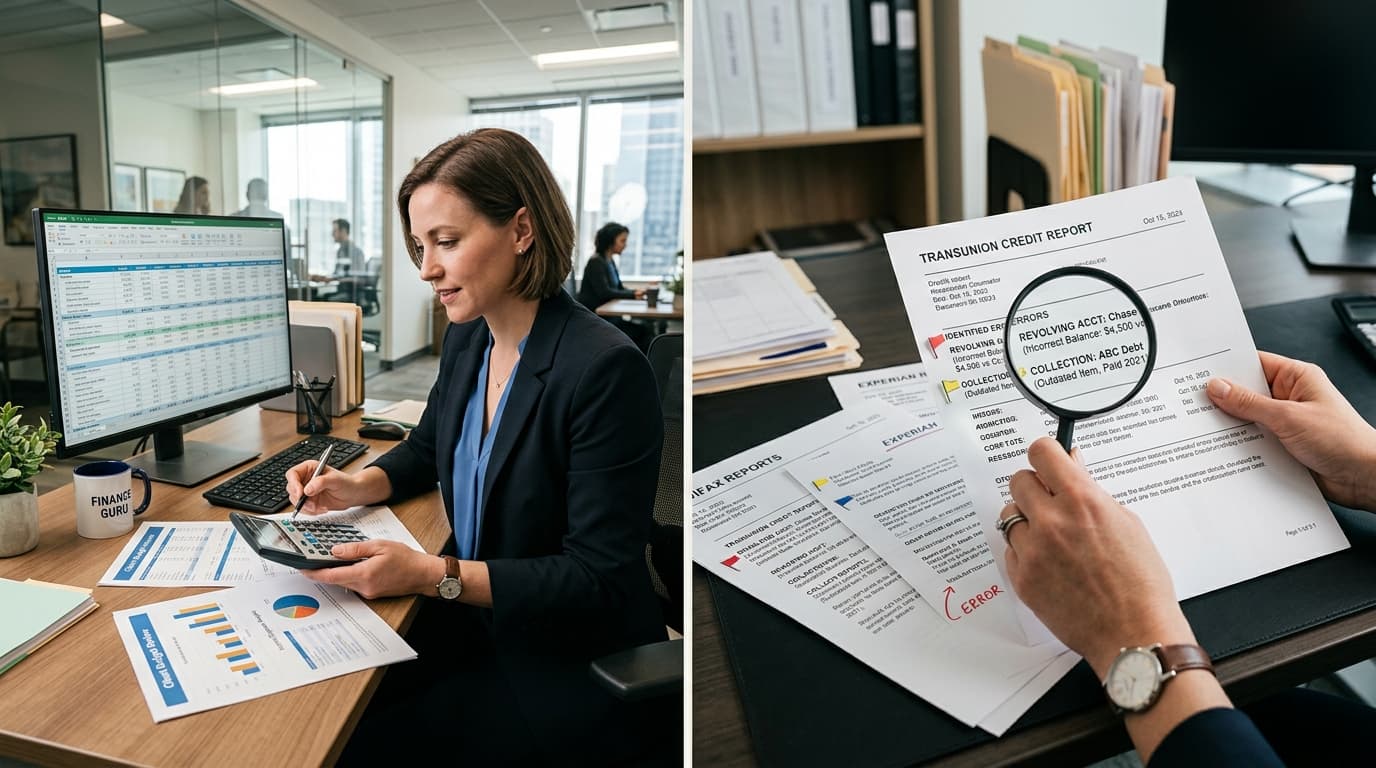
The very first thing you should do after your discharge is pull your credit reports from all three bureaus — Equifax, Experian, and TransUnion. You can get free copies at AnnualCreditReport.com.
What you're looking for:
- Debts that should show a $0 balance. Any account included in your bankruptcy should reflect a zero balance with a notation like "included in bankruptcy" or "discharged." If a creditor is still reporting an active balance, that's an error — and it's dragging your score down unnecessarily.
- Accounts that don't belong to you. Mixed files (where someone else's accounts end up on your report) happen more often than you'd think.
- Incorrect bankruptcy filing dates. The clock on when the bankruptcy falls off starts from the filing date. If that date is wrong, you could be stuck with it longer than you should be.
- Duplicate bankruptcy entries. Sometimes the same bankruptcy appears twice — once under public records and once as a trade line notation. That double hit shouldn't be there.
Under the Fair Credit Reporting Act (FCRA), every item on your credit report must be accurate, timely, and verifiable. If something's wrong, you have the right to dispute it — and the bureaus have 30 days to investigate. This is where professional credit repair can make a real difference. At Crowned Credit, we use FCRA dispute strategies to challenge errors, unverifiable accounts, and outdated information that's keeping your score down after bankruptcy.
Step 2: Get a Secured Credit Card (The Right Way)
A secured credit card is the single most effective tool for rebuilding credit after bankruptcy. You put down a deposit — usually $200 to $500 — and that becomes your credit limit. The card reports to the bureaus just like a regular credit card.
A few cards worth looking at in 2026:
- Discover it® Secured Credit Card — No annual fee, earns cash back, and Discover reviews your account after 7 months to see if you qualify for an unsecured upgrade.
- Capital One Platinum Secured — Starts at a $49 minimum deposit (depending on your credit), which is helpful if you don't have $200+ to tie up right away.
- OpenSky® Secured Visa — Doesn't require a credit check to apply, which matters right after bankruptcy when your score is at its lowest.
The rules that actually matter:
- Keep your balance under 10% of your credit limit. On a $300 limit card, that means never carrying more than $30. Credit utilization is 30% of your FICO score — it's the fastest lever you can pull. (Read our full utilization guide here.)
- Set up autopay for the full statement balance every month. One late payment can set you back months of progress.
- Use the card for something small and recurring — a streaming subscription, gas fill-up, or grocery trip. Then pay it off.
Step 3: Add a Credit-Builder Loan
Your credit score benefits from having a mix of account types. A secured card covers revolving credit. A credit-builder loan covers installment credit. Having both active at the same time strengthens your profile faster.
How credit-builder loans work: You "borrow" a small amount (usually $300 to $1,000), but instead of receiving the money upfront, it goes into a locked savings account. You make monthly payments for 6 to 24 months. Once you've paid it off, you get the money. The lender reports every on-time payment to the bureaus.
Self (formerly Self Lender) and MoneyLion both offer credit-builder loans with monthly payments as low as $25. For someone rebuilding after bankruptcy, the combination of a secured card + credit-builder loan can produce noticeable score improvements within 3 to 6 months.
Step 4: Become an Authorized User on Someone Else's Account
This one's underrated. If someone you trust — a parent, spouse, sibling — has a credit card with a long history of on-time payments and low utilization, you can ask them to add you as an authorized user.
When they do, that card's entire positive payment history gets added to your credit report. You don't even need to use the card. You don't even need to have it in your possession. The history alone gives your score a lift.
What to look for in an AU account:
- At least 2+ years of history
- 100% on-time payments
- Low utilization (under 10% is ideal)
- No late payments, ever
At Crowned Credit, authorized user tradeline strategy is one of the tools we use to help clients build positive payment history faster. It's a legitimate approach backed by how the credit scoring models actually work — FICO and VantageScore both factor in AU accounts.
Step 5: Dispute Errors and Inaccurate Post-Bankruptcy Reporting
This step is critical and most people skip it. After bankruptcy, your credit report often has errors:
- Discharged debts still showing active balances
- Accounts marked "charged off" that should say "included in bankruptcy"
- Collection accounts for debts that were discharged (meaning the collector shouldn't be reporting them at all)
- Incorrect dates that push negative items further into the future
Under the FCRA, you have the right to dispute any information that's inaccurate, incomplete, or unverifiable. When you dispute, the bureau contacts the creditor (called a "furnisher") and they have 30 days to verify the information. If they can't verify it — and post-bankruptcy, many furnishers have poor documentation — the item must be removed.
This is where working with a professional credit repair company can save you months of frustration. At Crowned Credit, we know exactly how to craft FCRA-based disputes that target the weaknesses in how creditors and bureaus report post-bankruptcy accounts. Many of our clients see removed items and score improvements within the first 45 to 90 days of working with us.
*Results vary by individual. Credit repair is not guaranteed, and outcomes depend on the specific details of your credit report. Crowned Credit operates in compliance with the Credit Repair Organizations Act (CROA).
Step 6: Don't Apply for Everything at Once
After bankruptcy, you'll get flooded with credit offers. Subprime auto lenders. High-fee credit cards with 29.99% APRs. "Guaranteed approval" personal loans. Most of these are traps.
Every application generates a hard inquiry on your credit report. One or two inquiries barely matter. But if you apply for 5 cards and 3 loans in a month, you could lose 20 to 30 points — points you can't afford to give up right now.
Be strategic:
- Apply for one secured card first. Wait 6 months.
- Then add a credit-builder loan or a second card.
- Space applications at least 6 months apart for the first 2 years.
- If you need to shop for an auto loan, do all your rate shopping within a 14-day window. FICO groups multiple auto loan inquiries made within 14 days as a single inquiry.
If you have unauthorized hard inquiries on your report, you can dispute those too.
Step 7: Build an Emergency Fund (Seriously)
This isn't a credit tip — it's a credit protection tip. The number one reason people end up back in financial trouble after bankruptcy is unexpected expenses. A $1,500 car repair. A medical bill. A job loss.
Without savings, you're forced to use credit or miss payments. Either one wrecks the progress you've been making.
Start small. Even $50 a month into a separate savings account adds up. Your goal is to build a $1,000 emergency fund within 6 to 12 months, then grow it to cover 3 months of essential expenses. A high-yield savings account (Marcus by Goldman Sachs, Ally, or Discover currently offer 4%+ APY) makes your money work while it sits there.
The Post-Bankruptcy Credit Score Timeline
Here's a realistic picture of what recovery looks like when you follow these steps consistently:
- Month 1-3: Pull reports, dispute errors, open a secured card, set up a credit-builder loan. Score may still be in the 450-520 range.
- Month 4-6: First round of on-time payments reported. Disputed errors start getting removed. You might see a 20-40 point bump.
- Month 6-12: Consistent payment history building. Utilization staying low. Score often reaches 550-620 range.
- Year 1-2: With continued responsible use and professional dispute work, many people reach the mid-600s. That's enough to qualify for an FHA mortgage, most auto loans, and unsecured credit cards.
- Year 2-3: 680+ is realistic with clean recent history. Conventional mortgage territory.
*These timelines are illustrative examples, not guarantees. Individual results vary based on credit history, report accuracy, and actions taken. Crowned Credit does not guarantee specific score improvements.
Can You Get a Mortgage After Bankruptcy?
Yes. Here are the current waiting periods:
- FHA loan: 2 years after Chapter 7 discharge, 1 year into Chapter 13 repayment (with court approval)
- VA loan: 2 years after Chapter 7, 1 year into Chapter 13
- USDA loan: 3 years after Chapter 7
- Conventional loan (Fannie Mae/Freddie Mac): 4 years after Chapter 7, 2 years after Chapter 13 discharge
The waiting period is just the minimum. You'll also need a qualifying credit score (580+ for FHA, 620+ for conventional), stable income, and a reasonable debt-to-income ratio. The credit rebuilding work you do in those 2-4 years is what determines whether you actually qualify when the waiting period ends.
We wrote a detailed comparison of credit scores needed to buy a house in 2026 if you're planning for homeownership.
Can You Get a Car Loan After Bankruptcy?
You can often get a car loan within months of your discharge — but the terms will be rough. Expect interest rates between 15% and 25% from subprime lenders.
A better approach: wait 6 to 12 months while building your credit with secured cards and credit-builder loans. Even moving from a 490 to a 580 can drop your auto loan rate by 5-8 percentage points. On a $25,000 car loan over 60 months, that's the difference between paying $8,400 in interest versus $4,200.
Check out our guide on what credit score you need to buy a car in 2026 for a full breakdown of rates by score range.
What NOT to Do After Bankruptcy
Quick list of moves that will slow your recovery or make things worse:
- Don't avoid credit entirely. Some people think "I'll just never use credit again." The problem is, no credit activity means no new positive data on your report. Your score stagnates. You need to use credit responsibly to rebuild.
- Don't co-sign for anyone. You're in recovery. If they miss payments, it hits your report.
- Don't pay for a "new credit identity." Services that promise you a new Social Security number or CPN (Credit Privacy Number) are illegal. Full stop. That's fraud.
- Don't ignore your credit reports. Check them at least quarterly. New errors can pop up anytime, and catching them early matters.
- Don't fall for predatory offers. "Guaranteed approval" usually means guaranteed high fees. Read the fine print.
When Professional Help Makes Sense
You can absolutely rebuild credit on your own after bankruptcy. But there are situations where professional credit repair accelerates the process significantly:
- Your credit reports have multiple errors from the bankruptcy that aren't getting resolved through basic disputes
- Discharged debts are still showing active balances or being sent to collections
- You have old negative items beyond the bankruptcy (late payments, charge-offs, collections) that may be disputable under the FCRA
- You don't have the time or knowledge to write effective dispute letters and follow up with bureaus and furnishers
At Crowned Credit, we specialize in post-bankruptcy credit repair. Our team uses FCRA-based dispute strategies to challenge inaccurate, incomplete, and unverifiable items on your report. We handle the back-and-forth with the bureaus so you can focus on the other parts of your financial recovery.
Our plans start at $150 enrollment + $99/month for our Essential plan, which covers disputes across all three bureaus. For faster, more comprehensive work, our Accelerated plan ($249 enrollment + $199/month) includes priority dispute handling and additional strategies like authorized user optimization. We also offer a one-time, prepaid Momentum package priced by custom quote for clients who want everything handled upfront.
Book a free consultation or call us at 336-310-0090 to see what's possible for your specific situation.
*Crowned Credit is a credit repair organization operating in compliance with the Credit Repair Organizations Act (CROA). We do not guarantee specific credit score improvements or outcomes. Results depend on the accuracy of information reported on your credit profile and the responses of creditors and credit bureaus to disputes filed on your behalf.