Credit Repair After Bankruptcy, Divorce & Foreclosure: 2026 Guide

Ashley Rivera
Credit Repair Specialist

If you're staring at a credit report that took a beating from a Chapter 7 filing, a divorce decree, or a foreclosure notice, here's the truth no one tells you up front: your credit is not permanently broken, but the path forward is specific to what happened to you. Credit repair after bankruptcy Chapter 7 looks different from rebuilding after a divorce. Foreclosure recovery has its own timeline. This guide walks through each path month by month, what can legally be removed from your reports, what has to age off naturally, and when it makes sense to hire a professional versus do it yourself. We'll be honest about what's possible — and what isn't.
We're Crowned Credit, a credit restoration firm based in North Carolina. We see these three scenarios every week. This is what actually works.
Table of Contents
- What These Life Events Do To Your Credit
- The Hard Truth: What Can and Can't Be Removed
- Chapter 7 Bankruptcy Recovery: Month-by-Month Roadmap
- Chapter 13 Bankruptcy: A Different Path
- Credit Recovery After Divorce: Untangling Joint Accounts
- Credit Recovery After Foreclosure: The 7-Year Climb (or Faster)
- When DIY Recovery Works (and When You Need a Pro)
- How Crowned Credit Approaches Life-Event Recovery
- Real Recovery Stories
- Frequently Asked Questions
- Next Steps
What These Life Events Do To Your Credit
Before we talk about fixing anything, you need to understand the damage. The numbers vary by starting score, but the patterns are consistent across the major scoring models.
Bankruptcy
FICO has published data showing that a bankruptcy filing typically drops a consumer's FICO score by anywhere from 130 to 240 points, depending on where the score started. The higher your score before filing, the more it falls. Someone with a 780 score can drop into the low 500s. Someone already at 620 might only fall to the low 500s.
A Chapter 7 bankruptcy remains on your credit report for 10 years from the filing date. A Chapter 13 stays for 7 years from the filing date, in most cases, because the filer is paying back at least some portion of what they owed.
Divorce
Divorce itself doesn't show up on your credit report. The credit bureaus don't track marital status. What hurts you is everything that happens around the divorce: joint accounts that get neglected, a former spouse who stops paying on shared debt, court-ordered payments that fall through, and the financial shock of running one household on what used to support two.
The CFPB has repeatedly warned that a divorce decree does not override your contractual obligation to a lender. If your name is on the loan, you're still on the hook regardless of what a judge ordered.
Foreclosure
A foreclosure typically drops a FICO score by 85 to 160 points, again depending on the starting point. It stays on your credit report for 7 years from the date of the first missed payment that led to the foreclosure.
Foreclosure often comes packaged with other damage: 90 to 180 days of late mortgage payments before the foreclosure itself, possible deficiency judgments, and sometimes a bankruptcy filed to stop or follow the foreclosure. Each of those is its own line item on the report.
The point: each of these events isn't one mark on your file. It's a cluster of negative items — collections, charge-offs, late payments, public records — that all need to be addressed individually.
The Hard Truth: What Can and Can't Be Removed
This is where most credit repair content lies to you. We won't.
Federal law — the Fair Credit Reporting Act (FCRA) — gives you the right to dispute inaccurate, incomplete, or unverifiable information on your credit report. It does not give you the right to remove accurate negative information just because you don't like it.
Here's a clean breakdown.
What CAN potentially be removed
- Inaccurate account information. Wrong balance, wrong dates, wrong account status, accounts that aren't yours.
- Duplicate listings. A bankruptcy account that also shows as a separate charge-off when it should be reported as "included in bankruptcy."
- Mixed file errors. Items belonging to someone with a similar name or Social Security number. The CFPB has flagged this as a widespread problem.
- Unverifiable items. If a furnisher can't verify the debt within the timeframe required by the FCRA, the bureau must delete it.
- Re-aged debts. A collector who resets the "date of first delinquency" to make a debt look newer than it is — this is illegal under the FCRA.
- Items past the legal reporting limit. A Chapter 7 still showing at year 11. A late payment still showing at year 8. These have to come off.
What CANNOT legitimately be removed
- An accurate, verifiable bankruptcy that's within its reporting window. No reputable firm — and no legal process — will remove a properly reported Chapter 7 in year 3.
- Accurate foreclosure records within 7 years.
- Accurate late payments, collections, or charge-offs that the furnisher can verify.
If a company promises to "wipe your bankruptcy" or "guarantee" deletion of accurate negative items, that's a Credit Repair Organizations Act (CROA) red flag. The FTC has taken enforcement action against firms making these promises. The Consumer Financial Protection Bureau publishes a similar warning.
That said, here's what most consumers don't realize: the bureaus and furnishers make errors constantly. The CFPB's 2024 complaint data showed credit reporting as the single largest complaint category by volume, with the majority concerning inaccurate information. So while we can't promise to delete what's accurate, in many cases there are real inaccuracies buried in a post-bankruptcy or post-foreclosure file that can come off.
Chapter 7 Bankruptcy Recovery: Month-by-Month Roadmap
Chapter 7 is the most common consumer bankruptcy. It typically discharges within 4 to 6 months of filing. From the moment you get that discharge notice, the clock starts on rebuilding. Here's a realistic 24-month plan.
Months 1–2: Stabilize and audit
Goal: Get a clean picture of what your reports look like post-discharge.
- Pull all three reports from AnnualCreditReport.com — this is the only federally authorized free source.
- Verify every account that was included in your bankruptcy is reporting correctly. The status should read "Included in Bankruptcy" or "Discharged through Bankruptcy" with a $0 balance.
- Flag any account that's still showing a balance, still showing as a charge-off, or reporting late payments after your filing date. These are reportable errors.
- Create a debt map: any debt that survived the bankruptcy (student loans, certain tax debts, child support, recent secured debts you reaffirmed).
Post-Discharge Month 1 Checklist:
- All three credit reports pulled and saved
- Bankruptcy discharge paperwork filed somewhere you can find it
- Each discharged account verified for accurate reporting
- Errors documented (account name, account number, what's wrong)
- Budget rebuilt for new income reality
- One emergency-fund savings account opened (even at $25/month)
Months 3–4: Dispute inaccuracies
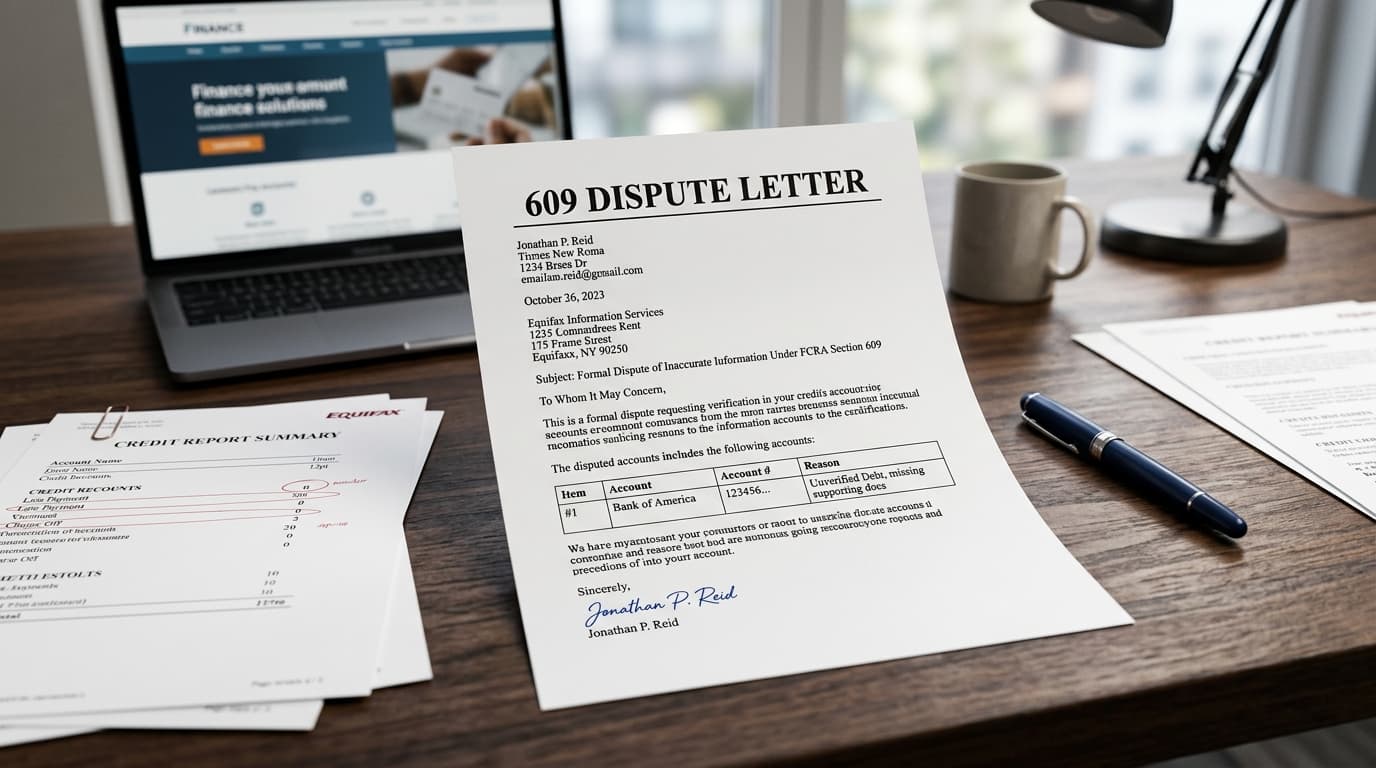
You can dispute directly with the credit bureaus by mail, online, or phone. The FCRA gives the bureaus 30 days (sometimes 45) to investigate.
Common post-Chapter 7 errors we see:
- Discharged accounts still showing an outstanding balance
- Discharged accounts still showing recent late payments
- The same debt listed twice — once as the original creditor, once as a collection agency
- A reaffirmed debt that's not showing payment history
Dispute each error individually with a short, clear letter. Include a copy of your discharge order. Do not use form letters scraped off the internet — bureaus flag those.
Months 5–6: Establish new credit (carefully)
This is the step most people fear. Don't. New credit is how you tell the scoring models you're a borrower again, not a former one.
Best tools for this stage:
- Secured credit card. You put down a deposit (typically $200–$500). The card reports to all three bureaus. Pay it in full every month. Experian and FICO have both written about secured cards as a primary rebuilding tool.
- Credit-builder loan. Offered by many credit unions and a handful of fintechs. The lender holds your "loan" in a locked account while you make monthly payments. When you finish, you get the money back and you have 12+ months of installment history.
- Authorized user status. If a family member with strong credit is willing to add you to an old account, this can help — but only if their account has a long history and low utilization.
Do not apply for store cards, "guaranteed approval" cards with $50/month fees, or anything advertised on a billboard near a payday lender. Those products are designed to extract fees from people in your exact situation.
Months 7–12: Build the pattern
The two biggest factors in your FICO score are payment history (35%) and amounts owed / utilization (30%). For the next six months, you have one job:
- Pay every bill on time. Every single one.
- Keep your secured card utilization under 10% if possible, under 30% at the absolute most.
- Don't apply for new credit unless you actually need it.
Expect to see meaningful score movement somewhere between month 9 and month 12. Scores rebuild faster early in the process and then plateau as the bankruptcy itself becomes the dominant negative factor.
Months 13–24: Add depth
Around month 12 to 15, most people are eligible to graduate from a secured card to an unsecured one (sometimes the same issuer just refunds the deposit). At that point you can:
- Add a second credit line. A mix of revolving and installment credit helps.
- Consider a small auto loan if you need a vehicle — but shop the rate aggressively. Post-bankruptcy auto loans are notorious for predatory pricing.
- Avoid mortgage applications until at least year 2 unless you're working with an FHA lender who specializes in post-bankruptcy borrowers (FHA generally requires a 2-year wait from discharge for Chapter 7).
By month 24, with clean payment history, most filers see their scores back into the mid-600s, and some into the low 700s. The bankruptcy is still on the report — but it weighs less every month.
Chapter 13 Bankruptcy: A Different Path
Chapter 13 is a court-supervised repayment plan that typically runs 3 to 5 years. During the plan, you're paying back creditors at a discounted rate based on what the court determines you can afford.
Three differences from Chapter 7 that matter for your credit:
- It only stays on your report for 7 years instead of 10.
- You're rebuilding during the plan, not after. Some Chapter 13 filers see their scores start to recover within the first year because they're now consistently paying on a court-supervised plan and the past-due balances have been frozen.
- You need court approval to open new credit during the plan. This is non-negotiable. Opening a credit card or financing a car without trustee approval can blow up your case.
The good news: many trustees will approve a small secured credit card after the first year of successful plan payments, specifically to help with rebuilding. Talk to your trustee. Don't guess.
After discharge, your post-Chapter 13 rebuild looks similar to the Chapter 7 path above — pull reports, fix errors, build new lines slowly. The main advantage: you may already be 3+ years into payment history by the time the bankruptcy discharges.
Credit Recovery After Divorce: Untangling Joint Accounts
Divorce-driven credit damage usually falls into one of three buckets. Identify which one is yours before doing anything.
Bucket 1: Joint accounts your ex is supposed to pay (per the decree)
This is the most common — and most dangerous — scenario. A judge orders your former spouse to pay the joint credit card or the second mortgage. Your spouse stops paying. The lender doesn't care what the decree says. The late marks go on both of your reports.
What to do:
- Close joint accounts where possible. If the balance is zero, close them immediately. Get written confirmation.
- Refinance accounts with a balance into one name. If your ex is supposed to keep the house, the only way to truly remove your liability is to refinance the mortgage into their name alone.
- Monitor monthly. Set up free monitoring on all three bureaus. The moment a joint account goes 30 days late, you need to know.
- If your ex misses payments, you may have to pay to protect your own credit. Ugly, but real. You can then go back to family court to enforce the decree — but the late mark on your report won't wait.
Bucket 2: Authorized user accounts you forgot about
Pull your reports and look for any account where you were an authorized user on your spouse's card. Call the issuer and have yourself removed. This stops future damage and can sometimes remove the entire account history from your report.
Bucket 3: New-life credit drag
Sometimes divorce just means you've now got rent + child support + a car payment + everything else running on one income that used to share expenses with two. The result: higher utilization, occasional late payments, sometimes a collection account.
If this is you, the recovery is straightforward but slow: rebuild the budget, automate every payment, knock down utilization first (it has the fastest score impact), and let time do the rest.
The CFPB has solid free guidance on managing joint debt during separation.
If you're dealing with divorce-related credit issues alongside a partner recovery, our Credit Repair for Couples guide walks through joint strategies for rebuilding together.
Credit Recovery After Foreclosure: The 7-Year Climb (or Faster)
Foreclosure is unique because it's almost never just "a foreclosure" on the report. The cluster usually includes:
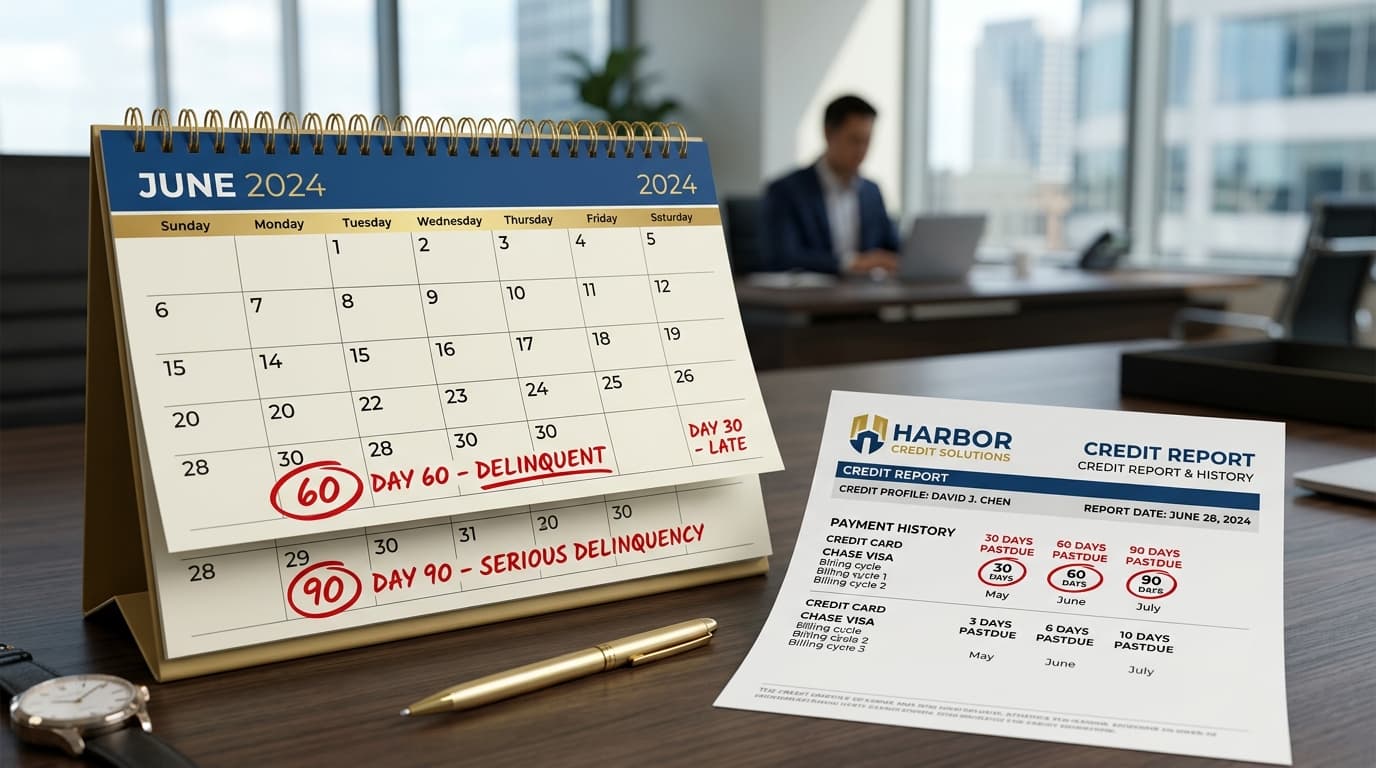
- 3 to 6+ months of 30/60/90/120-day late mortgage payments before the foreclosure
- The foreclosure itself, often coded as "foreclosure started," "foreclosure completed," or "deed in lieu"
- Possibly a deficiency judgment (where the home sold for less than the loan and the lender came after the difference)
- Sometimes a related bankruptcy
- Frequently, collection activity on other accounts that fell apart at the same time
The 7-year clock starts on the date of first delinquency that led to the foreclosure — not the foreclosure date itself. This is important. If your first missed mortgage payment was January 2024 and the foreclosure didn't complete until late 2025, the whole cluster still comes off in January 2031, not late 2032.
What you can challenge
- Wrong date of first delinquency. Servicers sometimes re-age accounts after a loan modification attempt. The original DOFD must stand.
- Inaccurate post-foreclosure reporting. Once the home is sold, the loan should report as closed with a $0 balance (or the deficiency amount, if applicable). It should not keep accruing late marks.
- Duplicate reporting. The original lender plus the post-foreclosure deficiency buyer reporting it as separate accounts when it's the same debt.
Mortgage waiting periods after foreclosure
If you ever want to buy again, the major loan programs have published waiting periods:
- FHA: 3 years from foreclosure (sometimes shorter with documented extenuating circumstances)
- VA: 2 years
- Conventional (Fannie Mae): 7 years standard, 3 years with documented extenuating circumstances
- USDA: 3 years
So even though the foreclosure stays on the report for 7 years, you can become mortgage-eligible again well before that — often within 3 years if your other credit is rebuilt.
Practical rebuild plan
The Chapter 7 24-month plan above maps almost perfectly to foreclosure recovery, with one adjustment: focus on installment credit rebuilding (a credit-builder loan, a small auto loan) because mortgage lenders want to see you can handle installment debt again before they'll touch you.
When DIY Recovery Works (and When You Need a Pro)
We're a credit repair company. So take this with the appropriate grain of salt. But here's the honest answer.
DIY works well when:
- You have time, patience, and decent attention to detail
- Your reports have a small number of clear errors
- You're comfortable writing dispute letters and tracking response timelines
- You don't have a complicated mix of bankruptcy, divorce, and collections to untangle
- You can stay disciplined for 12–24 months without giving up halfway
The CFPB and FTC both maintain free templates and step-by-step DIY dispute guides. They cost nothing. They work.
Professional help may be worth it when:
- You have multiple life events stacked (e.g., divorce that triggered a foreclosure that led to bankruptcy)
- Your reports have a large number of items and you don't have the bandwidth to manage 30+ disputes across three bureaus
- You've already disputed once on your own and got nothing but "verified" responses (this is where escalation strategies — method of verification requests, CFPB complaints, direct furnisher disputes under FCRA §623 — become useful)
- You're trying to qualify for a mortgage by a specific date and need help prioritizing what to address first
- You're not sure which items on your report are actually accurate (mixed file errors, identity theft, fraud cases)
A legitimate credit repair company operates under the Credit Repair Organizations Act (CROA). That means: written contract, 3-day right to cancel, no upfront fees for services not yet performed, no guarantees of specific outcomes. If a company won't put those things in writing, walk away.
To understand what professional services cost and how they compare, see our comprehensive Credit Repair Pricing Guide or review our transparent pricing page.
How Crowned Credit Approaches Life-Event Recovery
We're based in Greensboro, North Carolina, and a significant portion of the clients we work with are recovering from exactly the events covered in this guide. Here's how we think about the work.
We don't promise specific score outcomes. We can't. No legitimate firm can. What we can do is run a structured review of your reports, identify items that may be inaccurate, incomplete, or unverifiable, and pursue removal of those items through the dispute channels Congress created for that exact purpose.
We treat post-bankruptcy work as a 12-month-plus engagement, not a 30-day fix. Bureaus take their time. Furnishers take their time. Real progress on a complex post-life-event file is measured in quarters, not weeks.
We help with the rebuilding side too — not just deletions. Removing inaccurate items is half the work. Building new positive history is the other half, and it's the half that matters more over time.
We're transparent about CROA. You'll get a written contract, a clear scope of work, a 3-day right to cancel, and no charges for services that haven't been delivered.
We're not the right fit for everyone. If you have a clean post-bankruptcy file with two small errors, you'll do just fine on your own. If you've got 30+ items across three bureaus and a stacked situation, that's the kind of work we do every day.
Real Recovery Stories
These are anonymized composite examples — patterns we see often, not individual clients. Names are composites. No specific score guarantees implied; outcomes vary by file.
Composite 1: Marcus — The post-Ch7 HVAC contractor (Greensboro, NC)
Marcus, 41, runs a small HVAC company in Greensboro. A bad 2022 — a slow winter, a hospital stay for his wife, and a truck that needed a new engine — pushed him into Chapter 7 in early 2023. Pre-filing, his FICO 8 was around 540 across the three bureaus. Post-discharge it sat at 512.
When he came to us, the discharge was 4 months old but his reports were a mess. Two Synchrony store cards and a Capital One card were all still reporting as "open — charged off," with one even showing 30/60-day lates after the petition date. There was also a duplicate medical collection (~$1,400) listed once by the hospital and a second time by a debt buyer.
We pulled his discharge paperwork, mapped every account included in the bankruptcy against what was actually reporting, and worked the inaccuracies through both bureau disputes and direct furnisher disputes under FCRA §623. The post-petition lates were corrected. The duplicate medical collection came off one bureau. We paired the dispute work with a Self credit-builder loan and a $300 secured card.
By month 11 post-discharge, his middle score was in the high 500s and trending up. He's now 16 months in, talking to an FHA-savvy mortgage broker about the 24-month seasoning mark. The bankruptcy itself is still on his file — accurate, and it should be.
Composite 2: Tasha — The divorce hangover (Charlotte, NC)
Tasha, 34, called us 8 months after her divorce. Her ex was court-ordered to pay the joint car loan and a joint Discover card. He paid the car for three months, then stopped. The Discover card he never touched after the decree.
By the time she got to us, her TransUnion sat at 588 and Equifax at 596 — down from the low 700s during the marriage. The car loan showed three 30-day lates and one 60-day. The Discover card was 90 days past due with the balance creeping over the limit. She was paying rent, daycare, and her own car payment on one income; she'd been afraid to look at the reports for months.
First move was triage, not disputes: we walked her through refinancing the joint car into her name only (higher rate, but it stopped the bleeding), and through a hardship workout on the Discover card. Then we disputed the post-decree lates on the car loan — we had her divorce decree, the refinance docs, and a letter from the original lender confirming the transfer date. Two of the four lates were updated; the others stuck because they predated the refinance and were technically accurate.
14 months in, her middle score is in the mid-650s. The win wasn't a dramatic deletion — it was stopping a slow bleed that would've cost her another 60–80 points if it had kept going another year.
Composite 3: The Reyes family — Foreclosure + Ch7 cluster (Jacksonville, FL)
David and Elena Reyes, both early 40s, lost their Jacksonville home to foreclosure in 2022 after David's commission income collapsed. They filed Chapter 7 in 2023 to clean up about $38K in credit card debt and a ~$22K mortgage deficiency.
When they reached out, their files were a thicket. The foreclosure was reporting on Elena's file twice — once from the original lender, once from a debt buyer who'd picked up the deficiency and listed it as a separate active collection (even though it had been discharged in the Chapter 7). David had four post-discharge medical collections from a 2021 hospital stay that the bankruptcy attorney had failed to list in the petition. Starting scores: David 498, Elena 519.
We attacked it in layers. The duplicate deficiency collection — discharged in bankruptcy but still reporting as active — came off both their files after a furnisher dispute with a copy of the discharge order. Two of the four medical collections were unverifiable when we pushed back on the debt buyer for original-creditor documentation; they were deleted. On the rebuild side, we got David into a credit-builder loan and Elena into a secured card.
18 months later, David's middle score is in the low 620s, Elena's in the mid-640s. They're inside the FHA 3-year foreclosure window and the 2-year Chapter 7 window now, and their broker is running pre-approval scenarios. The foreclosure and bankruptcy themselves are still on the file — accurate, and they stay until they age off in 2029.
Composite 4: Brianna — Chapter 13 mid-plan rebuild (Atlanta, GA)
Brianna, 38, filed Chapter 13 in 2024 after her husband's small business closed and they fell behind on a second mortgage and three credit cards. Her plan is a 60-month repayment.
Most people assume Chapter 13 means "do nothing for five years and wait." Wrong. By the time she came to us — 14 months into the plan, with scores in the low 540s — there were already cleanup items worth chasing. Two of the credit cards included in the plan were still reporting recent monthly lates (they shouldn't, once the plan is confirmed and payments are flowing through the trustee). One card was still showing the pre-petition balance instead of being marked "included in Chapter 13."
We disputed the post-confirmation reporting errors with documentation from her trustee. Two of the three accounts were corrected to reflect the bankruptcy properly. We also worked with her trustee to get approval for a $300 secured card so she'd have at least one positive trade line reporting during the plan — many trustees will sign off on this after a year of clean plan payments.
At month 22 of the plan, her middle score is now in the high 590s and climbing slowly. She has another ~3 years of plan payments ahead, but she's building positive history the whole time instead of standing still. By discharge, she'll have nearly 5 years of consistent payment history under her belt — a meaningful head start that Chapter 7 filers don't get.
Composite 5: James — Post-divorce identity-theft tangle (Dallas, TX)
James, 47, came to us a year after a contested divorce. The split itself was ugly; the credit fallout was worse. His ex had opened two cards as an authorized user on his accounts during the marriage and, in the months after he moved out, had run up roughly $11K across them. She also — and this is where it crossed the line — opened a Comenity store card in his name alone after the separation, using his old address.
His Equifax was 462. He had four collections, two charge-offs, and the Comenity account that he genuinely didn't recognize. He'd already tried disputing on his own twice and gotten "verified" responses each time.
We approached it differently. The Comenity card we treated as identity theft — filed an FTC IdentityTheft.gov report, sent the report plus a police report to the bureaus and the furnisher, and pushed for a block under FCRA §605B. The account was removed across all three bureaus within about 60 days.
The authorized-user accounts were a different problem — those were technically his accounts. We helped him negotiate two of them down with pay-for-delete agreements in writing (we don't promise pay-for-delete will work, but it's a legitimate negotiating posture and sometimes it does). One creditor agreed, one didn't. The unsuccessful one was paid and updated to "paid collection."
17 months in, his middle score is in the low 640s. The contested-divorce items that were genuinely his still age on his file. The ones that weren't his are gone. That distinction is most of the work in cases like this.
The point of these stories isn't "look how much we removed." It's that the most valuable work in life-event recovery is rarely about the big public records. It's the smaller, duplicated, miscoded, or re-aged items around them that are quietly dragging the score down.
Frequently Asked Questions
How long does Chapter 7 bankruptcy stay on my credit report?
10 years from the filing date for the public record itself. Individual discharged accounts may report for 7 years from the original delinquency.
Can credit repair really remove a bankruptcy from my report?
If the bankruptcy is accurate and within its legal reporting window, no legitimate process will remove it. What can sometimes be removed is inaccurate reporting around the bankruptcy — accounts coded wrong, balances not zeroed out, or duplicate entries. Be very skeptical of any company that "guarantees" a bankruptcy deletion.
How soon after Chapter 7 discharge can I get a credit card?
Often immediately, but a secured card is the realistic option for the first 6–12 months. Some unsecured "subprime" cards target post-discharge consumers but come with high fees. Secured is almost always the better path.
Will my credit score ever recover after a bankruptcy?
Yes. FICO has noted that consumers who file bankruptcy and then practice disciplined credit habits often see scores recover into the mid-600s or higher within 2 to 4 years, even with the bankruptcy still on the report. The bankruptcy weighs less every year.
Does divorce affect my credit score directly?
No. The bureaus don't track marital status. The damage comes from joint accounts going unpaid, increased financial pressure, and missed payments during the transition.
Am I responsible for my ex's debts if the divorce decree says they have to pay?
If your name is on the contract with the lender, yes — to the lender. A divorce decree binds your ex to you, not to the lender. The lender can still come after you and still report negatively on your credit if payments stop.
How long does a foreclosure stay on my credit report?
7 years from the date of first delinquency that led to the foreclosure.
Can I buy a house again after foreclosure?
Yes, though there's a waiting period. FHA: typically 3 years. VA: 2 years. Conventional: 7 years (or 3 with documented extenuating circumstances).
Should I pay an old collection account that's about to fall off my report?
It depends. Paying a collection doesn't automatically remove it under modern scoring models. Some scoring models (FICO 9, VantageScore 3.0 and 4.0) ignore paid collections, but older FICO 8 — which many lenders still use — does not. If the account is close to falling off naturally, sometimes the best move is to leave it alone. If it's recent or actively reporting, paying it (ideally with a "pay for delete" agreement in writing) may make sense.
Will closing a credit card hurt my score?
It can, because it reduces your available credit (raising utilization) and may eventually shorten your average age of accounts. After bankruptcy or divorce, the rule of thumb is: close joint accounts you can't control, but keep your own old accounts open even if you don't use them.
What's the fastest way to raise my credit score after bankruptcy?
Two things move fastest: getting utilization on any new accounts to under 10%, and adding 6+ months of on-time payment history on a secured card or credit-builder loan. Together, these can produce visible score movement within 90–180 days.
Next Steps
If you're rebuilding from a Chapter 7, divorce, or foreclosure, here's the practical order of operations:
- Pull all three reports from AnnualCreditReport.com today. Save them as PDFs. You'll reference these for months.
- Make a list of items that look wrong. Don't worry yet about strategy — just identify everything that doesn't match what actually happened.
- Decide DIY vs. pro. If your file is small and clean, the CFPB's free dispute templates will get you most of the way. If it's complex or stacked, talk to a CROA-compliant firm.
- Open one secured card or credit-builder loan. Don't wait. New positive history is the most important variable in your rebuild.
- Set a 12-month checkpoint. Pull your reports again. Measure progress. Adjust.
If you'd like Crowned Credit to review your situation, we offer a free initial consultation. We'll tell you honestly whether we think we can help or whether you're better off going the DIY route. Either way, you'll walk away with a clearer picture of where you stand.
This article is for informational purposes only and does not constitute legal or financial advice. Credit repair laws and outcomes vary by state and individual circumstances. Crowned Credit operates as a credit restoration firm in compliance with the Credit Repair Organizations Act (CROA). We do not guarantee specific score outcomes.