Credit Utilization: The #1 Factor Killing Your Credit Score (And How to Fix It)

Ashley Rivera
Credit Repair Specialist
Your Credit Score Has a Hidden Leak — And It Might Be This
You've been paying your bills on time. You haven't applied for new credit in months. You're doing everything right — and your score still isn't where it needs to be. Or maybe it dropped and you can't figure out why.
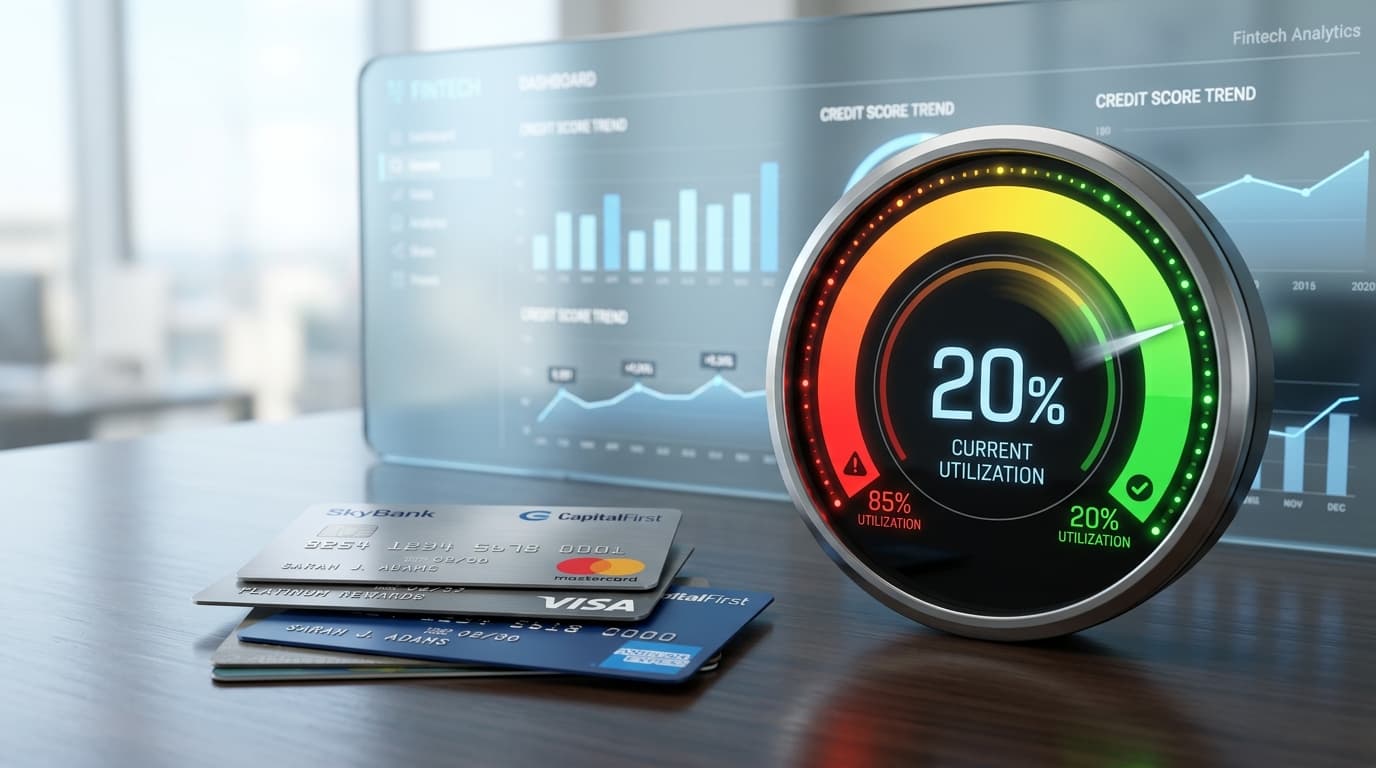
Credit utilization is one of the most misunderstood factors in the entire credit scoring system. It's responsible for 30% of your FICO score — second only to payment history — and it can swing your score by 50–100+ points without a single late payment or collection account. Results vary based on individual credit profiles and are not guaranteed.
Here's everything you need to know, with specific numbers and actionable strategies you can implement starting today.
What Credit Utilization Actually Is
Credit utilization is the ratio of your revolving credit balances to your revolving credit limits. "Revolving credit" means credit cards and lines of credit — not installment loans like car loans or mortgages, which are scored differently.
The formula is simple:
Utilization % = (Total Balances ÷ Total Credit Limits) × 100
Example: If you have $2,000 in credit card balances across accounts with a combined limit of $10,000, your utilization is 20%.
Scoring models look at utilization two ways:
- Overall utilization: All your balances combined vs. all your limits combined
- Per-card utilization: Each individual card's balance vs. its own limit
Both matter. You can have low overall utilization but get dinged because one card is maxed out. This catches a lot of people off guard.
The Numbers: What Utilization Rates Actually Do to Your Score
Here's roughly how utilization bands translate to score impact:
- 0% utilization: Good, but not always optimal — showing zero activity can sometimes be neutral rather than positive
- 1–9% utilization: Optimal zone. Lenders see you as an active, responsible credit user
- 10–29% utilization: Good. Minor impact, still favorable
- 30–49% utilization: Noticeable negative impact begins here — this is the threshold most people have heard of
- 50–74% utilization: Significant score drag. You're likely losing 20–50 points depending on your profile
- 75%+ utilization: Serious damage. Scoring models treat this as a sign of financial stress
- Maxed out (90–100%): One of the worst things you can do to your score short of a late payment
The sweet spot most credit experts target: under 10% per card, under 10% overall. If you can get there, you're squeezing maximum points out of this factor.
Results vary based on individual credit profiles and are not guaranteed.
Why the "Pay It Off Every Month" Strategy Isn't Always Enough
Here's something most people don't know: the balance that gets reported to the credit bureaus is your statement balance — not your end-of-month balance after you've paid it off.
This means even if you pay your card in full every month (which is great for avoiding interest), your credit report might show a high utilization rate if your statement closed with a high balance. You pay it off on day 21 but the bureau captured it on day 18 when your statement closed.
If your statement balance is consistently high — even if you pay it in full — your utilization is being reported high. This matters more than most people realize.
5 Strategies to Lower Your Utilization and Boost Your Score
Strategy 1: Pay Before Your Statement Closes
This is the fastest, most direct fix. Instead of paying after your statement closes (or after the due date), pay down your balance before the statement closing date. Your statement balance will be lower, which means a lower utilization gets reported.
Check your card's statement closing date in your online account — it's usually different from your payment due date. Paying a week before closing can dramatically change what gets reported.
Strategy 2: Make Multiple Payments Per Month
Instead of one big payment at the end, make two or three smaller payments throughout the month. This keeps your running balance lower throughout the billing cycle and reduces the balance that gets captured on your statement date.
This is particularly useful if you use your cards heavily for rewards or business expenses but want to keep your reported utilization low.
Strategy 3: Request a Credit Limit Increase
If your balance stays the same but your limit goes up, your utilization percentage drops automatically.
Example: $3,000 balance on a $6,000 limit = 50% utilization. Same $3,000 balance on a $10,000 limit = 30% utilization. Same balance, better score.
Call your card issuer and ask for a limit increase. If you've had the card for 12+ months, have an on-time payment history, and your income has grown since you opened the account, you have a solid case. Many issuers will grant this without a hard inquiry if you frame it correctly.
Important: Don't increase your spending just because your limit went up. The goal is lower utilization, not more debt.
Strategy 4: Open a New Card (Strategically)
A new credit card adds to your total available credit, which can lower your overall utilization ratio. If you have $5,000 in balances across $10,000 in limits (50% utilization), and you open a new card with a $5,000 limit, your utilization drops to 33% without paying down a single dollar.
The trade-off: opening new credit causes a hard inquiry and lowers your average account age, both of which have small negative effects. This strategy makes sense if your utilization is significantly high and you can qualify for a solid card. It doesn't make sense if you're 3 months away from applying for a mortgage.
Strategy 5: Strategically Distribute Your Balances
Remember: per-card utilization matters, not just overall utilization. If one card is at 90% while another sits at 5%, you're getting dinged on the maxed card even if your overall utilization looks fine.
Consider redistributing balances so no single card exceeds 30% — ideally under 10%. You can do this by paying down the highest-utilization card first (not always the highest balance), or by doing a balance transfer to spread debt across cards more evenly.
What Doesn't Count Toward Utilization
This is worth knowing because people sometimes confuse it:
- Mortgage balances — not factored into revolving utilization
- Auto loan balances — not factored in
- Student loans — not factored in
- Personal installment loans — not factored in
- Charge cards (like some Amex cards with no preset limit) — treated differently, usually excluded from utilization calculations
Only credit cards and revolving lines of credit (like HELOCs used as revolving credit) count.
How Quickly Utilization Changes Your Score
This is where utilization is actually your friend: unlike late payments or collections, which can stay on your report for 7 years, utilization is recalculated every month when your new balances are reported.
Pay down a card today, and next month's score could be meaningfully higher. This makes utilization the fastest lever you can pull if you're trying to improve your score before a major credit application.
If you're preparing to apply for a mortgage, auto loan, or business credit within the next 90 days, attacking your utilization is the highest-ROI move you can make right now. Results vary based on individual credit profiles and are not guaranteed.
When Utilization Alone Isn't Enough
Utilization is a powerful lever, but it's not the whole picture. If you also have collections, charge-offs, late payments, or errors on your credit report, optimizing utilization will help — but you'll hit a ceiling until those other issues are addressed.
That's where a comprehensive credit improvement strategy comes in. Crowned Credit works with clients on the full picture: utilization strategy, dispute process for inaccurate items, creditor outreach, and a prioritized action plan based on your specific profile. See our plans starting at $99/month or get a free review to understand exactly where you stand.
Take Control of Your Credit Score
Utilization is one of the few credit factors you can meaningfully impact in a matter of weeks. The strategies above are all things you can start on today — no waiting for disputes to process, no 30-day investigation periods.
If you want an expert set of eyes on your full credit picture, Crowned Credit offers a free consultation where we'll walk through your report, identify every opportunity for improvement, and give you a clear priority list — starting with utilization and going deeper.
Results vary based on individual credit profiles and are not guaranteed. Credit score impacts described are general estimates and may differ based on your unique credit history and scoring model used.