Experian vs. Equifax vs. TransUnion: Which Credit Bureau Actually Matters Most?

Ashley Rivera
Credit Repair Specialist
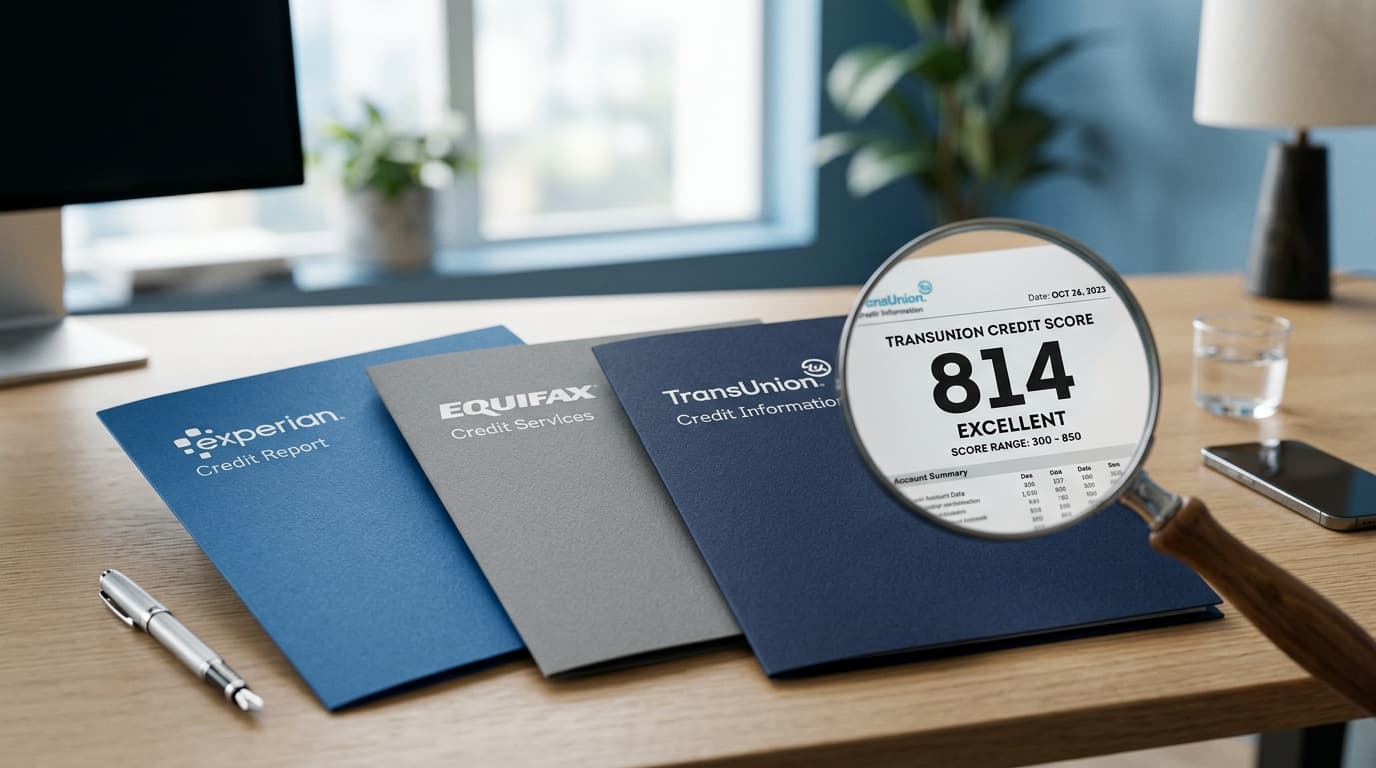
You pulled your credit score on Credit Karma and saw 672. Then you checked MyFICO and it showed 648. Your bank app says 691. Now you're wondering if these are even real numbers — or if someone's just making things up.
None of those sites are lying to you. The problem is that each number comes from a different credit bureau, and the three major bureaus — Experian, Equifax, and TransUnion — don't always have the same information on file about you. They each build their own picture of your credit history from data they receive independently. Different creditors report to different bureaus. Different bureaus use different scoring models. The result: three different scores, sometimes varying by 50 points or more.
This matters a lot when you're applying for a mortgage, a car loan, or a credit card. The bureau your lender pulls determines which version of your financial history they're evaluating. If the wrong one has an error — or if a negative item on one bureau never showed up on the others — that's the difference between an approval and a rejection.
Here's what you actually need to know about all three bureaus, which one matters most for different types of credit, and what to do if your reports don't reflect your real creditworthiness.
The Three Bureaus: What They Are and What They Do
Experian, Equifax, and TransUnion are for-profit companies. They collect data from lenders, credit card issuers, collection agencies, and public records, then sell that data to other lenders in the form of credit reports and scores. They're not government agencies, and they're not on your side — they exist to serve lenders, not consumers.
Each bureau competes with the other two for lender relationships, which is part of why their data doesn't always line up. A creditor who reports to Experian doesn't have to report to Equifax or TransUnion. And while most major creditors (banks, credit card issuers, large auto lenders) report to all three, smaller lenders, credit unions, and some specialty creditors may only report to one or two.
This creates a fragmented picture. You might have a collection account sitting on your Equifax report that never made it to Experian. You might have an account with a perfect payment history on TransUnion that Equifax never received. Your reports aren't necessarily wrong — they're just incomplete, in different ways.
Which Bureau Do Lenders Actually Pull?
There's no universal answer here, because different lenders have different preferences. But there are patterns worth knowing.
Mortgage Lenders
If you're applying for a home loan, expect all three bureaus to be pulled — every time, no exceptions. Mortgage underwriting uses a "tri-merge" report that combines data from Experian, Equifax, and TransUnion. The lender then takes the middle score of the three for qualification purposes (not the highest, not the average — the middle).
If you're applying jointly with a spouse or co-borrower, lenders take the lower of the two middle scores between both applicants. That one number drives your interest rate and whether you qualify at all.
This is why mortgage preparation is about all three bureaus, not just one. An error on any report — even if your other two scores are great — can drag down your middle score and cost you thousands in higher interest over the life of the loan.
Auto Lenders
Auto lending tends to lean toward Experian, which holds the largest database of auto loan data in the country. Many dealerships and banks use Experian Auto as their primary source. That said, individual dealers and credit unions make their own choices — some pull Equifax, some pull TransUnion, and some pull two at once.
When you apply for dealer financing, there's also a good chance they're shopping your application to multiple lenders in the background. Each of those lenders may pull a different bureau. That's why you sometimes see a cluster of hard inquiries appear after visiting one dealership. (Multiple auto-related inquiries within a 14–45 day window typically count as a single inquiry for scoring purposes under most FICO models.)
Credit Cards
Credit card issuers vary significantly. Some major issuers have bureau preferences that are fairly consistent — for example, Discover has historically favored Equifax and TransUnion, while American Express tends to lean on TransUnion and Experian. Chase commonly pulls Experian or TransUnion depending on the state you're in. Capital One is known to pull all three.
These patterns shift over time and vary by card product and geography, so they're not guarantees — but they're useful to know if you're strategically timing credit applications.
Personal Loans and Other Credit
Personal loan lenders, fintech lenders, and online creditors vary widely. Many pull whichever bureau they have a pricing relationship with. Some pull two. Larger personal loan platforms often use all three in their decisioning algorithms even if they only formally pull one.
The bottom line: unless you know exactly which bureau your lender is using, you can't optimize for just one. Cleaning up all three is always the right strategy.
Why Your Scores Are Different Across Bureaus
Your credit score isn't one number — it's dozens of numbers, generated by different scoring models applied to different data sets. The most common source of score variation comes down to three things:
1. Different creditors report to different bureaus. If a credit card company reports to Equifax and Experian but not TransUnion, your TransUnion score won't reflect that account at all. If it's a positive account with years of on-time payments, TransUnion is essentially missing a piece of evidence in your favor.
2. Different scoring models are used. FICO has over 60 different scoring models. VantageScore has its own models. A free credit monitoring app might show you your VantageScore 3.0 from TransUnion — which uses a different calculation than the FICO 8 a credit card issuer pulls from Experian. The underlying data could be identical and the scores would still differ just from the model change.
3. Reporting timing varies. Creditors don't all report on the same day. Your credit card balance might show $4,200 on Equifax (reported before you paid it down) and $800 on TransUnion (reported after). That difference alone can shift your utilization ratio — the second most important factor in your score — by enough to move the needle by 10–30 points.
What This Means for Credit Repair
Most people focus on the bureau they happen to check most often, or the one that showed up in a lender's rejection letter. That's a mistake. The right approach is to monitor and address all three simultaneously.
Under the Fair Credit Reporting Act (FCRA), every creditor who reports negative information to a bureau has a legal obligation to ensure that information is accurate, complete, and verifiable. When you dispute an item, the bureau has 30 days to investigate and confirm that the creditor can fully verify what they're reporting. If they can't — if there's any defect in documentation, timing, or the accuracy of what's being reported — the bureau must correct or remove the item.
Here's what most people miss: a collection account on your Equifax report isn't automatically on your Experian or TransUnion. You may need to dispute the same item with all three bureaus separately. Removing it from one doesn't remove it from the others.
This is one of the core reasons working with a professional credit repair company is more efficient than going it alone. Tracking disputes across three bureaus — each with its own process, timing requirements, and verification standards — while keeping records of everything and following up when creditors go quiet is a full-time job. Most people drop the ball on at least one bureau, and that's the one that ends up mattering when they apply for something important.
At Crowned Credit, every dispute strategy is built around all three bureaus from day one. Nothing gets left on one report while the others stay clean — because we've seen too many situations where the one ignored bureau was exactly the one a mortgage lender pulled.
Checking All Three Reports: How to Do It
You're entitled to one free report from each bureau every 12 months through AnnualCreditReport.com — the only federally mandated free source. During the pandemic, the bureaus temporarily allowed weekly free reports, and this access has continued in various forms, so check the site for current availability.
When reviewing your reports, look for:
- Accounts you don't recognize (potential identity theft or mixed file)
- Late payments marked on accounts where you paid on time
- Collections that appear on one bureau but not the others — and whether the balance or date differs between reports
- Hard inquiries you didn't authorize
- Accounts showing as open that should be closed (or vice versa)
- Incorrect personal information: wrong addresses, names, or employers
If you spot discrepancies between bureaus, that's often a sign that something was reported inaccurately to one or more of them. That's a dispute opportunity — and under FCRA, creditors must verify or the item must be corrected.
How Negative Items Affect Each Bureau Differently
One of the more frustrating realities: the same debt can appear with different statuses across bureaus. A collection account might show as "unpaid" on Equifax, "in dispute" on Experian, and not appear at all on TransUnion. A charge-off might show different balance amounts across all three.
Medical debt rules have changed significantly in recent years. As of 2024, medical debts under $500 were removed from credit reports entirely under new CFPB guidance, and major bureaus removed paid medical collections from reports. But implementation has been inconsistent — some medical collection entries that should have been removed are still showing up on one or two bureaus while gone from the third. Read more about medical debt on credit reports →
This inconsistency is exactly why a thorough credit repair engagement covers all three. A bureau-by-bureau audit often reveals that the same account is in wildly different states across reports — and each state requires a different strategy.
Prioritizing When You Have a Specific Goal
If you're preparing for a specific credit application and you know which bureau the lender favors, it makes sense to prioritize that one in the short term while addressing all three in parallel. Here's a quick reference:
- Buying a house: All three matter equally — mortgage lenders pull all three and use your middle score.
- Financing a car: Start with Experian, but don't ignore Equifax. Dealer financing may touch all three.
- Applying for a credit card: Research the specific issuer's bureau preference for the card you want. Many issuer-specific threads on credit forums have current data points.
- Renting an apartment: Most landlords use tenant screening services that pull from TransUnion or Equifax most commonly, though this varies by the screening company.
- Getting a personal loan: Varies too much to generalize — clean all three.
Can You Dispute With All Three at Once?
Yes — and for most situations, you should. Each bureau has its own online dispute portal, but you can also dispute by mail with supporting documentation. Disputing by mail (certified, return receipt) creates a paper trail that online portals don't, and forces the bureau to handle your dispute through their formal process rather than a quick automated system.
When the same item needs to be challenged across all three bureaus, you'll file three separate disputes — one per bureau — citing the same issue but tailoring the documentation to each bureau's specific format requirements. The 30-day investigation window starts independently at each bureau once they receive your dispute.
If a dispute comes back "verified" (meaning the creditor confirmed they stand by the information), you have options: you can request the method of verification used, send a Method of Verification letter, escalate to a CFPB complaint, or pursue other remedies. "Verified" isn't the end of the road.
The Bottom Line
There's no single bureau that matters most across the board. Experian is the most widely used for auto loans. Mortgages require all three. Credit cards depend on the issuer. And because you can never fully predict which bureau a lender will pull — especially when shopping rates across multiple lenders — the only real answer is: all three matter, and all three deserve attention.
If your reports have negative items, inaccuracies, or missing positive history, those problems will eventually surface when a lender checks the wrong bureau at the wrong time. Getting everything clean across the board eliminates that risk entirely.
If you're ready to address all three bureaus systematically and build the credit profile that actually reflects your reliability as a borrower, schedule a free consultation with Crowned Credit. Our team reviews all three of your reports, builds a dispute strategy tailored to your situation, and works your case until the results are there.
Crowned Credit's plans start at $150 setup + $99/month for the Essential plan, or $249 setup + $199/month for the Accelerated plan. For those who want a one-time deep-dive, the Momentum plan is a one-time, prepaid program priced by custom quote — no monthly fees. See our full pricing page or call us at 336-310-0090 to talk through which option fits your goals.
CROA Disclaimer: Crowned Credit is a credit repair organization as defined by the Credit Repair Organizations Act (CROA). We do not guarantee specific results or credit score improvements. Results vary based on individual credit profiles. You have the right to dispute inaccurate information on your credit report directly with the credit bureaus at no cost. This post is for educational purposes only and does not constitute legal or financial advice.