How to Get a Car Loan with Bad Credit in 2026 (And What It's Actually Costing You)

Ashley Rivera
Credit Repair Specialist
You need a car. Your credit isn't great. You're wondering if any lender will actually say yes — and if they do, whether the rate will be something you can live with.
Here's the honest answer: yes, you can get a car loan with bad credit in 2026. Lenders exist specifically for this situation. But the math on what you'll pay in interest is brutal, and most people don't fully realize it until they're three years into a loan wondering why their balance hasn't moved much.
This guide covers both sides — how to actually get approved right now, and how to stop letting bad credit drain money out of your pocket every single month.
What "Bad Credit" Means for a Car Loan
Lenders slice credit scores into tiers, and each tier gets a different interest rate. The gap between good credit and bad credit isn't a few percentage points — it's often double or triple the rate.
Here's what the numbers looked like in mid-2026 for new car loans:
- Excellent credit (720+): 5–7% APR
- Good credit (660–719): 7–9% APR
- Fair credit (620–659): 9–13% APR
- Subprime (501–600): ~13–18% APR on new, ~19–21% on used
- Deep subprime (below 500): 20–29% APR, or flat-out denial
Run that through a real scenario. Say you're financing a $20,000 used car over 60 months:
- At 7% APR: total interest paid ≈ $3,761
- At 19% APR: total interest paid ≈ $11,174
That's a $7,400+ difference on the same car. And if you rolled in negative equity from a previous trade-in — which dealers love to do — the number gets worse. See exactly what score you need to qualify for better rates.
Step 1: Pull Your Credit Reports Before the Dealer Does
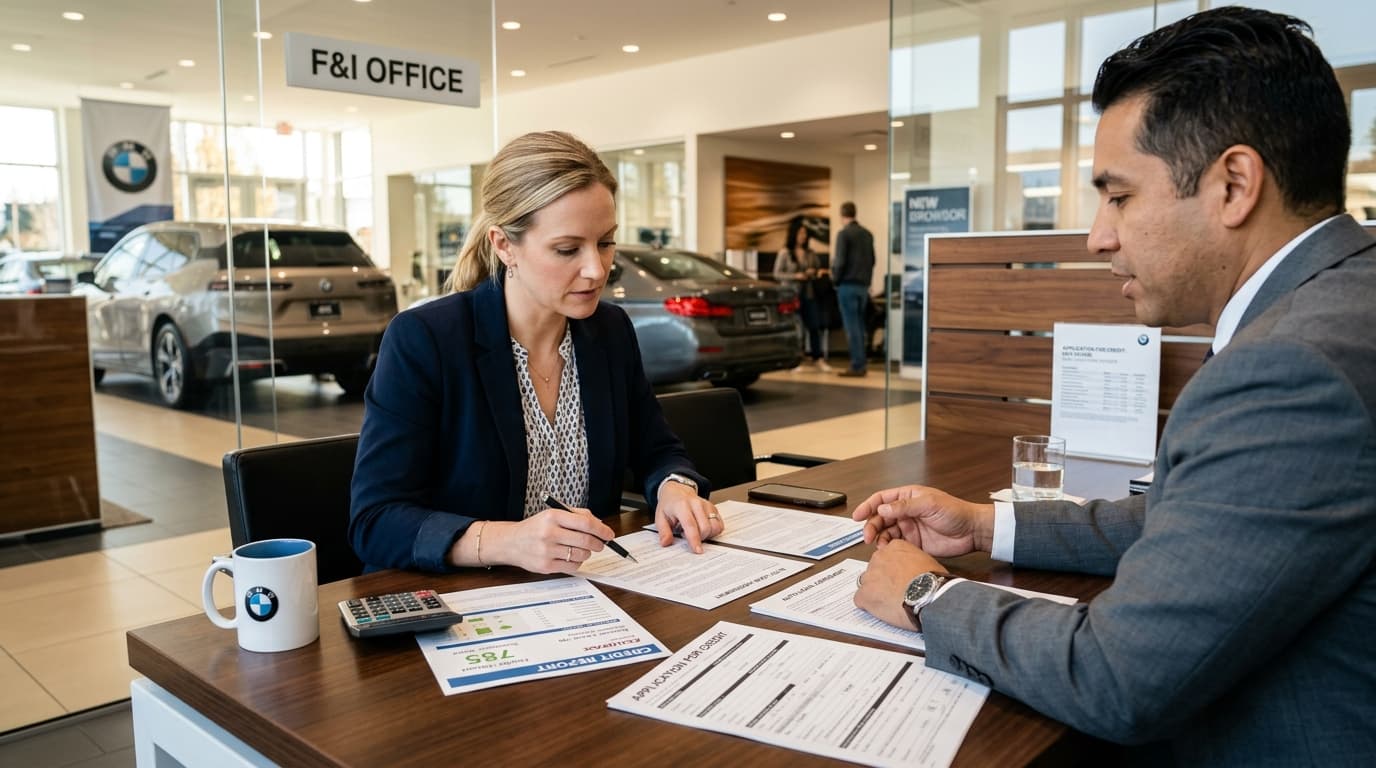
Most people walk into a dealership without knowing their actual score. The dealer runs a hard inquiry, sees a 561, and suddenly you're talking to the F&I manager about a 23% rate on a used Civic. You're already on the back foot.
Pull your reports from AnnualCreditReport.com before you shop. All three bureaus — Equifax, Experian, TransUnion. Look for:
- Accounts you don't recognize (potential fraud)
- Late payments reported incorrectly
- Collections that have already been paid
- Duplicate negative accounts
- Balances that don't reflect your current payoff status
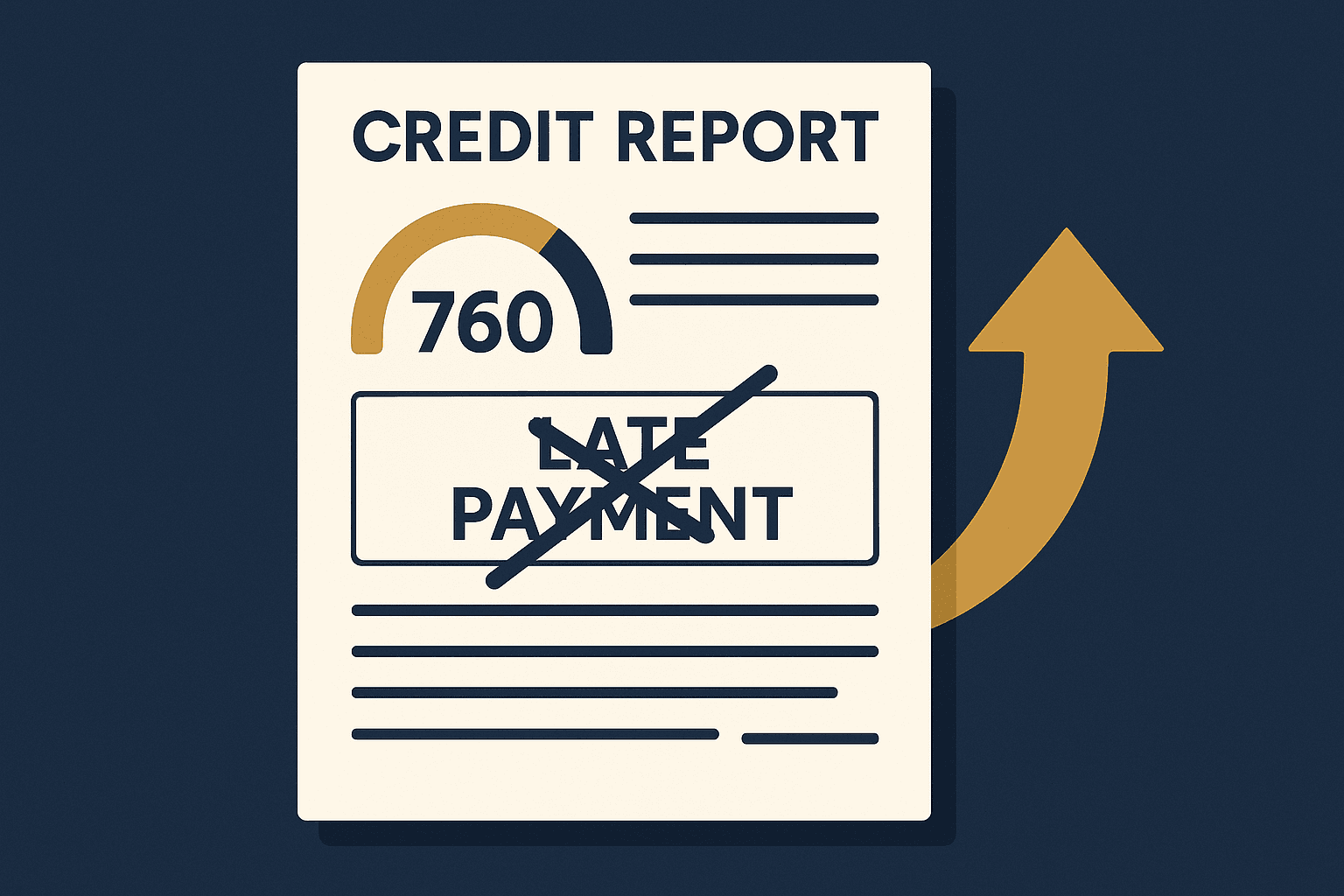
Any error you find is disputable under the Fair Credit Reporting Act. Here's the full guide to disputing credit report errors. Even one corrected error can shift your score enough to move you into a better lending tier.
Step 2: Know Your Number Before You Go
Dealers are allowed to mark up your interest rate over what the lender actually approved you for. This is called dealer reserve, and it's legal. If the bank approved you at 15% and the dealer shows you 19%, the 4% difference goes in the dealer's pocket.
The only way to fight this is to walk in with competing offers already in hand. Get pre-approved by your own bank, a credit union, or an online lender before you set foot on a lot. Even if you end up using dealer financing, having a competing offer gives you something to negotiate against.
Step 3: Where to Actually Get Approved with Bad Credit
Not every lender will work with a 540 credit score. Here's where to look:
Credit Unions
Credit unions are member-owned institutions that tend to approve more flexibility in their underwriting. Many will look at your full financial picture — not just the score. If you have stable income, a direct deposit relationship, or a co-signer, a credit union is often your best first call. Rates at credit unions for bad credit borrowers are typically 2–5 percentage points lower than at traditional banks.
Online Subprime Lenders
Companies like Autopay, OpenRoad Lending, and Capital One Auto Navigator specifically work with lower credit scores. You apply online, often with a soft pull pre-qualification first, and get rate offers without tanking your score. This is worth doing even if the rate isn't great — it gives you a baseline before you talk to dealers.
Manufacturer Financing (CAPTIVE Lenders)
Ford, Toyota, GM, and other major manufacturers have their own financing arms. During promotional periods, they sometimes extend financing to buyers with scores in the 580–620 range who might get turned down at a bank. The catch: you're usually limited to buying a new car at full MSRP, which eliminates the pricing flexibility you'd get on used inventory.
Buy Here Pay Here (BHPH) Lots
BHPH dealers act as both the seller and the lender. They'll approve almost anyone, but the interest rates are frequently 25–30% or higher, the inventory is generally lower quality, and they often install GPS tracking or remote disablers to repossess your car quickly if you miss a payment. It should be a last resort, not a starting point.
One more thing: rate shopping within a 14-day window only counts as a single hard inquiry on your credit report. Pull multiple offers, compare them, then decide. Learn more about how hard inquiries actually work.
Step 4: Structure the Deal to Your Advantage
Even if your rate isn't great, you can make the loan less painful with smarter deal structure.
Put More Down
A larger down payment reduces the amount you're financing, which reduces the lender's risk. Many subprime lenders require 10–20% down anyway. If you can push it to 20–25%, you may qualify for a slightly better rate, and your monthly payment will be lower regardless. It also protects you from going underwater immediately — a common trap with high-rate loans.
Shorten the Loan Term
Dealers love 72- and 84-month loans because they make the payment look small. But on a 19% APR loan, a 72-month term means you're still paying near-full interest for the last two years of ownership. A 36- or 48-month term costs more per month but saves a significant amount on total interest.
Buy Used, But Choose Carefully
High-mileage cars financed at 20% APR are a double risk — the car may need repairs before you've paid it off, and you'll still owe the full balance. Aim for certified pre-owned vehicles under 80,000 miles with a clean vehicle history report. The monthly payment might be slightly higher for a more reliable car, but the risk of getting stuck is much lower.
Step 5: If You Already Have a High-Rate Loan, Refinance
If you got a car loan two or three years ago when your credit was worse, check your rate against what you'd qualify for today. Even if your score has only gone up 40–50 points, that can translate to a meaningfully lower rate — and potentially hundreds of dollars saved per year in interest.
Refinancing an auto loan is usually straightforward. Most lenders charge no fee for it. You apply for a new loan that pays off your existing one, and you start fresh with the new terms. The main requirements are that you're current on your payments and the loan isn't so old or the car so depreciated that the lender won't cover the remaining balance.
Autopay, RefiJet, and myAutoLoan are commonly used platforms for auto refinancing with fair or rebuilding credit.
What You're Really Paying For: The Math Nobody Shows You
Let's be direct about something. The car dealership isn't your enemy — but their incentives don't align with yours. A finance manager earns more when you take a longer loan at a higher rate. The feature they're selling is the monthly payment, not the total cost.
Do this before signing anything: multiply the monthly payment by the number of months, then subtract the car's purchase price. That number is how much interest you'll pay. If you're financing a $15,000 car and your total payments come to $23,000, you're paying $8,000 for the loan itself. That's real money.
On a $25,000 car at 8.22% APR over 60 months, you pay roughly $5,400 in interest. At 19% APR over the same term, you pay about $13,400. The difference — $8,000 — is larger than most people's emergency funds. And it compounds over every car you finance at bad credit rates across your lifetime.
The Longer Game: Fix the Credit, Get the Better Rate
Getting approved for a car loan today with a 540 credit score is possible. But every month you carry a 19% loan when you could have qualified for 8% is money you're not getting back.
Most people who work with a professional credit repair company see meaningful score movement within 3–6 months. That's not a guarantee of any specific result — every credit file is different — but for someone who has unverified negative items, errors, or old collections dragging down their profile, the process can move quickly once those items are challenged under FCRA rights.
Here's the strategic play: if you don't need the car immediately, work on your credit for 90–120 days before applying. If you need the car now, get it — but plan to refinance in 12–18 months once your credit improves. Set a calendar reminder the day you sign. Most people forget to refinance and overpay for the full term.
The factors that most commonly hold scores down in the subprime range:
- Collections from medical debt, utilities, or old credit cards
- Late payment history with inaccurate dates or amounts
- Accounts that creditors can't fully verify under FCRA's Section 611 verification requirement
- High credit utilization on open revolving accounts
- Thin credit files with no positive payment history building the score up
All of these can be addressed. Some respond quickly to disputes. Others require consistent positive payment history over time. Learn how collection accounts are handled in the dispute process, and see how utilization alone can move your score significantly.
When to Get Professional Help
If your credit file is complicated — multiple collections, charge-offs, a prior bankruptcy, or disputes that came back "verified" when you know they shouldn't have — doing this alone can get frustrating fast. The bureaus process tens of millions of disputes annually. A form letter gets a form response.
At Crowned Credit, our team works through the full credit file using FCRA rights to challenge what creditors report and to demand verification of every item that's dragging a score down. The Accelerated plan starts at $249 and $199/month — and for most clients who are financing a vehicle or planning a major purchase, the improvement in loan rates more than offsets the cost. See all plans and pricing here.
If you're carrying a 19% car loan right now, every point improvement in your credit score has a dollar value attached to it. That's not a soft benefit — it's real ROI. Book a free consultation here and we'll walk through your credit file, show you what's dragging the score down, and give you a realistic timeline for what's achievable.
Quick Checklist Before You Apply
- ✅ Pull all three credit reports — check for errors before any lender does
- ✅ Get pre-approved by a credit union or online lender first
- ✅ Rate shop within a 14-day window to limit hard inquiry impact
- ✅ Calculate total loan cost (not just monthly payment)
- ✅ Put 10–20% down minimum, more if possible
- ✅ Keep the loan term to 48 months or under if the math works
- ✅ Set a reminder to refinance in 12–18 months if you take a high-rate loan now
- ✅ If your profile has significant negatives, get professional credit review before financing
Bad credit makes car buying harder and more expensive. But it's not permanent — and if you're smart about how you structure the loan right now while working to fix the underlying score, you can get the car you need without locking yourself into years of overpaying.
Disclaimer: Crowned Credit is a credit repair organization. Results from credit repair vary based on individual circumstances. No specific score improvement or timeline is guaranteed. Under the Credit Repair Organizations Act (CROA), you have the right to cancel services within three business days without penalty. Credit repair cannot remove accurate, timely negative information from your credit report.