When Can Debt Collectors Sue You? (And What to Do If They Do)

Ashley Rivera
Credit Repair Specialist
The Legal Window: Statute of Limitations
Every state sets a time limit for how long a creditor or debt collector can sue you for unpaid debt. This is called the statute of limitations (SOL).
Once the statute expires, the debt becomes "time-barred." Collectors can still contact you about it, but they can't legally sue you. If they try, you have an absolute defense in court.
Typical statute of limitations by debt type:
- Credit card debt: 3-6 years in most states
- Medical debt: 3-10 years depending on the state
- Auto loans: 4-6 years
- Personal loans: 3-6 years
- Student loans (federal): No statute of limitations
The clock typically starts from your last payment date or the date of default—whichever is later. Some states use the date of last activity, which could include making a payment, acknowledging the debt in writing, or even agreeing to a payment plan.
For a complete breakdown of statute of limitations by state and debt type, check out our 50-state statute of limitations guide.
When Are Collectors Actually Likely to Sue?
Just because a collector can sue doesn't mean they will. Lawsuits cost money, and debt buyers often purchase old accounts for pennies on the dollar. They'll only sue when it's financially worth it.
Collectors are more likely to sue when:
- The debt is large enough. Most won't sue for balances under $1,000-$1,500. The sweet spot for lawsuits is $2,000-$10,000.
- You have income or assets. If they can't garnish wages or levy bank accounts, a judgment is worthless to them.
- The debt is recent. The closer you are to default, the more likely legal action becomes. Debts nearing the statute of limitations are less attractive.
- You ignored them completely. If you never responded to calls, letters, or validation requests, they assume you won't show up to court either—making it an easy default judgment.
- You live in a garnishment-friendly state. In states where wage garnishment is easy (like Ohio, Missouri, or Illinois), collectors sue more aggressively. In states like Texas, North Carolina, Pennsylvania, and South Carolina—where wage garnishment is restricted—lawsuits are less common.
Collectors are less likely to sue when:
- The debt is small (under $1,000)
- The statute of limitations is about to expire
- You're judgment-proof (no income, no assets, receiving federal benefits)
- You disputed the debt and requested validation
Warning Signs a Lawsuit Might Be Coming
Lawsuits don't come out of nowhere. Watch for these red flags:
- Letters from a law firm instead of a collection agency. Law firms send final demand letters before filing suit.
- "Intent to sue" or "pre-legal" notices. These explicitly state legal action is being considered.
- A sharp increase in contact frequency. Daily calls and letters can signal they're escalating.
- The debt was recently sold. New debt buyers often sue quickly to recover their investment.
- You received a settlement offer with a hard deadline. This is often the last chance before they file.
If you see these signs, don't ignore them. Take action now—before the lawsuit is filed.
What to Do If You're Sued by a Debt Collector
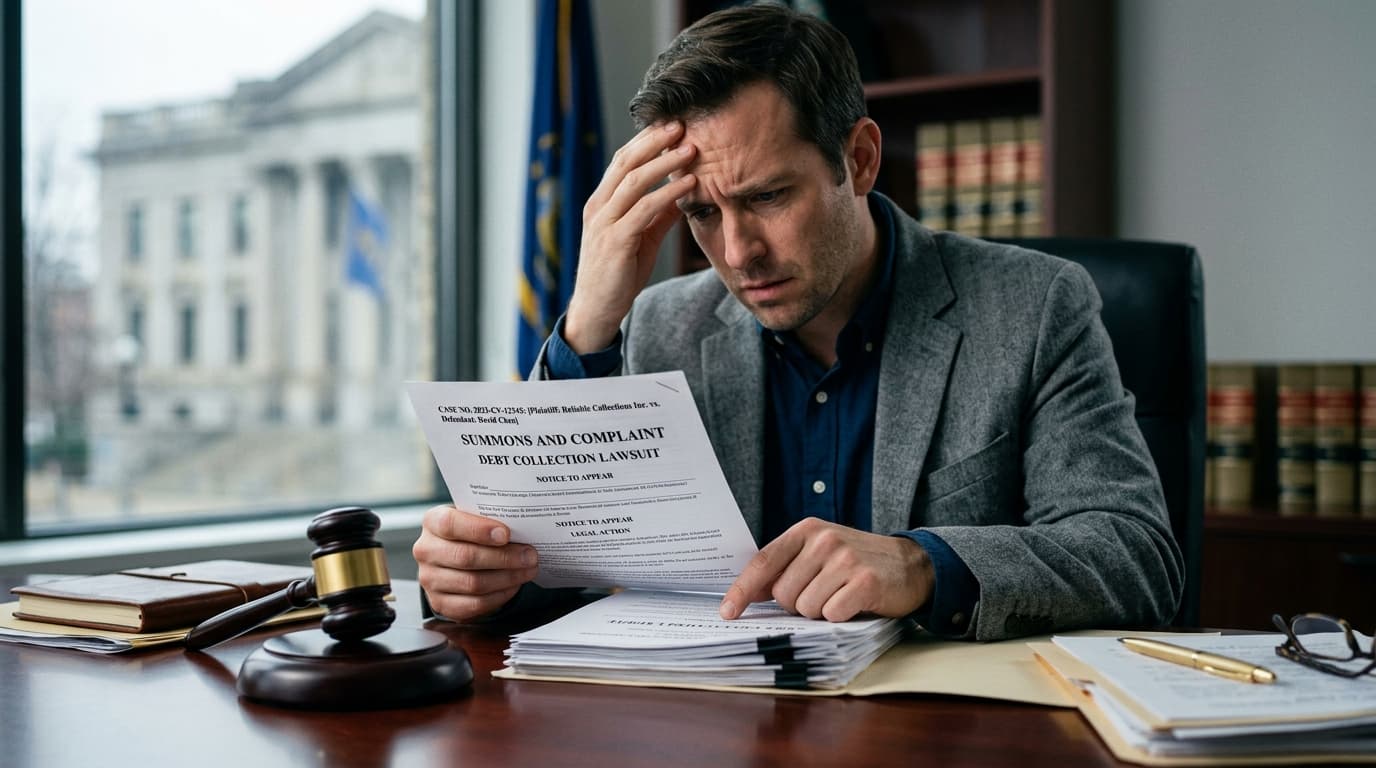
If you've been served with a lawsuit (you'll receive a summons and complaint), here's what to do:
1. Don't Ignore It
This is the worst move you can make. If you don't respond within the deadline (usually 20-30 days), the collector wins by default judgment—even if you had a valid defense.
Default judgments allow them to garnish wages, freeze bank accounts, and place liens on property.
2. Read the Complaint Carefully
Check these details:
- Is the debt within the statute of limitations?
- Do they have proof you owe the debt? (Original signed agreement, account statements, chain of title if sold)
- Is the amount accurate?
- Are they licensed to collect in your state?
Debt buyers often lack complete documentation. If they can't prove you owe the debt, you have a defense.
3. File an Answer
You must file a written response (called an "Answer") with the court by the deadline. Your Answer should:
- Admit or deny each claim in the complaint
- Raise any defenses (statute of limitations, lack of proof, mistaken identity, etc.)
- Request proof of the debt (demand they provide documentation)
You can find Answer templates online or hire an attorney. Some courts offer self-help resources.
4. Consider Hiring an Attorney
Many consumer attorneys work on contingency or offer free consultations. If the collector violated the Fair Debt Collection Practices Act (FDCPA)—like suing on time-barred debt without disclosing it—you may have a counterclaim.
Some attorneys will defend your case for free if they can win damages from FDCPA violations.
5. Negotiate a Settlement
Once you've filed your Answer, the collector knows you're not rolling over. This is often when settlement offers improve dramatically.
You may be able to settle for 30-50% of the balance, sometimes less. Get everything in writing before paying a dime.
6. Show Up to Court
If the case goes to trial, show up. Bring any evidence that supports your defense—payment records, letters, proof the debt is time-barred, etc.
Many debt collection lawsuits are dismissed when consumers actually show up and challenge the claim.
Special Case: Time-Barred Debt
If a collector sues you on a time-barred debt (past the statute of limitations), they're banking on you not showing up.
Here's what you need to know:
- The statute of limitations is an "affirmative defense." You must raise it in your Answer—the court won't do it for you.
- Collectors can still ask for payment. They just can't sue or threaten to sue. If they do threaten, that's an FDCPA violation.
- Don't restart the clock. Making a payment, acknowledging the debt in writing, or agreeing to a payment plan can restart the statute in many states.
- Ask before you pay. If a collector contacts you about an old debt, ask: "Is this debt past the statute of limitations in my state?" If they won't answer or dodge the question, that's a red flag.
Under the FDCPA, collectors must disclose if a debt is time-barred before attempting collection. If they don't, you may have grounds for a lawsuit against them.
Can Debt Collectors Garnish Your Wages or Bank Account?
Not without a judgment. Here's the process:
- They sue you and win a judgment. (Or you don't show up and they get a default judgment.)
- They apply for a writ of garnishment. This is a court order directing your employer or bank to send money directly to the collector.
- Your wages or bank account are garnished. Limits vary by state—typically 25% of disposable income for wage garnishment.
Some income is protected from garnishment, including:
- Social Security benefits
- Supplemental Security Income (SSI)
- Veterans benefits
- Unemployment benefits
- Child support and alimony
If you're receiving protected income, notify your bank immediately if your account is frozen. Federal law requires they release protected funds.
How to Protect Yourself Before a Lawsuit Happens
Prevention is always better than defense. Here's how to reduce your lawsuit risk:
1. Respond to Collection Attempts
You don't have to admit you owe the debt, but ignoring collectors completely signals you're an easy target. Send a debt validation letter within 30 days of first contact, demanding proof.
2. Know Your State's Statute of Limitations
If a debt is nearing the deadline, collectors may try to pressure you into payment or restarting the clock. Don't make any payments or written acknowledgments without understanding the consequences.
3. Dispute the Debt With the Credit Bureaus
If the debt appears on your credit report with errors—wrong balance, wrong dates, wrong creditor—dispute it immediately. This creates a paper trail and can limit the collector's ability to use your report as evidence.
Our team at Crowned Credit helps clients dispute inaccurate and unverifiable accounts every day. We know how to challenge collection accounts using your rights under the Fair Credit Reporting Act (FCRA).
4. Consider Credit Repair or Debt Settlement
If you have multiple collection accounts, a strategic approach can save you from lawsuits and rebuild your credit at the same time.
Credit repair focuses on disputing inaccurate or unverifiable negative items—including collections—using FCRA rights. Creditors must verify everything they report. If they can't, the item must be removed.
Debt settlement negotiates reduced payoff amounts, often 30-60% of the balance. Settling before a lawsuit is filed gives you more leverage.
At Crowned Credit, we handle both strategies depending on your situation. Book a free consultation at getcrownedcredit.com/book-now or call us at 336-310-0090 to discuss your options.
5. Keep Records of Everything
If you're ever sued, documentation is your best defense. Keep:
- Copies of every letter from collectors
- Records of phone calls (dates, times, what was discussed)
- Payment records, settlement agreements, or account statements
- Proof you requested debt validation
What If You Can't Afford to Pay?
If you're genuinely unable to pay, you may be "judgment-proof." This means even if they win a lawsuit, they can't collect anything from you.
You're typically judgment-proof if:
- You have no income, or your only income is from protected sources (Social Security, SSI, disability)
- You have no assets (property, savings, vehicles)
- You live in a state that restricts garnishment
In this case, collectors are unlikely to sue—it's not worth their time. But that doesn't mean the debt disappears. It'll still impact your credit report (until it ages off) and collectors may continue contacting you.
Can You Be Arrested for Unpaid Debt?
No. Debtors' prisons were abolished in the U.S. in the 1800s. You cannot be arrested or jailed simply for owing money.
However, you CAN be held in contempt of court if you ignore a court order—like failing to appear for a debtor's examination (a hearing where you must disclose your income and assets). Contempt of court can result in arrest.
Bottom line: you can't be arrested for the debt itself, but ignoring court orders can create serious legal consequences.
The Bottom Line
Debt collectors can sue you as long as the debt is within your state's statute of limitations—but lawsuits aren't guaranteed. The size of the debt, your financial situation, and whether you've responded all play a role.
If you're sued:
- Don't ignore it—file an Answer
- Challenge their proof
- Raise the statute of limitations if it applies
- Consider hiring an attorney (many work on contingency for FDCPA violations)
- Negotiate a settlement before judgment
If you're trying to avoid a lawsuit:
- Respond to collection attempts strategically
- Dispute inaccurate accounts on your credit report
- Consider credit repair or settlement before things escalate
At Crowned Credit, we work with clients facing collection accounts, lawsuits, and credit damage every day. We help you understand your rights, dispute unverifiable debts, and rebuild your credit—even if you've been sued in the past.
Book a free consultation today: getcrownedcredit.com/book-now or call 336-310-0090.
Our pricing starts at $150 setup + $99/month (Essential) or $249 setup + $199/month (Accelerated). We also offer Momentum as a one-time, prepaid plan priced by custom quote. Learn more at getcrownedcredit.com/pricing.
Disclaimer: This article is for educational purposes only and does not constitute legal advice. Credit repair results vary based on individual circumstances. Under the Credit Repair Organizations Act (CROA), no credit repair company can guarantee specific outcomes or timelines.