Do Utility Bills Build Credit in 2026? What Actually Helps, What Doesn't, and How to Make Your Payments Count

Ashley Rivera
Credit Repair Specialist

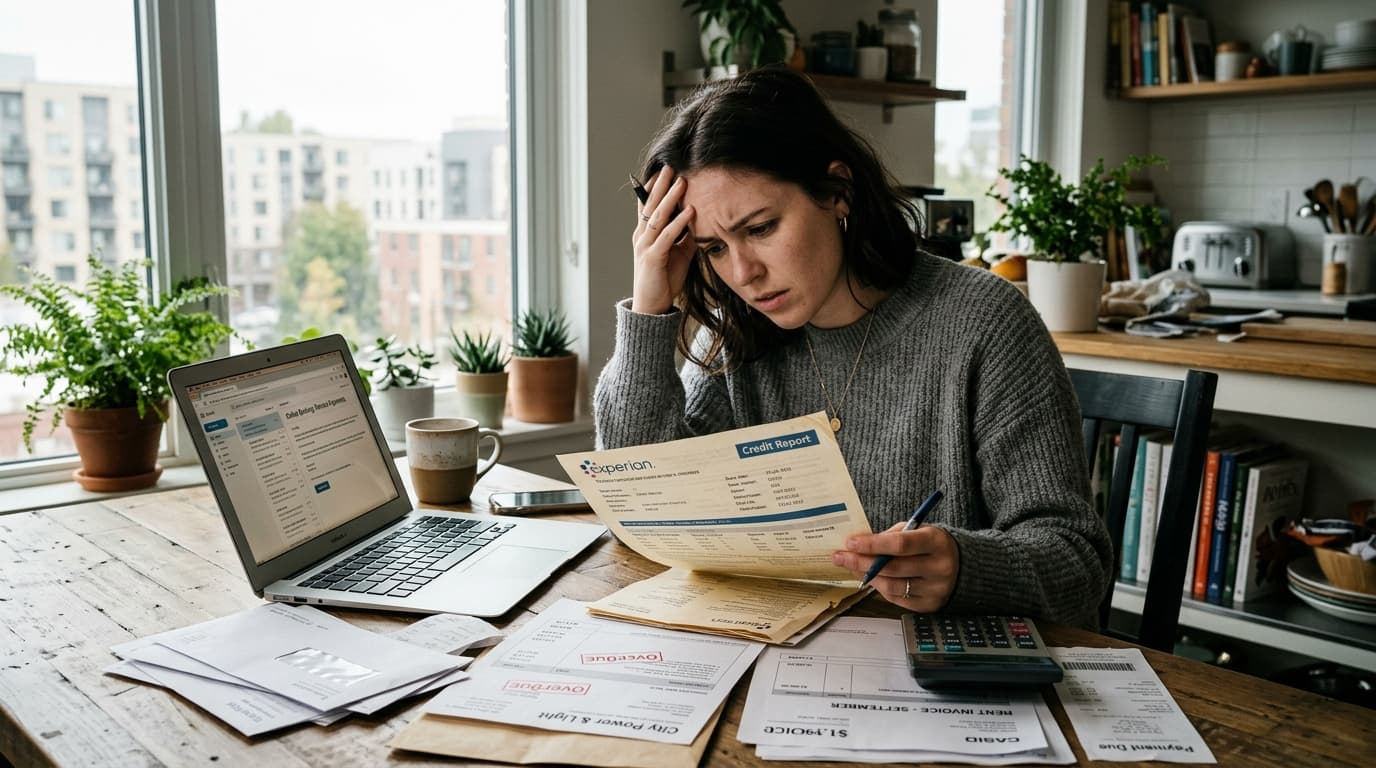
You pay the electric bill on time. Same with water, gas, internet, and your phone. So it feels reasonable to ask a simple question: if I keep paying every month, why is my credit score still stuck?
That frustration is real, and it catches a lot of people off guard.
In most cases, utility bills do not automatically build credit. Your power company can get paid on time for three straight years and the major credit bureaus may never see a single positive update. But that does not mean utility bills are irrelevant. In 2026, they can still matter in a few very specific ways, especially if you are rebuilding, working with a thin file, or trying to squeeze more value out of bills you already pay anyway.
This is where people get tripped up. They hear that “bills build credit” and assume every monthly payment helps. That is not how the system usually works. Traditional credit scoring models care most about accounts that are actually reported as credit tradelines, like credit cards, auto loans, mortgages, and certain credit-builder products. Utility accounts live outside that system unless something causes them to be reported or you intentionally add them through a reporting service.
So let’s clear it up. Here is what utility bills do, what they do not do, when they can hurt you, and how to use them as part of a smarter credit repair plan with Crowned Credit.
The Short Answer
Paying utility bills on time usually does not build credit by itself.
Why? Because most utility providers do not report normal monthly payments to Equifax, Experian, and TransUnion the same way a lender does.
What usually happens instead:
- Your on-time electric, gas, water, or internet payments stay off your standard credit reports
- Your missed payments may stay off your report at first too
- If the account becomes seriously delinquent and goes to collections, that negative item can absolutely hit your credit
That is why utility bills feel unfair in the credit world. The system often ignores the good behavior and reacts when things go bad.
If you need the bigger foundation first, read how credit scores work and how the three major credit bureaus collect information.
Why Utility Bills Usually Do Not Show Up on Your Credit Report
Credit reports are built around credit accounts, not every bill in your life.
A credit card issuer lends you money. An auto lender finances a vehicle. A mortgage company extends long-term debt. Those businesses are set up to report account history month after month. Utility companies usually are not operating in that same framework. They are billing you for a service you already used, not extending revolving or installment credit in the traditional sense.
That is why a utility account normally works like this:
- You use the service
- You get billed
- You pay the bill
- The payment is recorded internally by the provider, but not broadly reported to the bureaus
So if your goal is to build a stronger credit file, you cannot assume utility payments alone will move the needle.
When Utility Bills Can Affect Your Credit
This is the part that matters.
1. When you use a bill-reporting service
Some services let you add eligible utility, telecom, or streaming payments to at least part of your credit file. The details vary. Some only affect one bureau. Some only influence certain scoring models. Some pull from your bank history. Some require ongoing subscription fees.
That means utility payments can help in 2026, but usually only if you take an extra step and enroll in a reporting program that actually sends qualifying data somewhere useful.
2. When you fall behind badly enough that the account goes to collections
This is the more common scenario. A utility bill may not help when you pay it on time, but if it becomes late, charged off, or sold to a collection agency, the negative side can show up and drag your score down.
Example: if a $186 cable bill gets ignored after a move, it might sit quietly for a while. Then one day it lands with a collector and starts affecting approvals, interest rates, or apartment applications. That small bill suddenly becomes a real credit problem.
3. When it appears in alternative data systems
Some lenders, landlords, or specialty screening services look beyond standard bureau files. They may review cash flow, bank data, rental history, or alternative payment behavior. That does not mean your utility bill is boosting your FICO score directly, but it can still influence decisions in the real world.
Can Utility Bills Raise Your Credit Score?
Sometimes, but not automatically, and not in every scoring model.
If you use an eligible reporting tool and your history gets added in a way the model recognizes, you might see a benefit. But people make a mistake here. They treat utility reporting like a magic fix. It is not.
A utility tradeline usually matters less than these bigger drivers:
- Late payments already sitting on your reports
- High credit card utilization
- Collections, charge-offs, repossessions, or inaccurate negatives
- A very thin file with too few primary tradelines
If someone has two maxed-out cards and three collections, reporting the gas bill is not the main solution. It is a side move, not the whole game plan.
That is why we usually tell clients to think in this order:
- Clean up damaging negative items where possible
- Lower revolving utilization
- Build stronger primary accounts
- Use alternative reporting as a supporting tool, not the foundation
You can see that logic in our guides on credit utilization, removing collections, and thin credit files.
Which Bills Count as Utility Bills for Credit Purposes?
Usually people mean:
- Electric
- Gas
- Water
- Trash
- Internet
- Cable
- Cell phone
But not every service is treated the same way by every reporting platform. One service may accept electric and mobile bills but not water. Another may pull telecom payments but ignore local utilities. That is why you need to read the details before assuming your full bill stack will be counted.
If you are trying to build credit from scratch, a stronger base usually comes from primary accounts in your own name. Start with building credit from scratch, secured credit cards, and credit-builder loans.
Utility Bills Can Hurt Faster Than They Help
This is the blunt truth.
The credit system is often more aggressive on the negative side than the positive side. If you are consistently on time, your utility history may do little or nothing unless you enroll in reporting. But if you miss enough payments, move and forget a final bill, or let an old account sit unpaid, that same utility history can turn into a collection account that follows you for years.
Common ways this happens:
- You move apartments and forget the final power bill
- You cancel internet service and miss equipment or closing charges
- A mobile bill gets hit with extra fees and quietly grows
- An old roommate leaves a balance in your name
Then six months later you are applying for financing and wondering why there is a collection from a provider you barely remember.
If that sounds familiar, also read how small debts end up affecting reports and common credit report errors. Utility collections are not always reported correctly, and inaccurate data should be challenged.
Should You Use a Utility Reporting Service?
Sometimes yes, but only if the rest of your file is under control.
A utility reporting service can make sense if:
- You have limited credit history
- You already pay utilities on time every month
- You want a low-effort way to add more positive data
- You understand that the impact may be modest and uneven across models
It may make less sense if:
- Your file is loaded with collections or charge-offs
- Your credit card balances are still too high
- You are expecting one utility service to offset major negatives
- You are paying monthly fees for a tool that is not moving the bigger problems
Think of utility reporting like adding better tires to a car with engine trouble. Helpful, sure, but not the first repair if the bigger system is already struggling.
A Realistic Example
Let’s say Marcus has a 602 score, one secured card with a $500 limit, and a collection from an old telecom bill for $274. He also pays his current electric bill and phone bill on time every month.
If Marcus signs up for a utility reporting program, could that help? Possibly.
But if the old collection stays in place and the secured card is reporting at 78% utilization, the upside may be limited. A smarter move would look like this:
- Get the card balance down from $390 to under $50
- Review whether the telecom collection is accurate, complete, and properly reported
- Dispute any verifiable errors under the FCRA
- Add utility reporting only as a support layer
That is a real plan. It addresses what is hurting him most, not just what sounds easy.
What Works Better Than Utility Bills for Building Credit?
If your goal is stronger approvals, lower rates, or a cleaner report, these tools usually matter more:
1. A secured credit card used correctly
One well-managed secured card can do more for many consumers than a pile of reported utility bills. Keep the reported balance low. Pay on time every month. Do not max it out just because the limit is small.
2. A credit-builder loan
For some people, an installment account adds useful depth and structure to the profile. It is not mandatory, but it can help when used intentionally.
3. Fixing errors and unverifiable negatives
This is where real movement often happens. If your reports contain inaccurate late payments, duplicate accounts, wrong balances, mixed files, or collections that cannot be properly verified, cleaning that up can matter far more than adding one more positive data source.
4. Lowering credit utilization
If your cards are reporting at 60%, 80%, or 95% usage, that can bury your progress fast. Utility reporting will not rescue a maxed-out revolving profile.
Start with how credit utilization works, then review secured card options if you need a stronger starter account.
What Crowned Credit Tells Clients About Utility Bills
We do not dismiss utility reporting. It can be useful. But we also do not oversell it.
At Crowned Credit, the question is never just, “Can this bill maybe add a few points?” The better question is, what is the highest-leverage move on this file right now?
For one person, that may be disputing inaccurate collections. For another, it may be rebuilding after high utilization. For somebody with a thin file, it may be opening the right primary tradeline and staying disciplined for six to twelve months. Utility bill reporting can support those efforts, but it should fit into a strategy, not replace one.
If you want a team to review the whole picture, book a consultation or look at our pricing:
- Essential: $150 setup + $99/month
- Accelerated: $249 setup + $199/month
- Momentum: custom quote, one-time
You can also call 336-310-0090 if you want to talk through your report first.
Bottom Line
Utility bills usually do not build credit on their own. They may help if you intentionally use a reporting service, but the effect is often limited compared with the bigger factors driving your file.
What they can do very clearly is hurt you if unpaid balances turn into collections.
So the smart move in 2026 is simple:
- Keep utility bills current
- Watch for final bills after moves or cancellations
- Use reporting tools carefully if they fit your situation
- Focus harder on utilization, primary tradelines, and negative-item cleanup
CROA Disclosure: No company can legally promise a specific credit score increase or guarantee results within a certain timeframe. Any impact from utility reporting, disputes, or credit-building tools depends on your current profile, the data being reported, the scoring model used, and whether negative items are verified or removed.
If you want help figuring out what is actually holding your score back, schedule a consultation with Crowned Credit.