Jefferson Capital Systems on Your Credit Report: How to Deal with Them and Remove It

Ashley Rivera
Credit Repair Specialist

You pull your credit report and notice a sudden drop in your credit score. You scroll down and find a collection account listed under a name you do not recognize: Jefferson Capital Systems (sometimes listed as JCS or Jefferson Capital). Who is Jefferson Capital Systems? You never opened an account with them. Why are they reporting on your credit, and how do you get them off?
Jefferson Capital Systems is one of the largest buyers of unpaid consumer debt in the United States. They are not a lender; instead, they buy delinquent accounts from original creditors for pennies on the dollar and attempt to collect the full amount. Fortunately, federal law grants you robust rights to challenge and remove Jefferson Capital Systems from your credit reports. This guide provides a complete, step-by-step blueprint of how to deal with them in 2026.
Who Is Jefferson Capital Systems?
Jefferson Capital Systems, LLC is a massive third-party debt collection agency and debt buyer. Founded in 2002 and headquartered in St. Cloud, Minnesota, they are owned by the private equity firm J.C. Flowers & Co. They purchase portfolios of old, charged-off accounts from credit card companies, personal loan lenders, auto finance providers, and telecommunications utilities.
When consumers fall behind on credit cards or phone bills, the original creditors declare those debts as losses and sell them in bulk. Debt buyers like Jefferson Capital purchase these portfolios for a fraction of the actual balance—typically between 1.5 and 4 cents on the dollar. If you have an unpaid utility bill of $2,000, Jefferson Capital may have bought that account for as little as $40. Once they own the account, they have the legal right to collect on it. If they can convince or pressure you into paying even a portion of that balance, they walk away with a substantial profit.
Because they are a third-party debt buyer, their activities are heavily regulated. Jefferson Capital Systems has faced numerous consumer complaints and regulatory scrutiny. Over the years, thousands of consumers have filed complaints against them with the Consumer Financial Protection Bureau (CFPB) and the Better Business Bureau (BBB) for attempting to collect debts that were already paid, reporting inaccurate balances, and failing to validate debts. When dealing with Jefferson Capital Systems, you must know your rights and document everything carefully.
Why Is Jefferson Capital Systems on Your Credit Report?
If Jefferson Capital Systems is showing up on your Equifax, Experian, or TransUnion credit reports, it means an original creditor charged off your debt and sold it. Here is how that cycle works:
- You fell behind on payments on an account like a credit card, cell phone bill (such as Verizon or AT&T), or utility account.
- After 120 to 180 days of non-payment, the original creditor "charged off" the account, declaring it a loss for tax purposes.
- The original creditor sold the debt portfolio to Jefferson Capital Systems.
- Jefferson Capital loaded your information into their system, created a new collection account, and reported it to the credit bureaus.
This process often results in two negative entries on your credit report: the original creditor's account listed as "Charged Off" with a $0 balance, and Jefferson Capital's entry listed as an active "Collection" showing the full balance. This is legally permissible under the Fair Credit Reporting Act (FCRA) as long as the balances are reported accurately and the original creditor reports a $0 balance once the debt is sold.
However, the seven-year reporting clock does not reset. Under the FCRA, a collection account can only remain on your credit report for seven years plus 180 days from the date of first delinquency of the original account. If your original card became delinquent in March 2020, the entire entry must be removed from your credit reports by September 2027 at the absolute latest, regardless of when Jefferson Capital purchased it. Any attempt to alter dates to keep a collection on your report longer is an illegal practice known as "re-aging."
The Damage of a Jefferson Capital Collection Account
An active collection from Jefferson Capital Systems damages your credit profile. An active collections account signals to automated underwriting systems that you have an unresolved, delinquent obligation, which can lead to:
- Severe Score Drops: A single collection entry can immediately strip 50 to 110 points from your credit score.
- Loan and Mortgage Denials: Mortgage lenders running automated systems will flag active collections and require them to be resolved or removed before approving a home loan.
- Skyrocketing Interest Rates: If approved for a loan with an active collection, you will be relegated to subprime tiers, costing you thousands in extra interest.
- Rental and Employment Roadblocks: Many leasing offices and employers pull credit histories. An open collection with a major debt buyer can cause landlords to reject your rental application.
Your Legal Shields: The FDCPA and the FCRA
Federal law provides you with powerful leverage when dealing with debt buyers like Jefferson Capital Systems. There are two primary laws you must understand and use to your advantage.
The Fair Debt Collection Practices Act (FDCPA)
The FDCPA regulates how third-party debt collectors can interact with you. Under this federal statute:
- The Right to Debt Validation: Within 30 days of receiving Jefferson Capital's initial written contact, you have the legal right to send a written validation request. Once they receive this letter, they must cease all collection efforts until they provide verification of the debt.
- No Harassment or Abuse: Jefferson Capital collectors cannot call you before 8:00 AM or after 9:00 PM your local time, use profane language, or threaten legal action they do not intend to take.
- Cease and Desist: You can send Jefferson Capital a written request instructing them to stop contacting you entirely. While this does not wipe away the debt, it legally forces them to stop the direct calls and mail.
The Fair Credit Reporting Act (FCRA)
The FCRA regulates how credit bureaus and data furnishers handle your information. Under the FCRA:
- The Right to Accurate Reporting: Everything reported on your credit file must be 100% accurate, complete, and verifiable. If any detail is wrong, it must be corrected or deleted.
- The Right to Dispute: You have the right to challenge any entry on your credit reports. If you file a dispute with the bureaus, they must forward it to Jefferson Capital, who then has 30 days to investigate and verify every detail of the account.
- Unverifiable Data Must Be Deleted: If Jefferson Capital cannot locate the original records to back up their reporting, or if they fail to respond within the 30-day window, the credit bureaus must delete the collection entry.
Because Jefferson Capital buys debts in massive portfolios, they often receive very limited data from original creditors. If you demand strict verification under the FCRA and they cannot produce original documentation, they cannot legally maintain that negative entry on your credit reports.
Step-by-Step Guide to Removing Jefferson Capital Systems
To successfully handle and remove a Jefferson Capital collection account, you must follow a disciplined process. Do not call them on the phone; always communicate in writing via certified mail to create a legally binding paper trail.
Step 1: Obtain and Review Your Credit Reports
Download your reports from AnnualCreditReport.com and examine the Jefferson Capital entry. Check for inconsistencies across bureaus, such as varying balances, inaccurate open dates, wrong account numbers, or if the original creditor fails to report a $0 balance. Any discrepancy justifies an FCRA dispute.
Step 2: Submit a Written Debt Validation Request
If recently contacted, send a formal debt validation letter via Certified Mail within 30 days. Demand proof of the debt's ownership chain, the original signed contract, and a full transaction history without admitting ownership. If they cannot provide these records, they must cease collection and credit reporting.
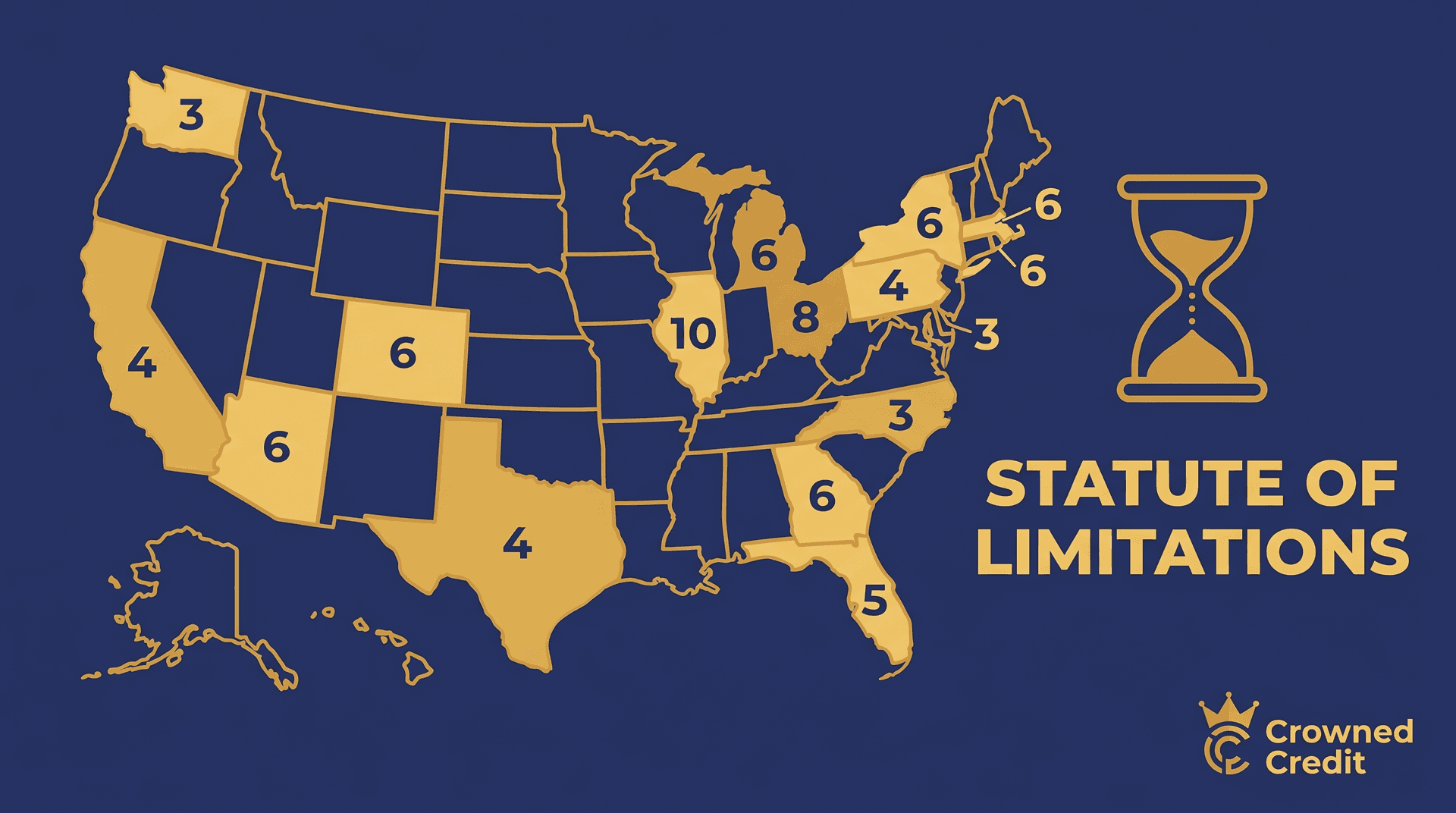
Step 3: Check Your State's Statute of Limitations
Check your state's statute of limitations (SOL) before negotiating or paying. Once the SOL passes, the debt is time-barred, meaning they cannot legally sue you. Be careful: making even a partial payment can restart the clock, giving them a new window to sue.
Step 4: Dispute the Account with the Credit Bureaus
If you have identified errors or if Jefferson Capital failed to provide proper debt validation, file a formal dispute with Experian, Equifax, and TransUnion. Write a clear dispute letter outlining the specific inaccuracies you found. For example: "The balance reported on account number XXXXX by Jefferson Capital Systems is inaccurate. I am disputing this account under the FCRA. Please investigate and delete this unverifiable information."
The bureaus have 30 days to investigate. If Jefferson Capital cannot verify the entry with accurate records within that timeframe, the account must be permanently deleted. If they verify it anyway without addressing the errors, you can request the method of verification to see exactly how they conducted their investigation.
Step 5: Leverage Jefferson Capital's Pay-for-Delete Policy
Unlike some collection agencies that refuse to remove accurate accounts, Jefferson Capital Systems has an official, publicly acknowledged "Pay-for-Delete" policy. They state that they will request the credit bureaus to delete their collection entry once the account is paid or settled.
To handle this negotiation strategically:
- Never Pay Full Balance: Because Jefferson Capital purchased the debt for pennies, they are usually willing to settle for 30% to 50% of the claimed balance. Start your negotiation low—around 20%—and settle somewhere in the middle.
- Get It in Writing First: Do not pay anything based on a verbal promise. Demand a formal settlement letter stating the agreed-upon amount, that this payment satisfies the debt in full, and that they will request the deletion of the tradeline from all credit bureaus within 30 days of payment.
- Understand the Tax Implications: If Jefferson Capital forgives more than $600 of the original debt balance, they report it to the IRS. You may receive a Form 1099-C (Cancellation of Debt), and the forgiven amount could be treated as taxable income.
Step 6: Send a Direct Dispute to Jefferson Capital
If disputing through the credit bureaus does not yield results, you can file a direct dispute with Jefferson Capital Systems under the FCRA. Send your dispute letter, along with copies of your credit reports highlighting the errors, directly to Jefferson Capital's disputes department. Sending a direct dispute forces Jefferson Capital to conduct an internal audit of their records, and if they cannot back up their claims, they must delete the reporting.
Why Professional Credit Repair Is Worth It
The process of disputing collections with massive debt buyers and credit bureaus can be exhausting. The bureaus often use automated scanning systems that reduce complex disputes into two-digit codes, ignoring your evidence entirely. Jefferson Capital's history shows they do not always follow dispute regulations voluntarily unless held strictly accountable.
If you have tried disputing on your own and hit a brick wall, or if you are preparing to buy a home, secure a car loan, or build business credit and cannot afford to wait, professional credit repair is a highly strategic choice. Professional services understand how to bypass automated bureau systems, handle complex validation processes, and escalate disputes when collectors violate federal law.
At Crowned Credit, we take an aggressive, legal, and highly systematic approach to challenging collection accounts from agencies like Jefferson Capital Systems, Midland Credit Management, Portfolio Recovery Associates, and LVNV Funding. We look at your credit profile as a whole, identifying structural flaws, cross-bureau inaccuracies, and procedural violations that give us the leverage to demand deletions.
We offer clear, transparent, and results-focused plans designed to fit your goals and timeline:
- Essential Plan ($150 setup fee + $99/month): Perfect for standard credit rebuilds, focusing on core bureau disputes and systematic escalations.
- Accelerated Plan ($249 setup fee + $199/month): Designed for individuals on a tight deadline (such as preparing for a mortgage or business expansion). This plan features intensive, multi-channel disputes and expedited processing.
- Momentum Plan (custom quote, one-time): A complete, flat-rate package for comprehensive, full-service credit restoration with a defined scope.
You can view our complete pricing plans here or schedule a free, comprehensive consultation to have an expert analyze your credit files. Our team can also be reached directly at 336-310-0090 to answer your questions.
Critical Mistakes to Avoid
One wrong move can set your credit repair progress back months. When Jefferson Capital Systems appears on your credit report, make sure you avoid these common traps:
- Do Not Agree to a Payment Plan on the Phone: Phone representatives are trained to lock you into agreements. That small payment can legally revive a time-barred debt, giving them the right to sue you.
- Do Not Send Original Documents: When sending disputes or validation requests, only send photocopies. Keep your original documents and receipts organized in a dedicated file.
- Do Not Use Generic Dispute Templates: Using easily recognizable, generic dispute templates found online often leads the credit bureaus to flag your dispute as "frivolous" and discard it without conducting an investigation.
- Do Not Assume Paying Automatically Removes the Entry: Unless you have an explicit Pay-for-Delete agreement, paying off a collection merely changes the status to "Paid Collection." A paid collection still damages your credit score. Deletion is the only outcome that restores your score.
The Long-Term Cost of Inaction
A collection account from Jefferson Capital Systems will not simply disappear because you ignore it. Over its seven-year lifespan, a single collection can cost you tens of thousands of dollars. If you are shopping for a 30-year home mortgage, a lower credit score caused by a collection account can push your interest rate up by 1% to 2%. Over the life of a $350,000 mortgage, that small difference in interest rate results in over $80,000 of unnecessary payments. That is the real cost of bad credit.
Whether you choose to tackle Jefferson Capital on your own or partner with a professional team like Crowned Credit, taking action is the single best financial decision you can make today. You have federal laws protecting you, and Jefferson Capital's own business model relies on consumers not knowing their rights. By educating yourself and asserting your legal protections, you can successfully remove Jefferson Capital Systems from your credit reports and build a secure financial foundation.
Ready to take the first step toward clean credit? Book your free Crowned Credit consultation today, or call our Greensboro office at 336-310-0090. We will review your reports, identify your negative items, and build a tailored strategy to restore your score.
Legal Disclaimer: Crowned Credit is a credit repair organization as defined by the Credit Repair Organizations Act (CROA). Results vary based on individual circumstances and credit history. We do not guarantee the removal of any specific item from your credit report or promise any specific improvement in your credit score. Nothing in this article constitutes legal or financial advice. Consult a licensed attorney or financial advisor for advice specific to your situation.