Can Employers Check Your Credit in 2026? Your Rights, State Laws, and How to Prepare

Ashley Rivera
Credit Repair Specialist

You nailed the interview. The hiring manager practically told you the job was yours. Then silence. Two weeks later, a generic rejection email lands in your inbox.
What happened? There's a decent chance your credit report killed your shot.
According to a Professional Background Screening Association and HR.com survey, 51% of U.S. employers include credit or financial checks in their background screening process. That means roughly half the companies you apply to might pull your credit history before making a final decision — and most people have no idea this is happening until it's too late.
The good news: your rights are stronger than ever in 2026, with new state laws rolling out that restrict or outright ban the practice. The bad news: if you're in a state without protections, a few collections or late payments could quietly cost you your dream job.
Here's exactly what employers see, what they can't do, and how to get your credit report job-ready.
What Employers Actually See on a Credit Check
First, a common misconception: employers do NOT see your credit score. Not your FICO, not your VantageScore, nothing with a number attached.
What they receive is a modified version of your credit report that shows:
- Payment history — late payments, defaults, and how late (30, 60, 90+ days)
- Outstanding debts — collections accounts, charge-offs, balances owed
- Credit accounts — open and closed accounts, credit limits, types of credit
- Public records — bankruptcies, tax liens, civil judgments
- Hard inquiries — recent credit applications
They cannot see your date of birth, marital status, or account numbers. The report is stripped of information that could lead to discriminatory hiring decisions beyond financial behavior.
So while a hiring manager won't know your exact score, they'll see the story behind it. A report full of collections, maxed-out cards, and missed payments paints a very different picture than a clean one — especially for roles involving money or sensitive information.
When and Why Employers Pull Credit Reports
Not every employer checks credit on every candidate. The practice is most common for:
- Financial roles — accounting, banking, investment management, treasury
- Government positions — security clearances almost always involve credit review
- Senior management — C-suite and VP-level roles with fiduciary responsibility
- Positions handling cash or assets — retail management, warehouse supervisors, armored transport
- Law enforcement and military — where financial stress is considered a vulnerability
The reasoning, fair or not, goes like this: if someone can't manage their personal finances, they might be a higher risk when managing company money. The Society for Human Resource Management (SHRM) has noted that when an applicant's debt exceeds 10% of the open position's salary, some employers flag it as a concern.
Whether that's a fair assessment is debatable. But it's the reality you're dealing with.
Your Federal Rights Under the FCRA
The Fair Credit Reporting Act (FCRA) gives you critical protections that apply in every state, regardless of local laws:
1. Written consent is mandatory. No employer can pull your credit report without your explicit, written permission. If they didn't hand you a disclosure form and get your signature, the credit check is illegal.
2. You must receive a pre-adverse action notice. If an employer is considering not hiring you based (even partially) on your credit report, they're required to send you a copy of the report and a "Summary of Rights" document before making the final decision. This gives you a chance to explain or dispute errors.
3. You must receive an adverse action notice. If they decide not to hire you, they must tell you in writing and identify the consumer reporting agency that provided the report. They also must inform you of your right to dispute the report's accuracy.
4. The credit check is a soft pull. An employment credit check does NOT affect your credit score. It shows up as a soft inquiry that only you can see — other creditors and lenders won't know about it.
These protections matter, but they only work if you actually exercise them. If you get a pre-adverse action notice, that's your window to dispute any inaccurate information before the employer makes a final call.
States That Ban or Restrict Employer Credit Checks in 2026
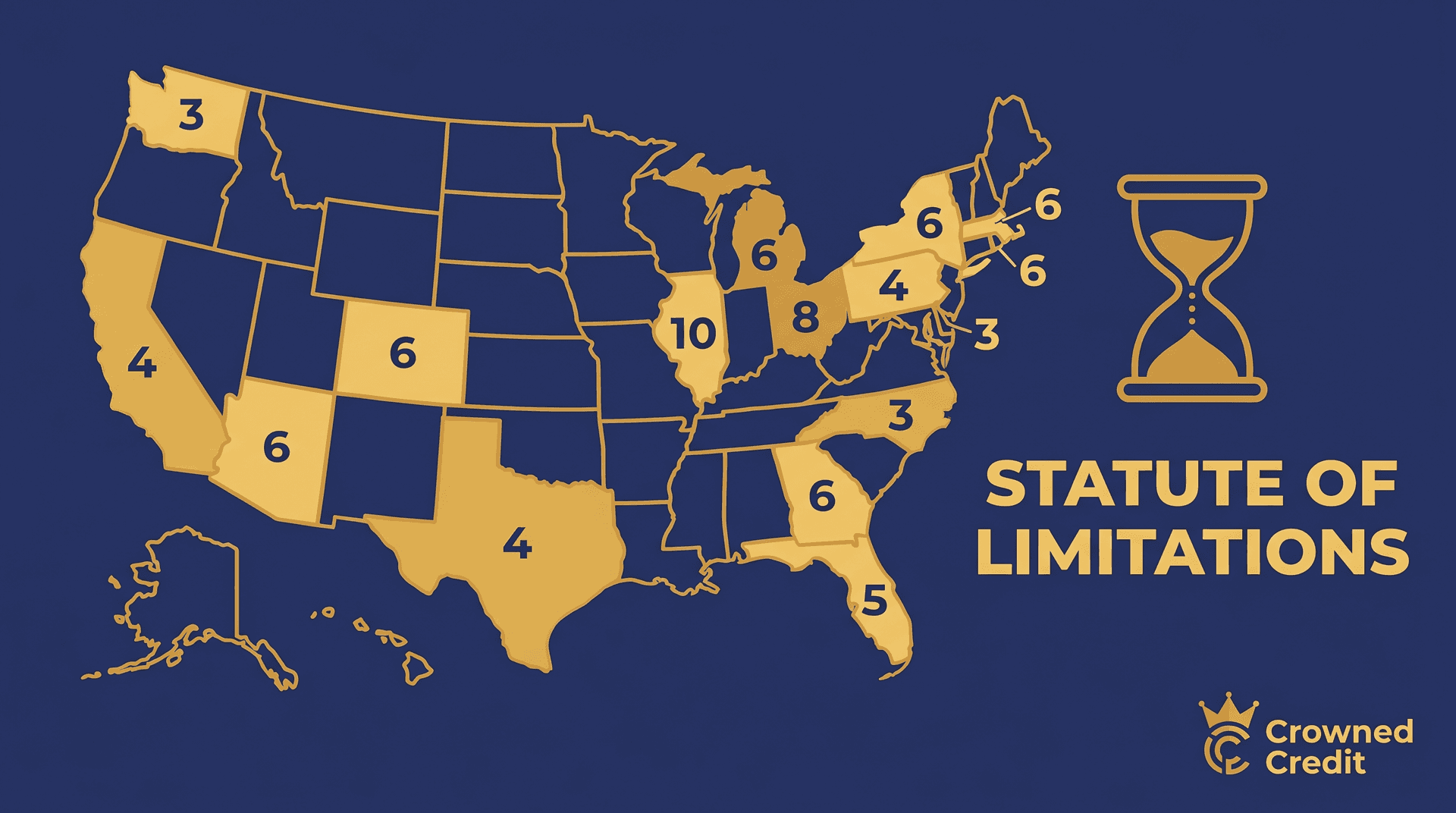
Federal law allows employer credit checks with consent, but a growing number of states have said "not so fast." As of April 2026, these states restrict or ban the practice:
- California — Banned for most positions. Exemptions for managers, roles handling $10,000+ in cash daily, law enforcement, and DOJ employees.
- Colorado — Banned since 2013, with exceptions for banks, legally required checks, and roles where the employer can prove a legitimate business reason.
- Connecticut — Banned for all employers since 2011, with exemptions for financial institutions and certain management roles.
- Hawaii — Prohibits credit checks unless the information is directly related to the position's duties.
- Illinois — Banned, with exceptions for banks, insurance, government, law enforcement, and positions where credit history is a bona fide job requirement.
- Maryland — Banned unless the employer can demonstrate the credit history is substantially related to the job.
- Nevada — Employers cannot use credit information unless the position requires it or the information is reasonably related to the job.
- Oregon — Broad ban with exemptions for federally insured banks, certain public safety positions, and roles where credit history is substantially job-related.
- Vermont — Employers cannot use credit reports unless the information is substantially related to the job.
- Washington — Banned for most employment decisions, with exceptions for financial institutions and positions with access to confidential financial information.
Breaking: New York State Ban Takes Effect April 18, 2026
This is brand new: New York State is banning employer credit checks starting April 18, 2026 — just days from now. Previously, only New York City had restrictions. Now the entire state is covered.
The law prohibits employers from requesting or using a candidate's consumer credit history for employment decisions, with only narrow exemptions for certain financial and law enforcement roles. If you're job hunting in New York, this is a major win.
Several cities have also enacted their own ordinances, including Chicago, New York City, and Philadelphia, which may provide protections beyond their state-level laws.
What Happens If Your Credit Costs You a Job
Here's what this actually looks like in practice. Say you're applying for an operations manager role at a mid-size company. You've got 8 years of experience. Great references. Strong interview.
But your credit report shows:
- A $4,200 medical collection from 2023
- Two 60-day late payments on a car loan from 2024
- A credit card charge-off for $1,800
The employer sees this and thinks: If they can't stay on top of a car payment, can they manage a $2M operating budget? Unfair? Maybe. But it happens every single day.
What most people miss is that some of those items might be inaccurate, unverifiable, or outdated. Under the FCRA, creditors and collection agencies are required to verify every item they report. If they can't produce documentation proving the debt is yours, accurate, and reported correctly, it must be removed.
That medical collection? The original creditor may have sold it to a debt buyer who can't prove the amount is correct. Those late payments? The lender might not have the records to verify the exact dates. The charge-off? It could be past the statute of limitations or reported with errors in the balance or account status.
How to Get Your Credit Job-Ready
Whether you're actively job hunting or just want to be prepared, here's how to clean up your report before an employer sees it:
Step 1: Pull All Three Reports
Go to AnnualCreditReport.com (the only federally authorized source) and pull your reports from Equifax, Experian, and TransUnion. You don't know which bureau an employer will check, so you need all three.
Step 2: Look for Errors and Questionable Items
Review each report line by line. Flag anything that's:
- Not yours (wrong name, address, or account you don't recognize)
- Inaccurate (wrong balance, wrong payment status, wrong dates)
- Unverifiable (old debts from creditors who may not have documentation)
- Outdated (items past the 7-year reporting window)
Step 3: Dispute Strategically
File disputes directly with the credit bureaus for clear errors. For more complex situations — collections you're not sure about, charge-offs with incorrect balances, late payments you believe are misreported — you'll want to use debt validation letters and FCRA-based dispute strategies.
Under the FCRA, the bureaus have 30 days to investigate your dispute. If the creditor can't verify the item, it must be removed. This is where professional credit repair can make a serious difference — experienced dispute specialists know exactly how to challenge items effectively and which verification gaps to target.
Step 4: Address Collections Before They're Seen
If you have collections accounts, consider pay-for-delete negotiations where you offer to settle the debt in exchange for complete removal from your report. Not every collector will agree, but many will — especially on older debts where they've already written off the original amount.
Step 5: Reduce Visible Debt Load
Even though employers can't see your score, they can see your balances relative to your limits. If your credit cards are maxed out, that's visible. Pay down balances where possible, starting with cards closest to their limit. Check out our guide on managing credit utilization for specific strategies.
How Long Does Cleanup Take?
Timeline depends on what's on your report:
- Simple errors — Bureau disputes typically resolve within 30-45 days
- Collections and charge-offs — Dispute and validation processes usually take 2-4 rounds over 3-6 months
- Multiple negative items across bureaus — A comprehensive cleanup typically takes 4-8 months with consistent effort
The earlier you start, the better positioned you'll be when opportunity knocks. Waiting until you're in the middle of a job search means you're already behind.
*Individual results vary based on your unique credit situation. Credit repair is not guaranteed, and timelines depend on the complexity of items on your report and the responsiveness of creditors and bureaus. Crowned Credit operates in full compliance with the Credit Repair Organizations Act (CROA).
Can You Be Fired Over Your Credit?
Yes — in states without protections, an employer can run a credit check on existing employees too, not just new hires. The same FCRA rules apply: they need your written consent and must follow the adverse action process if they take action based on the results.
This most commonly happens during promotions into financial roles, government clearance renewals, or company-wide policy changes. If you've been at a company for years but your credit has deteriorated, a routine check during a promotion review could create problems.
What You Should NOT Do
A few things that won't help — and might hurt:
- Don't lie about your financial history. If an employer asks about bankruptcies or financial issues on an application (where legal), being caught in a lie is worse than the credit issue itself.
- Don't refuse the credit check. In states where it's legal, refusing a credit check usually means you're out of the running. It's treated the same as refusing a drug test.
- Don't panic-pay everything. Paying a collection without a deletion agreement just updates the account activity date and can actually make it more visible. Strategy matters more than just throwing money at the problem.
When Professional Help Makes Sense
If you're staring at a credit report with 5, 10, or 15+ negative items and you need to be job-ready in the next few months, handling disputes across three bureaus while managing verification requests, validation letters, and creditor communications is a full-time job on its own.
That's exactly the situation where working with a professional credit repair company saves you time and gets better results. At Crowned Credit, our dispute specialists work with all three bureaus simultaneously, targeting inaccurate, unverifiable, and questionable items using FCRA-based strategies that most people don't know exist.
Our plans are built for different situations:
- Essential — $150 enrollment + $99/month for straightforward cases
- Accelerated — $249 enrollment + $199/month for complex reports needing aggressive multi-bureau disputes
- Momentum — custom quote, one-time for a complete, intensive repair engagement
If your credit report is standing between you and a better career, schedule a free consultation and we'll walk through exactly what an employer would see and what we can challenge. You can also call us at 336-310-0090.
The Bottom Line
Employer credit checks aren't going away — but your rights are expanding. New state laws, including New York's ban starting April 18, 2026, are shifting the landscape in favor of job seekers. Still, if you're in a state where employer credit checks are legal, your report is fair game.
The smartest move you can make right now: pull your reports, see what an employer would see, and start cleaning up anything that doesn't belong there. Whether you handle it yourself or work with professionals, don't let fixable credit issues silently sabotage your career.
Your skills got you the interview. Make sure your credit report doesn't lose you the job.