How Long Does a Settled Account Stay on Your Credit Report in 2026?

Ashley Rivera
Credit Repair Specialist

The 7-Year Rule (And Why It's Not What You Think)
A settled account stays on your credit report for seven years from the date of your first missed payment — not from the settlement date.
This is critical. If you missed payments for 18 months before settling the debt, you've already burned through 18 months of that seven-year clock. You'd have five and a half years left, not a full seven.
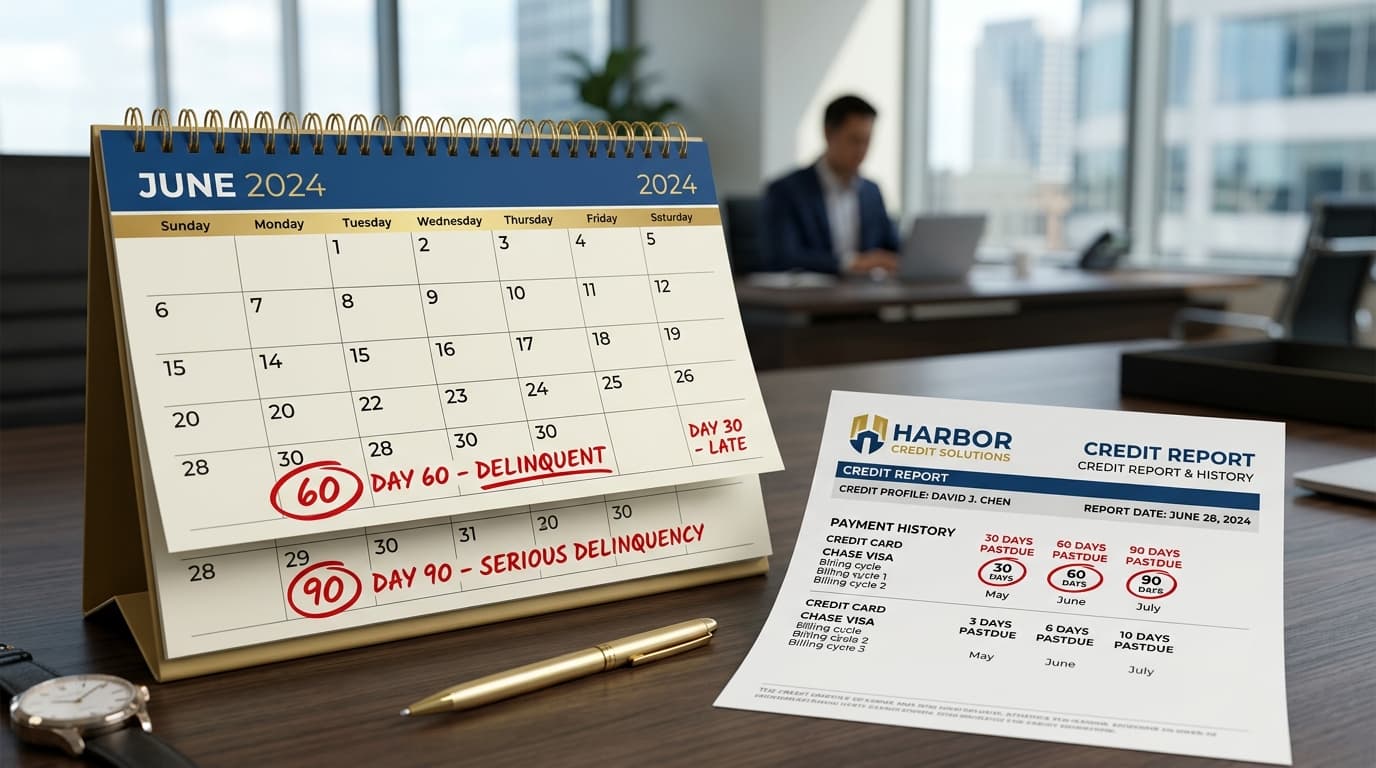
The timeline starts ticking the moment you first went 30+ days late on that account. That's called the "date of first delinquency," and it's what the credit bureaus use to calculate when negative items age off your report.
What "Settled" Means on Your Credit Report
When you settle a debt for less than the full balance, the creditor reports it to the credit bureaus. The account will show one of these statuses:
- "Settled"
- "Settled for less than full balance"
- "Paid settled"
- "Account legally paid in full for less than the full balance"
All of these mean the same thing to lenders: you didn't pay what you originally agreed to pay. And that's a red flag.
It's better than an unpaid collection or charge-off, but it's not the same as "paid in full." Lenders see settled accounts as evidence that you struggled to meet your obligations.
How Much Does a Settled Account Hurt Your Credit Score?
Settling a debt can drop your credit score anywhere from 50 to 150 points, depending on:
- Your starting score (higher scores take bigger hits)
- How many other negative items are already on your report
- How recent the settlement is
- Whether you had late payments leading up to the settlement
The damage isn't permanent, though. The impact fades over time, especially if you rebuild with positive payment history. By year three or four, a settled account has much less weight than it did in year one.
But during those first couple of years? Expect mortgage lenders, auto loan underwriters, and premium credit card issuers to ask questions. Some may decline you outright. Others may approve you at higher interest rates.
Settled vs. Paid in Full: What's the Difference?
There's a huge difference between settling a debt and paying it in full.
| Status | What It Means | Impact on Credit |
|---|---|---|
| Paid in Full | You paid the entire balance owed | Neutral to slightly positive. Late payments still count, but the debt is fully resolved. |
| Settled | You negotiated and paid less than the full amount | Negative. Shows you didn't meet the original agreement. |
If you're deciding between the two and can afford to pay in full, do it. The credit impact is significantly better. But if paying in full isn't realistic, settling is still better than leaving the debt unpaid indefinitely.
Can You Remove a Settled Account from Your Credit Report Early?
Maybe. It depends on the situation.
1. Dispute Inaccurate Information
If the settled account has errors — wrong balance, wrong settlement date, wrong creditor name, anything inaccurate — you have the right to dispute it under the Fair Credit Reporting Act (FCRA).
The credit bureaus must investigate. If they can't verify the information, they have to remove it. This doesn't always work, but when there are legitimate errors, it's worth trying.
2. Goodwill Letters
If you settled in good faith, rebuilt your credit since then, and have a solid payment history now, you can write a goodwill letter to the original creditor.
Ask them to update the account status from "settled" to "paid in full" as a gesture of goodwill. There's no guarantee they'll do it, but some creditors will — especially if you've been a customer in good standing since the settlement.
3. Professional Credit Repair
Credit repair companies like Crowned Credit challenge settled accounts by requesting method of verification from creditors and bureaus. Under FCRA, creditors must provide documentation proving the debt, the settlement terms, and the reported status.
If the creditor can't produce proper documentation, the bureaus must remove the item. This is a strategic process that requires knowledge of FCRA rights, proper dispute language, and persistence.
Results vary. Crowned Credit does not guarantee specific outcomes or score increases. Under the Credit Repair Organizations Act (CROA), no company can legally guarantee removal of accurate information.
What Happens After 7 Years?
Once seven years pass from your first missed payment, the settled account automatically falls off your credit report. The credit bureaus are required by law to remove it.
You don't need to do anything. It happens automatically.
But here's the catch: some creditors report incorrect dates. If your settled account is older than seven years and still showing up, dispute it immediately. That's a violation of FCRA, and you have the right to have it removed.
How to Rebuild Credit After Settling a Debt
A settled account doesn't have to define your financial future. You can start rebuilding immediately.
1. Get a Secured Credit Card
Secured cards are designed for people rebuilding credit. You put down a deposit (usually $200-$500), and that becomes your credit limit. Use it for small purchases, pay it off in full every month, and watch your score climb.
We wrote a full guide on the best secured credit cards for rebuilding credit in 2026.
2. Become an Authorized User
Authorized user tradelines let you piggyback on someone else's positive credit history. If a family member or friend has a credit card with perfect payment history and low utilization, ask to be added as an authorized user.
Their account history gets added to your credit report, which can boost your score quickly.
3. Use a Credit Builder Loan
A credit builder loan is a small loan (usually $300-$1,000) designed specifically to build credit. The lender holds the money in a savings account while you make monthly payments. Once you've paid it off, you get the cash back — and you've built 12 months of positive payment history.
4. Pay Everything Else On Time
Payment history is 35% of your credit score. Even with a settled account on your report, consistent on-time payments on your other accounts will gradually improve your score.
Set up autopay for minimums if you're worried about missing due dates. One new late payment will undo months of progress.
5. Keep Utilization Under 10%
Credit utilization is the second-biggest factor in your score. If you have a $1,000 credit limit, keep your balance under $100.
High utilization tanks your score fast. Low utilization helps it recover faster.
Should You Settle a Debt in the First Place?
Settlement makes sense in specific situations:
- The debt is already in collections or charged off
- You can't afford to pay the full balance
- The creditor is threatening legal action
- You're prioritizing debt resolution over short-term credit score impact
But if the account is still current and you can afford the payments, don't settle. Keep paying on time. Settling a current account that's in good standing will hurt your credit more than helping it.
And if you're considering settlement as part of a broader debt relief strategy, compare it to alternatives like credit counseling, debt consolidation, or even bankruptcy. Each option has different credit implications and timelines.
Real-World Example: How Long a Settled Account Actually Lasts
Let's say you had a credit card with a $5,000 balance. You stopped paying in January 2024. The account went to collections in July 2024. In March 2025, you negotiated a settlement and paid $2,500 to close it out.
Here's the timeline:
- January 2024: First missed payment (this is your start date)
- July 2024: Account charged off and sent to collections
- March 2025: You settle for $2,500
- January 2031: The settled account falls off your credit report (7 years from first delinquency)
Even though you settled in March 2025, the clock started in January 2024. You'll carry that settled status until January 2031 — nearly six years after the settlement.
When to Get Professional Help
If you've settled multiple debts, or if settled accounts are blocking you from getting approved for a mortgage, car loan, or apartment, professional credit repair can help.
At Crowned Credit, we challenge settled accounts by requiring creditors to verify every detail under FCRA. We also work on the rest of your credit profile — late payments, collections, charge-offs, hard inquiries — to maximize your score while the settled accounts age off.
Our most popular plan is Accelerated at $249 setup + $199/month. We also offer Essential ($150 + $99/month) and Momentum (a one-time, prepaid program for aggressive dispute work, priced by custom quote).
Or call us at 336-310-0090.
Bottom Line
A settled account stays on your credit report for seven years from your first missed payment — not from the settlement date. It'll hurt your score, especially in the first couple of years, but the impact fades over time.
You can rebuild credit while it's still on your report by using secured cards, becoming an authorized user, taking out credit builder loans, and maintaining perfect payment history going forward.
If the settled account has errors or if you want professional help removing it, credit repair companies can challenge the item under FCRA. Results vary, but when creditors can't verify the details, the bureaus must remove it.
The seven-year clock is running. What you do during that time determines whether you're stuck in credit limbo or building toward 700+.